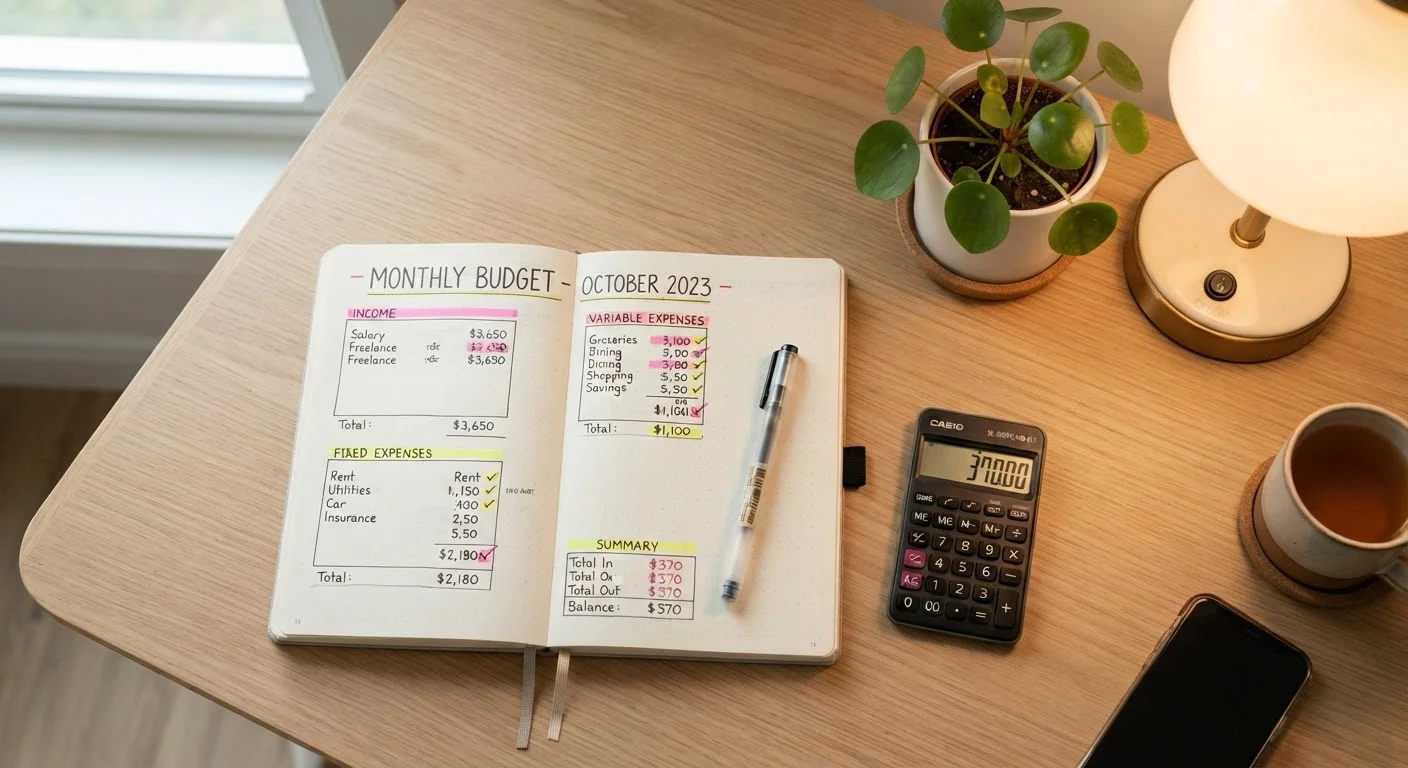

Why Most Budget Reviews Fail — and How to Fix That
Most people don't abandon budgets because budgeting is hard. They abandon them because the review process feels overwhelming, time-consuming, or discouraging. A monthly budget review should answer three simple questions: Did I earn what I expected? Did I spend within my plan? What do I need to change? If your review process is more complicated than that, it's worth simplifying before adding anything else.
If you're working from your first budget and want to revisit how you built it, our plain-language guide to building a personal budget from scratch covers the foundation. For a complementary routine that catches issues between monthly reviews, consider pairing this process with a weekly 15-minute money check-in.
This Is Education, Not Personal Advice
This article provides general budgeting information for educational purposes only. It is not personalized financial advice. Your income, expenses, debt, and goals are unique to your situation. For guidance tailored to your circumstances, consult a qualified, licensed financial professional.
What You Need Before You Start
A review is only as useful as the data you bring to it. Before sitting down, gather your statements and tools so the session stays focused on analysis — not hunting for paperwork.
What you will need
Bank and credit card statements
Provide the actual transaction data you need to compare against your budget categories.
Spreadsheet or budgeting app
Organizes income and spending data so category comparisons are fast and clear.
Last month's budget document
Serves as the baseline you're measuring actual spending against.
Pen and notebook
Useful for jotting notes on patterns or adjustments to carry into next month's plan.
Stack Your Review With Something You Already Do
Pick a recurring date — like the last Sunday of each month — and pair the review with a routine you enjoy, such as a morning coffee or a relaxed evening. Habit stacking reduces the willpower needed to start and makes the review feel less like a chore.
The Monthly Review Process, Step by Step
Follow these steps in order. The sequence matters: confirming income before checking spending prevents you from drawing wrong conclusions about where money went.
Schedule a fixed date and gather your statements
Choose one recurring date each month — the same day every month reduces decision fatigue. The last weekend of the month works well because it leaves time to set up next month before it starts. Pull all bank statements, credit card statements, and any other income records you need. Having everything in one place before you sit down saves time and prevents an incomplete review.
Confirm your actual income for the month
Before checking spending, verify what actually landed in your accounts — not what you expected. Freelance income, side work, irregular bonuses, or a paycheck timing shift can all affect how much you actually had to work with. If income came in lower than expected, note it — it explains some overspending before you start drawing conclusions.
Compare actual spending to each budget category
Go line by line through your budget categories — groceries, housing, transportation, dining, subscriptions, and so on. Write down what you planned to spend and what you actually spent. Don't skip categories where you went over; those gaps are the whole point of the review. Look for patterns: did the same category run over for the second month in a row? That's a signal the limit may need adjusting, not just more willpower.
While reviewing recurring charges, it's worth doing a quick scan for forgotten subscriptions. Our guide to auditing recurring charges walks through this in detail.
Calculate your savings rate for the month
Subtract your total spending from your total income. Whatever remains — or whatever you deliberately moved to savings — is your savings rate for the month. Even if the number is small or negative, knowing it is more useful than not knowing. If you have savings or debt payoff goals, check where you stand relative to them. This single number often reveals the cumulative effect of small spending decisions made throughout the month.
Adjust category limits for next month — based on data, not guilt
Use what you found to set realistic limits for the coming month. If groceries ran over by $60 three months in a row, raise the grocery budget and cut somewhere else — not as a punishment, but as an honest reflection of your actual life. Make only the adjustments supported by the data you just reviewed. Sweeping changes made out of frustration rarely stick. For a broader view of whether your overall budget structure still fits your situation, see signs your budget needs a bigger overhaul.
Document one key observation and close the review
Write one sentence summarizing the month's pattern — for example, 'Dining out ran over by $90 due to two unplanned events' or 'Savings target met; transportation came in under.' This note takes 30 seconds and becomes invaluable when you look back over several months to spot larger trends. Then close your statements and mark the review done. Keeping the process finite — not open-ended — is what makes it repeatable.
Skipping the Review Doesn't Reset the Budget
Avoiding your monthly review doesn't erase overspending — it just means you'll carry hidden problems into the next month. Even a 20-minute review of imperfect numbers is far more useful than no review at all. Consistency matters more than perfection here.
Once you've completed a few monthly reviews, you may want a broader end-of-month financial reset. The monthly financial reset checklist pairs well with this review process and covers savings progress and debt balances in one pass. You can also explore everyday money tips for additional habits that support consistent financial progress.
This article is for general informational and educational purposes only and does not constitute personalized financial advice. Consult a licensed financial professional for guidance suited to your individual circumstances.