Why a Weekly Check-In Works Better Than Monthly Monitoring
Most people review their finances reactively — when a bill surprises them, when a balance dips unexpectedly, or when a credit card statement arrives. By then, the damage is done and the only option is damage control. A weekly check-in shifts you from reactive to proactive, giving you seven days to course-correct instead of thirty.
The time investment is deliberately small. Research on habit formation consistently shows that short, repeatable actions build lasting routines more reliably than intensive periodic efforts. Fifteen minutes once a week is 13 hours of active financial awareness per year — awareness that compounds into better decisions over time.
This routine also reduces the low-grade financial anxiety that many people carry without naming it. Anxiety often thrives on uncertainty. Replacing vague worry with concrete weekly data — even when the data isn't perfect — tends to make finances feel more manageable, not more stressful. Think of it as the financial equivalent of the personal check-in approach applied to your money.
This Is General Information, Not Financial Advice
The steps in this article are educational in nature and apply broadly to personal finance habits. They are not personalized financial, tax, or investment advice. For guidance tailored to your specific situation, consult a licensed financial professional.
What You Need Before You Start
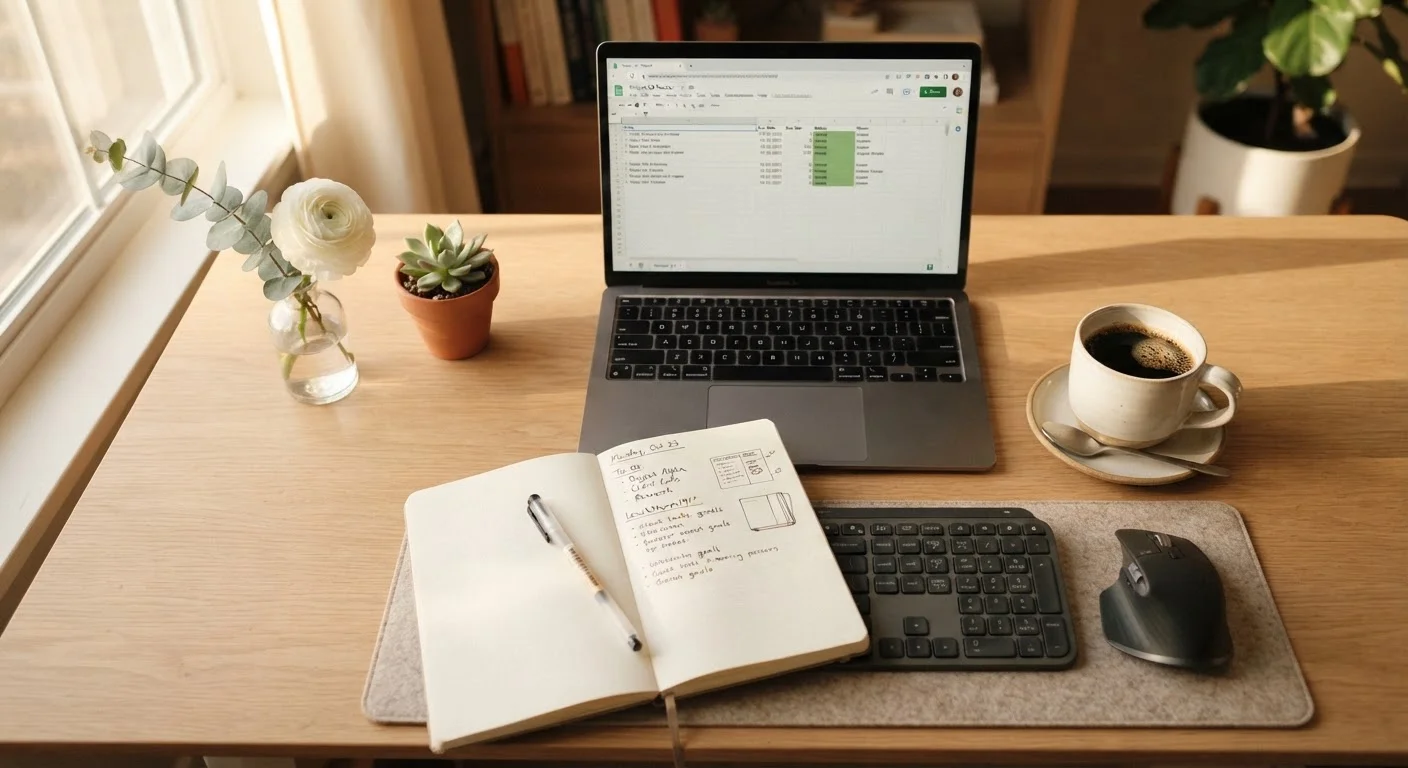
The weekly check-in requires minimal setup. Gather your tools once, and the recurring session stays friction-free.
What you will need
Bank or Credit Union Online Portal
Pull up recent transactions and current balances for all accounts.
Spreadsheet or Budgeting App
Record weekly spending totals and flag categories running high.
Recurring Bills List
A reference list of all subscriptions and automatic charges to verify against transactions.
Calendar or Reminder App
Schedule a fixed weekly slot so the review becomes a non-negotiable appointment.
Stack It With an Existing Habit
Behavioral research consistently shows that linking a new habit to an existing one dramatically improves follow-through. Try pairing your money check-in with Sunday morning coffee, a lunch break, or any standing weekly routine. The science of habit stacking applies just as well to financial routines as it does to exercise.
The Five-Step Weekly Routine
Follow these steps in order each week. Once the sequence becomes familiar, it will take 15 minutes or less.
Schedule a Fixed Weekly Slot
Pick one specific day and time each week and block it in your calendar as a recurring event. Sunday evening and Monday morning are popular choices because they bookend the week naturally. Treat it like a standing appointment — set a reminder and protect it from being bumped.
Pull Up All Account Balances
Log in to every checking, savings, and credit account. Note the current balance for each. You are not analyzing yet — just gathering a snapshot. Write the numbers down in your spreadsheet or app so you have a running record to compare week over week.
Review Transactions From the Past Seven Days
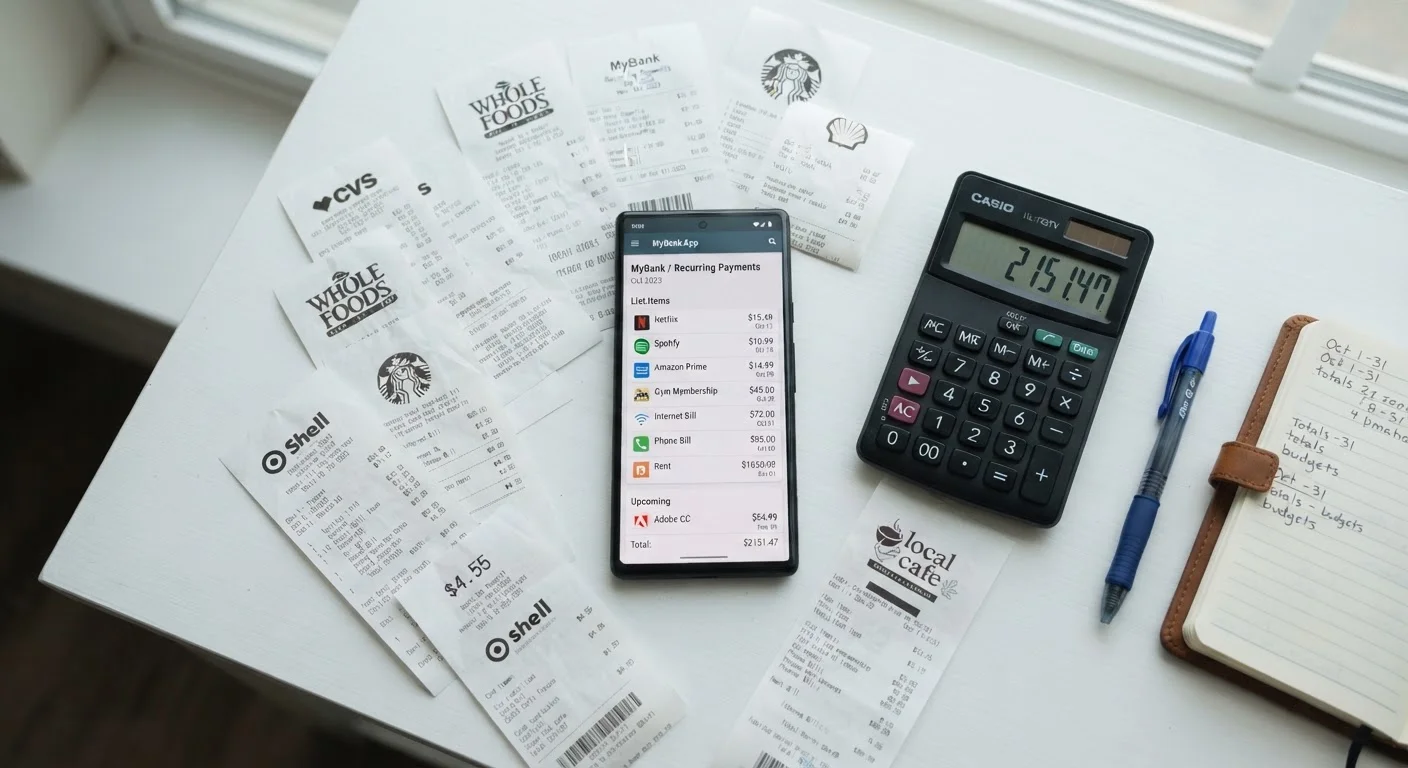
Scan every transaction posted since your last check-in. Categorize them loosely: essentials (groceries, utilities, transport), discretionary (dining, entertainment, shopping), and automatic charges (subscriptions, loan payments). You're looking for anything surprising — a charge you don't recognize, a category running hotter than usual, or a subscription you forgot you had.
Subscription creep is one of the most common sources of budget leaks. Flag any recurring charge you can't immediately explain.
Compare Spending to Your Weekly Target
Take your monthly discretionary budget and divide by 4.3 (the average number of weeks in a month) to get a rough weekly target. Compare this week's discretionary spending against that number. Are you on pace, ahead, or behind? A single over-budget week isn't a crisis — it's information that lets you adjust the next week before the month gets away from you.
Note One Action for the Coming Week
End every session by writing down one concrete adjustment. It could be as simple as: 'pack lunch three days this week,' 'cancel the streaming service I haven't used,' or 'transfer $25 to savings before Friday.' One specific action is more effective than a vague intention. This small step is how weekly awareness translates into real financial progress over time.
For a broader view, pair your weekly habit with a monthly budget review to see how the weeks are adding up and where to adjust your plan.
Don't Skip the Review When Things Feel Fine
Most overspending goes unnoticed during stretches when finances feel comfortable. That false sense of security is precisely when small leaks — forgotten subscriptions, recurring fees, impulse purchases — quietly accumulate. The weekly check-in is most valuable when everything seems okay.
Making the Habit Stick Long-Term
The first two or three weeks are the hardest. After that, the check-in becomes part of your rhythm and the cognitive load drops sharply. A few practices help sustain the habit past the initial effort:
- Keep records simple. A basic table with five columns — date, checking balance, credit balance, weekly spend, and one observation — is enough. Complexity is the enemy of consistency.
- Don't punish a bad week. If spending ran high, note why and move on. The goal of the check-in is awareness, not self-criticism.
- Layer in automation. The check-in pairs well with automated savings transfers, so there's less to manually manage each week. Automating your savings removes one decision from your plate entirely.
When you're ready to zoom out, use the monthly financial reset checklist to see how your weekly habits are shaping the bigger picture. Weekly and monthly reviews reinforce each other — one keeps you honest day-to-day, the other keeps your broader goals in view.
This article is for general informational and educational purposes only and does not constitute personalized financial, tax, investment, or legal advice. Consult a licensed financial professional for guidance suited to your individual circumstances.