The Choice Behind Every Purchase
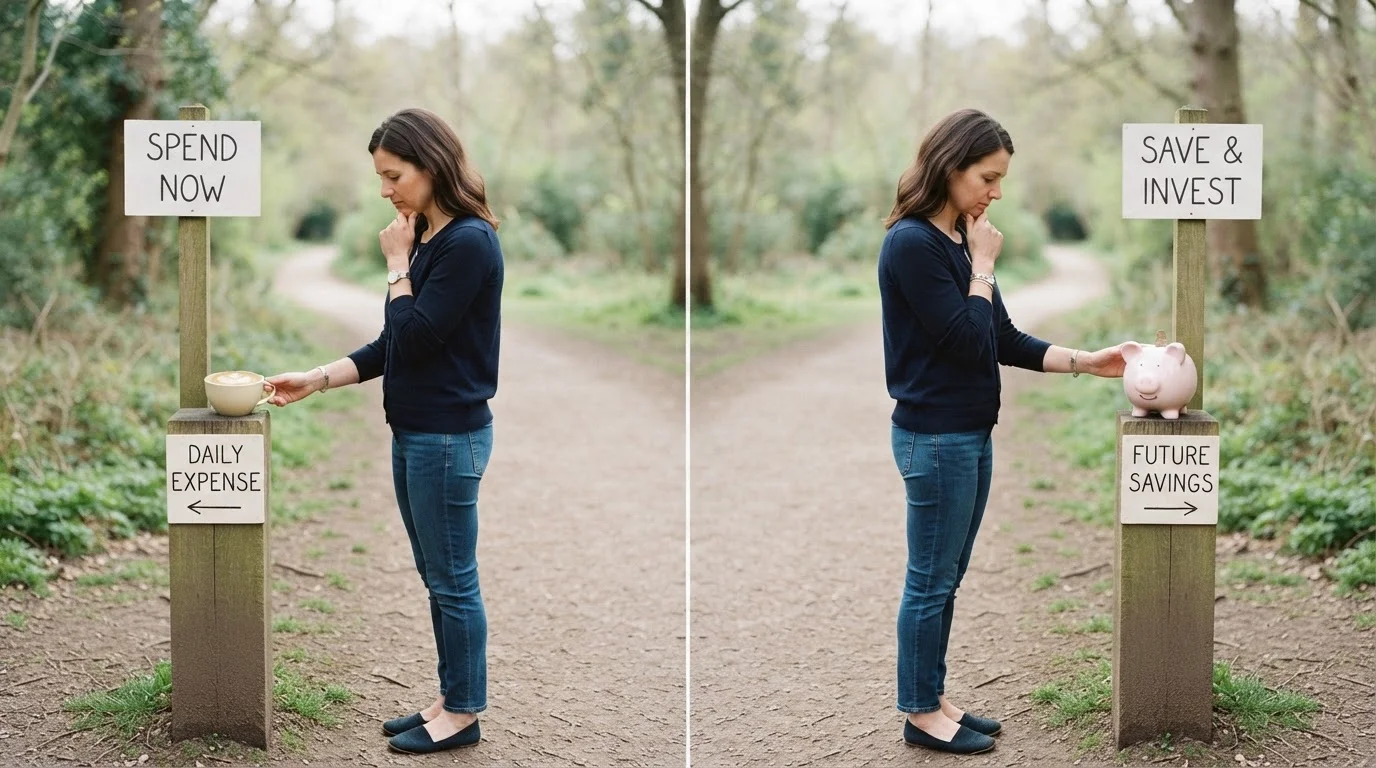
Most spending decisions feel like simple transactions — you want something, you pay for it, done. But underneath every purchase sits a quieter reality: choosing to spend money one way means not spending it another way. That foregone alternative is opportunity cost, and it's one of the most useful lenses in personal finance.
This isn't a complicated concept. It's the instinct behind every time someone thinks, "If I skip this, I could put that money toward something else." Formalizing that instinct — giving it a name and a framework — makes it far easier to apply consistently, especially with small, everyday spending where the stakes feel low but the cumulative effect is high.
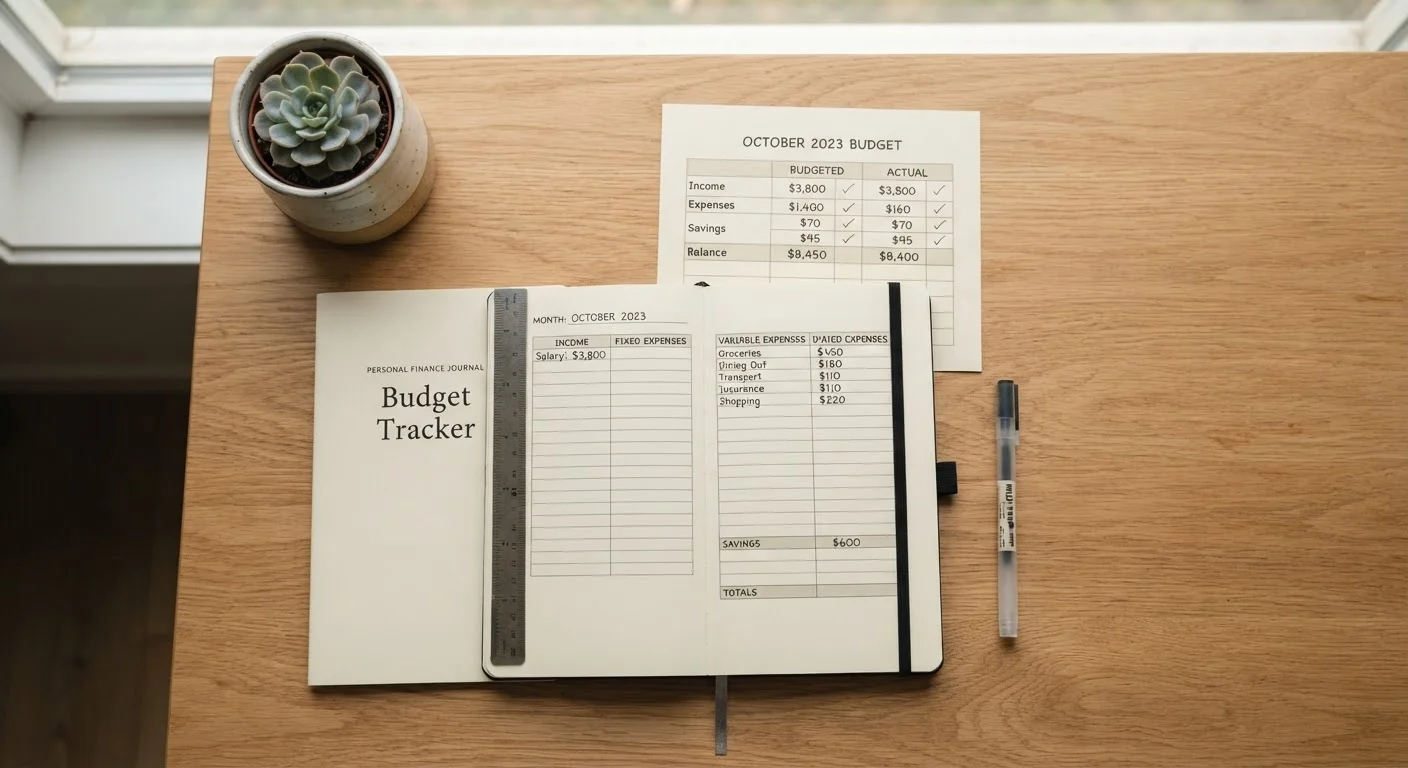
Understanding how money actually moves through your life is the foundation this concept builds on. Tracking your personal cash flow is often the first step to seeing where opportunity costs are silently accumulating.
$1,500+
Annual cost of a daily $6 coffee habit
Calculated at five days per week over 50 working weeks — illustrating how modest daily spending compounds into significant annual figures.
4 in 10
Americans who couldn't cover a $400 emergency
According to Federal Reserve survey data, a substantial share of households lack a basic liquidity buffer — often while maintaining discretionary spending habits with meaningful opportunity costs.
$219
Average monthly U.S. subscription spend per household
Research by C+R Research found that consumers consistently underestimate their subscription spending, often by half — a gap that reflects unexamined opportunity costs.
Why Small Decisions Carry the Biggest Hidden Costs
Large purchases — a car, a vacation, a home appliance — tend to get deliberate attention. We compare options, think it over, maybe sleep on it. Small, recurring expenses rarely get the same scrutiny, and that asymmetry is where opportunity cost does its quietest work.
A $12 streaming service, a $4 daily snack run, a $25 monthly subscription you barely use: individually, none of these feel significant. Collectively, they can easily represent $200 or more per month. Over a year, that's a meaningful sum that could have been directed toward an emergency fund, a high-interest debt balance, or a savings goal. Small daily expenses accumulate faster than most people expect — and opportunity cost is why the accumulation matters beyond the raw dollar figure.
Start With Recurring Costs, Not One-Time Purchases
Recurring expenses are where opportunity cost compounds most reliably. A one-time splurge has a single trade-off; a monthly subscription has that trade-off twelve times a year. Auditing recurring charges — subscriptions, memberships, automatic renewals — is one of the highest-leverage applications of opportunity cost thinking. The Budgeting Basics hub has practical frameworks for doing exactly this.
The key insight isn't that subscriptions or small treats are bad choices. It's that they are choices — and every choice has a trade-off worth seeing clearly.
Applying Opportunity Cost Without Overthinking It
You don't need to calculate compound interest on every latte to use this concept productively. A single practical question is enough: "What else could this money reasonably do?"
That question reframes spending from passive to active. Instead of asking "Can I afford this?" (often yes, technically), you're asking "Is this the best use of these dollars right now?" That's a more honest and more useful question.
For impulse or non-essential spending, building in a brief delay reinforces this thinking. A simple 24-hour pause before discretionary purchases gives opportunity cost thinking a chance to surface before the decision is made, not after.
Opportunity cost also applies beyond pure finance. Choosing between thrifting and fast fashion, for example, involves trade-offs in money, time, and even environmental impact — all forms of cost that deserve acknowledgment.
This article is for general informational and educational purposes only and does not constitute personalized financial advice. For guidance specific to your financial situation, consult a licensed financial professional.