Why Impulse Spending Is So Hard to Stop
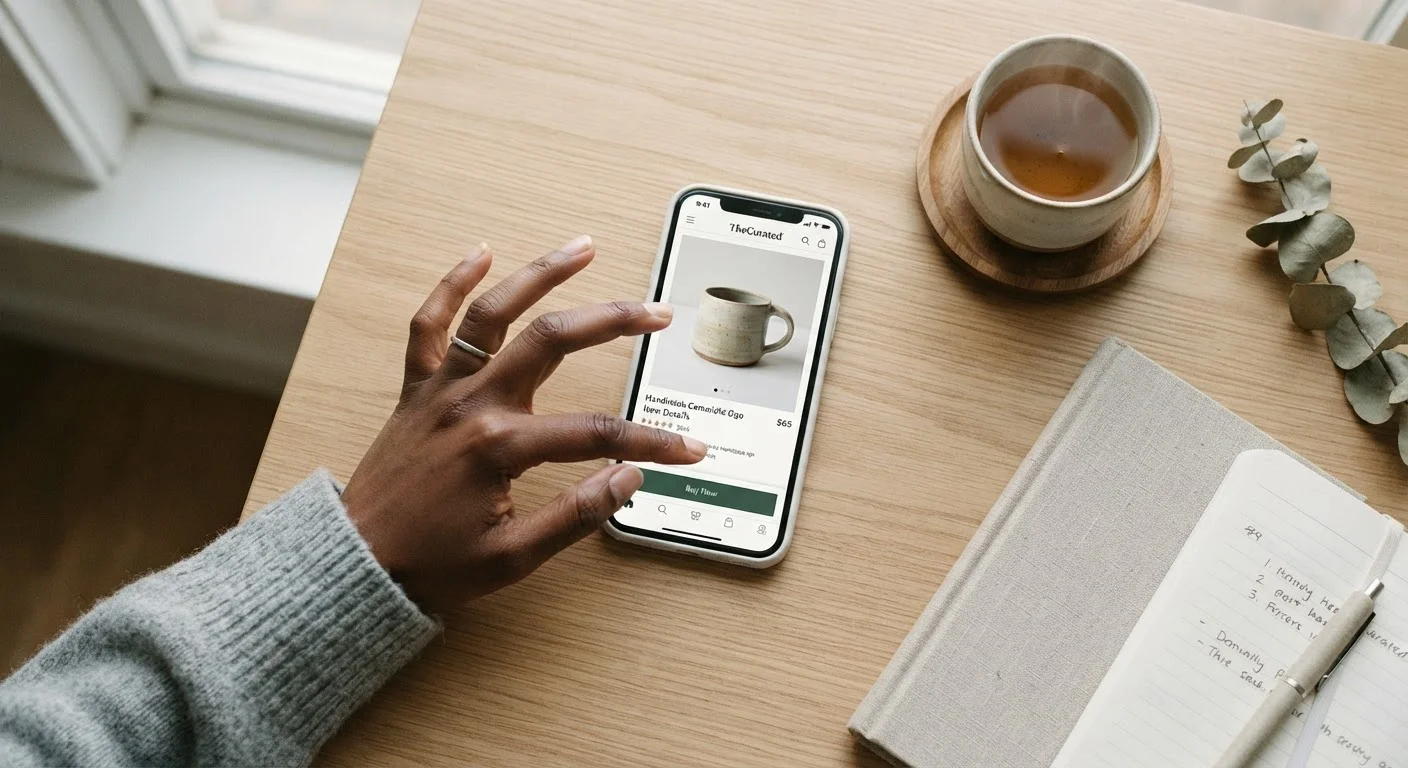
Impulse purchases are not a willpower failure — they're a predictable response to how retail environments are designed. Online platforms use personalized recommendations, countdown timers, and one-click checkout to compress the gap between desire and purchase. Physical stores place high-margin items near checkout lanes for the same reason.
The result is that spending decisions often happen before conscious evaluation kicks in. Research in behavioral economics consistently shows that people systematically underestimate how much their mood, environment, and framing influence financial choices. The 24-hour rule doesn't fight human psychology — it works with it by simply buying time.
Present Bias: Why 'Now' Always Feels Urgent
Present bias is a well-documented cognitive tendency where people assign disproportionately high value to immediate rewards compared to future ones. It's why a $50 item feels like a bargain in the moment but may feel like a questionable decision a week later. The 24-hour rule directly counters present bias by forcing a time gap between the emotional trigger and the financial action.
How the Rule Actually Works in Practice
The mechanics are straightforward. When you feel the urge to buy something that isn't on your planned shopping list and isn't an urgent necessity, you stop. You don't add it to your cart, you don't ask a salesperson to hold it — you walk away and set a reminder for the next day.
That 24-hour window serves several functions at once:
- Emotional reset: The excitement that accompanied the initial discovery usually fades, giving you a clearer read on whether the item genuinely fits your life.
- Budget check: You have time to review whether the purchase fits your current financial picture without the pressure of the moment.
- Comparison opportunity: A day is enough time to research alternatives or find a better price.
If you return the next day and still want the item — and it fits your budget — you buy it without guilt. That's the rule working exactly as intended.
Use a Wishlist as Your Waiting Room
Instead of abandoning an item entirely, add it to a wishlist or note-taking app with the date you found it. Revisit the list after 24 hours. This makes the rule easier to follow because you're not saying 'no' permanently — just 'not right now.' Items that stay on the list for weeks without urgency are strong candidates to remove entirely.
The Long-Term Financial Impact
The 24-hour rule's power comes from repetition, not any single transaction. Consider that even skipping a few unplanned purchases per month — each in the $20–$50 range — adds up to several hundred dollars annually that can be redirected to savings, debt repayment, or planned goals.
~$314
Average monthly U.S. impulse spend per consumer
A Slickdeals consumer survey estimated that Americans spend roughly $314 per month on impulse purchases on average, highlighting the scale of unplanned spending habits.
88%
Shoppers who have made an impulse purchase
Multiple retail surveys consistently find that the vast majority of consumers report making at least one unplanned purchase in a given month.
Beyond the raw numbers, the habit trains a more deliberate relationship with money. Over time, many people who practice it report that the default impulse to buy weakens, because the brain begins to associate purchasing with a considered decision rather than an immediate reaction. That shift alone has lasting value.
This article is for general informational and educational purposes only. It does not constitute personalized financial advice. Consult a qualified financial professional for guidance specific to your situation.