How Each Method Works
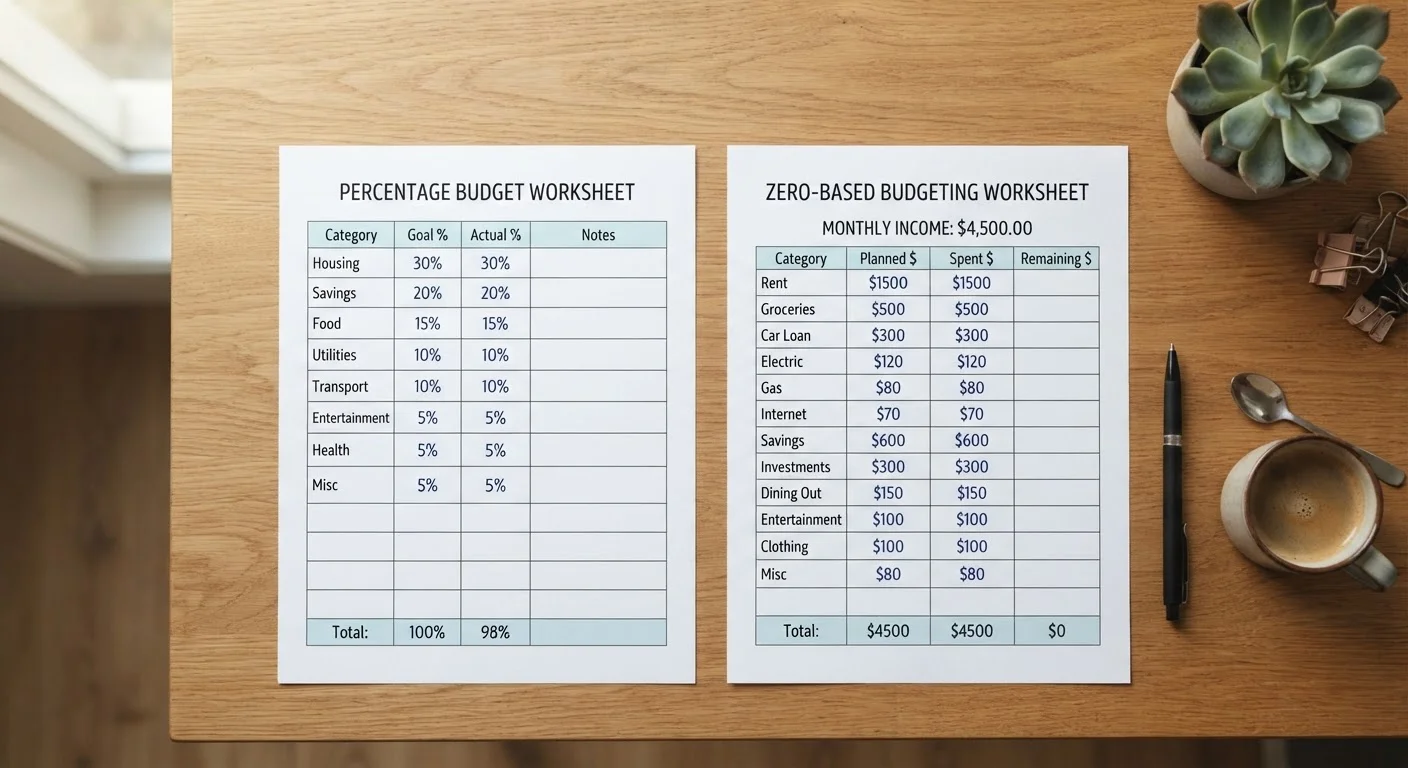
Zero-based budgeting (ZBB) starts with your income and ends at zero — not because you spend everything, but because every dollar is assigned a purpose before the month begins. Savings, debt payments, and discretionary spending are all deliberate line items. Nothing is left floating. For a deeper look at what this means in practice, see what zero-based budgeting actually means.
Percentage-based budgeting works differently. You divide income into broad categories using fixed ratios. The widely known 50/30/20 framework, for example, directs 50% toward needs, 30% toward wants, and 20% toward savings and debt. The percentages stay consistent; you don't rebuild the structure each month. The 50/30/20 rule explained covers this framework in detail if you want to explore one popular version.
| Criterion | Zero-Based Budgeting | Percentage-Based Budgeting |
|---|---|---|
| Starting point | Income minus every assigned dollar = $0 | Income split into fixed percentage categories |
| Monthly setup time | 30–60 minutes per month | Minimal after initial setup |
| Flexibility for variable income | High — rebuilt each month | Moderate — ratios stay fixed |
| Level of spending detail | Very granular, line by line | Broad category buckets |
| Best suited to | Active trackers, debt payoff phases | Consistent earners, long-term habits |
| Risk if not maintained | Budget collapses without monthly rebuild | Spending drift within broad categories |
Time, Effort, and Real-Life Fit
The most meaningful practical difference between the two methods is upfront and ongoing effort. Zero-based budgeting typically requires 30–60 minutes at the start of each month to map out income and expenses from scratch. Mid-month check-ins help catch overspending before it compounds. This level of engagement is genuinely useful — but it's also a real time commitment that not every household can sustain consistently.
Percentage-based budgeting is far lighter once the ratios are set. The framework doesn't change; only your income figures need updating. For households managing two incomes or complex shared expenses, that simplicity can matter significantly. Budgeting when two incomes are involved explores how couples can structure either approach.
~30%
Americans with a detailed monthly budget
Gallup polling has consistently found that fewer than one-third of U.S. adults maintain a detailed household budget, suggesting that ease of use is a genuine adoption barrier.
1 in 3
Households report living paycheck to paycheck
Federal Reserve survey data has regularly shown that a significant share of U.S. households carry little financial buffer, underscoring why a structured spending plan — in any form — can matter.
Variable income earners — freelancers, hourly workers with shifting schedules, or those with seasonal earnings — often find ZBB more practical, since they must adjust monthly regardless of which method they use. Fixed-salary earners may find percentage-based budgeting sufficiently accurate without the overhead.
Trade-Offs Worth Knowing
Zero-based budgeting's strength — granular control — is also its main risk. Budgets that feel overly restrictive are more likely to be abandoned. If spending categories are set too tightly, one unexpected expense can unravel the whole month's plan. Building a realistic buffer or "miscellaneous" line item into a ZBB is a common workaround that preserves the method's discipline without making it brittle.
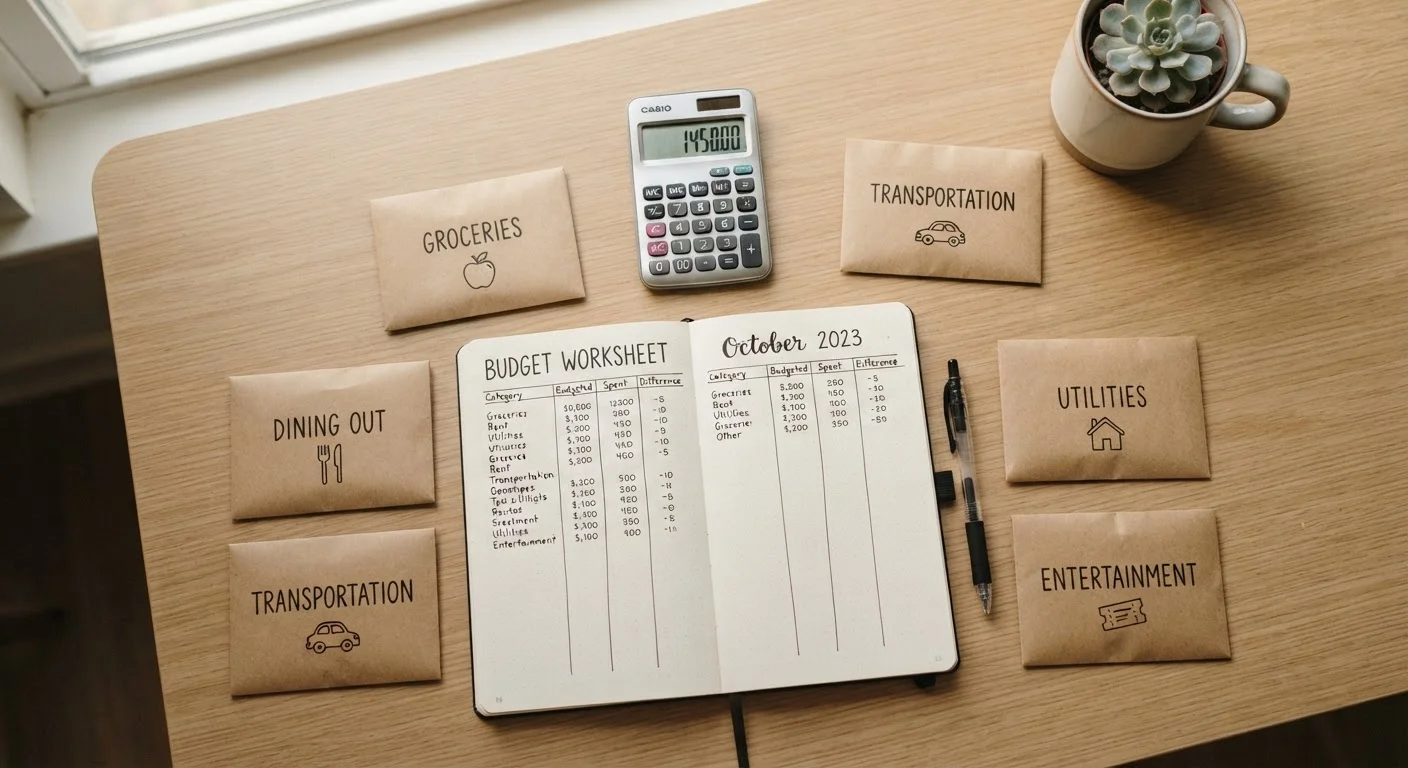
Percentage-based budgeting, by contrast, can mask problem spending within broad categories. A household where all discretionary spending lands inside "wants" at 30% might not realize how much of that is impulsive rather than intentional. The framework provides structure, but not the line-item visibility that reveals specific habits. If you're curious about a cash-based alternative that adds tactile accountability, envelope budgeting's honest pros and cons is worth reading alongside this comparison.
Neither Method Works Without Honest Numbers
Both zero-based and percentage-based budgeting depend on accurate income and expense figures. Underestimating irregular costs — car maintenance, medical copays, annual subscriptions — is the most common reason either method underperforms. Before committing to a framework, tracking actual spending for 30–60 days gives you a realistic baseline to build from.
It's also worth noting that many people combine elements of both. Using percentage targets to set overall category ceilings, then building zero-based line items within each category, is a hybrid approach some find practical. There's no rule requiring strict adherence to one method.
For more on common misconceptions that keep people from picking any system at all, budgeting myths that keep people from starting addresses several practical barriers.
This article is for general informational and educational purposes only and does not constitute personalised financial advice. Consult a qualified financial professional for guidance specific to your situation.