How the Three Categories Work
The 50/30/20 rule starts with your net income — what lands in your bank account after federal and state taxes and any pre-tax deductions. From there, it allocates spending across three buckets.
50% — Needs
This half covers expenses you can't reasonably eliminate: housing, utilities, groceries, transportation to work, health insurance, and minimum payments on any debts. These are obligations, not preferences. If your rent alone is 45% of your take-home pay, the rule will immediately highlight a structural strain worth addressing.
30% — Wants
This portion covers discretionary spending — things that improve your quality of life but aren't strictly required. Dining out, entertainment subscriptions, clothing beyond basics, hobbies, and travel all belong here. It's a meaningful category because it avoids the all-or-nothing thinking that causes many budgets to fail. You're allowed to enjoy your money; this rule just puts a ceiling on it.
20% — Savings and Debt Repayment
The final fifth goes toward building financial resilience. That includes contributions to an emergency fund, retirement accounts, and any debt payments above the required minimum. If you carry high-interest debt, many financial educators suggest prioritizing that before putting additional money into savings — but the decision depends on your specific situation. Consult a licensed financial adviser if you're unsure how to allocate within this bucket.
Start With Last Month's Real Numbers
Before applying any budget framework, pull up your last 30 days of bank and credit card statements. Categorize each transaction as a need, want, or savings contribution. This gives you an honest baseline rather than an optimistic estimate — and makes any gaps between your current habits and your target percentages immediately visible.
Applying the Rule to Your Real Income
The math is straightforward. If your monthly take-home pay is $4,000, the rule suggests:
- $2,000 for needs (50%)
- $1,200 for wants (30%)
- $800 for savings and debt repayment (20%)
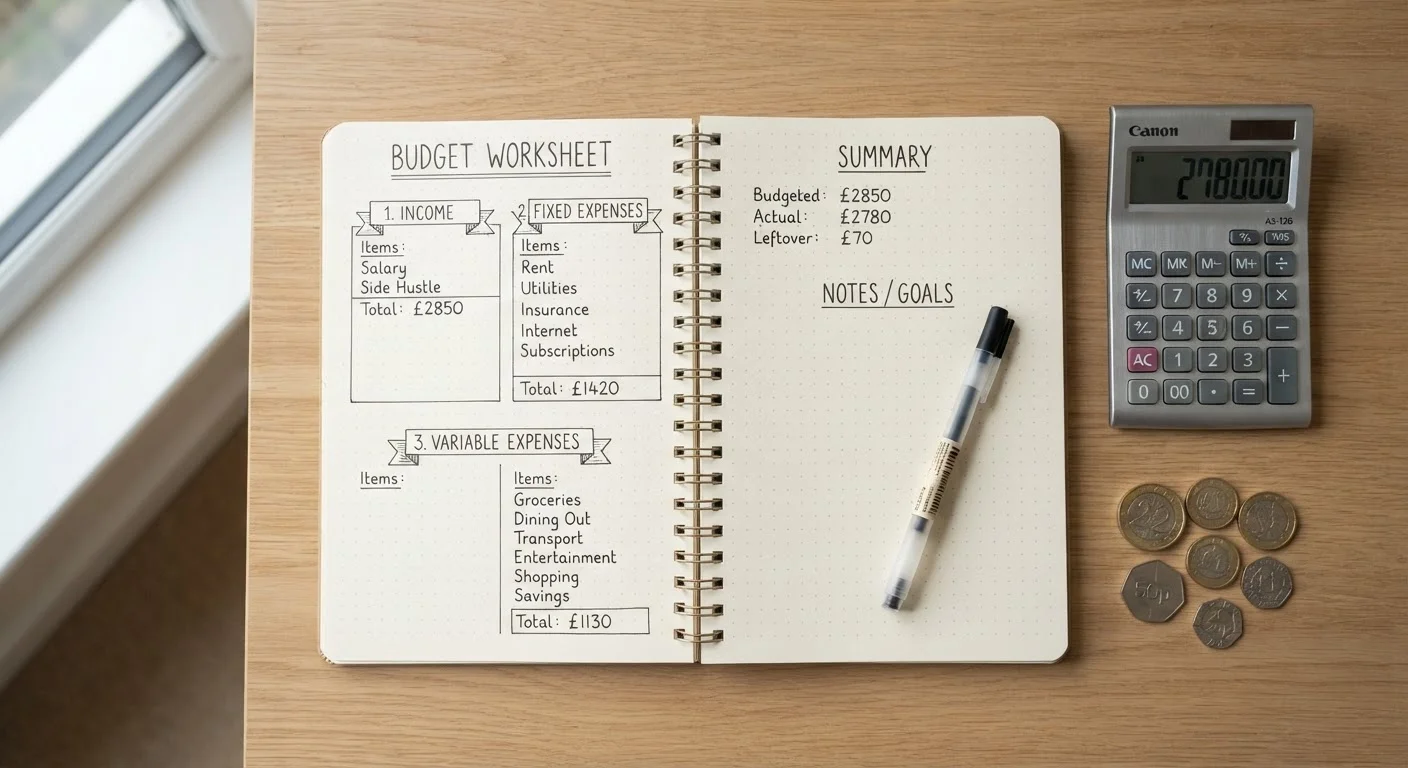
Start by adding up your fixed monthly obligations — rent or mortgage, car payment, insurance premiums, utility averages, and minimum debt payments. Compare that total to your 50% ceiling. If it's under, you have breathing room. If it's over, you've identified where to focus first.
Next, track a recent month of discretionary spending. Most people underestimate their wants category until they look at actual bank statements. The exercise itself is clarifying — not to induce guilt, but to give you accurate data to work with.
57%
Americans without $1,000 emergency savings
A Bankrate survey found that more than half of U.S. adults could not cover a $1,000 emergency from savings, underscoring why the 20% savings category matters.
33%
Average share of income spent on housing
The U.S. Bureau of Labor Statistics Consumer Expenditure Survey consistently finds that housing represents the largest single expense category for American households.
Once you have both figures, the gap between your current allocation and the 50/30/20 targets tells you what, if anything, needs to shift. That might mean reducing a fixed cost, cutting back on discretionary spending, or adjusting the percentages to match your actual circumstances. The framework is a benchmark, not a mandate.
Where the Rule Works — and Where It Doesn't
The 50/30/20 rule works best for people with moderate, stable incomes in areas where housing costs don't dominate the budget. It's intentionally simple, which makes it easier to stick to than detailed category-by-category tracking.
But it has real limits. In cities with high rents, housing alone can consume 40–50% of take-home pay before any other need is covered. For lower-income households, needs may structurally exceed 50%, leaving little room for savings or enjoyment. The rule also doesn't distinguish between urgent debt repayment and long-term investing, which can matter a great deal depending on interest rates and individual goals.
The Rule Assumes Stable, Predictable Income
Freelancers, gig workers, and anyone with variable monthly income may find percentage-based budgeting harder to apply consistently. When your paycheck changes from month to month, consider budgeting off your lowest typical monthly income and treating any additional earnings as a bonus directed toward savings or debt. This approach protects you during slower months without requiring a complete budget rebuild each time.
If you find that the framework doesn't fit your situation, you're not doing anything wrong — the percentages aren't universal. Some people adapt it to a 60/20/20 or 70/20/10 split to reflect their reality. What matters is that your spending is intentional, and that some portion consistently goes toward stability. For a deeper look at where this framework breaks down, see why the 50/30/20 rule doesn't work for everyone.
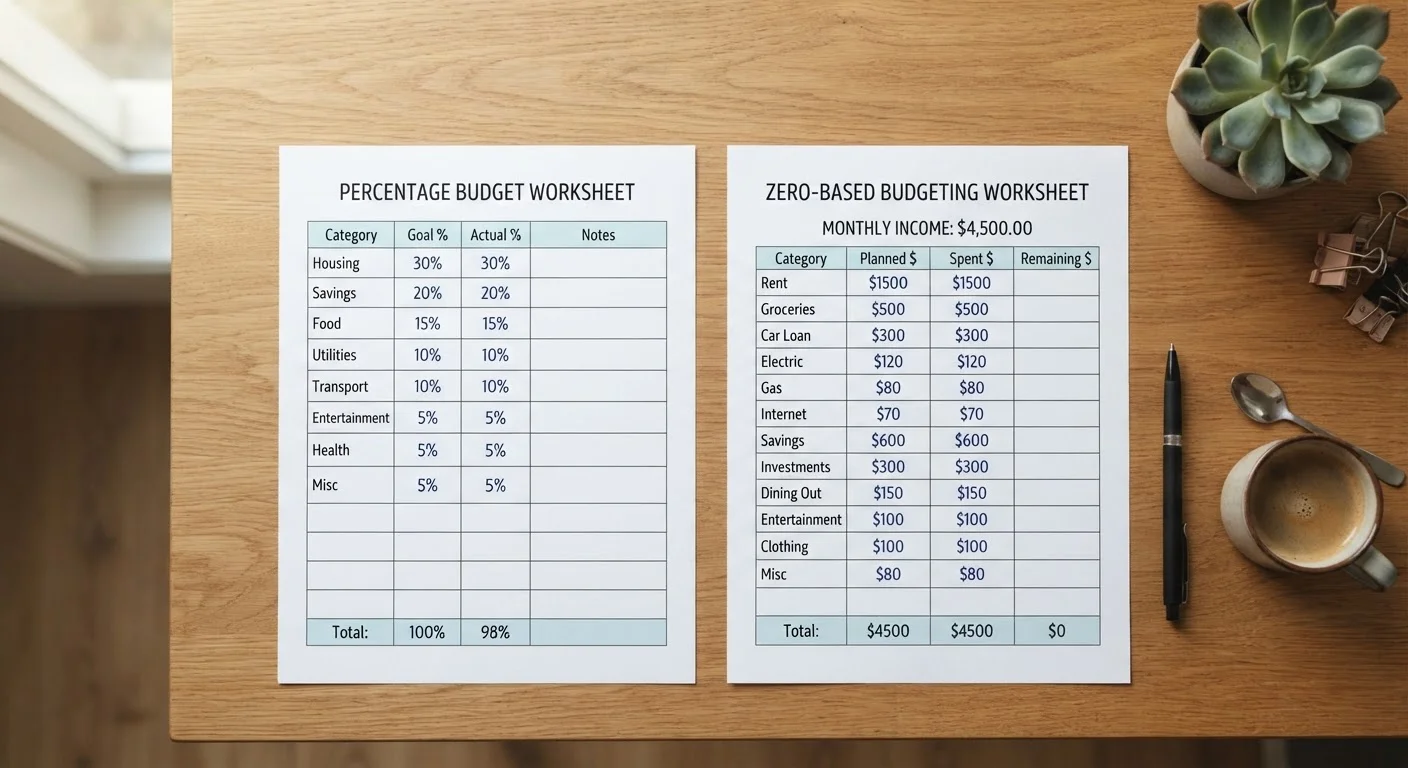
If you're comparing this approach to other frameworks, our overview of zero-based budgeting vs. percentage-based budgeting walks through how each method differs and who tends to benefit most from each.
Once you've set your percentages, building a regular review habit matters. Our guide to setting up a monthly budget review explains what to check each month and how to adjust without starting from scratch.
This article is for general informational and educational purposes only and does not constitute personalized financial advice. Please consult a licensed financial adviser before making decisions specific to your financial situation.