How Envelope Budgeting Actually Works
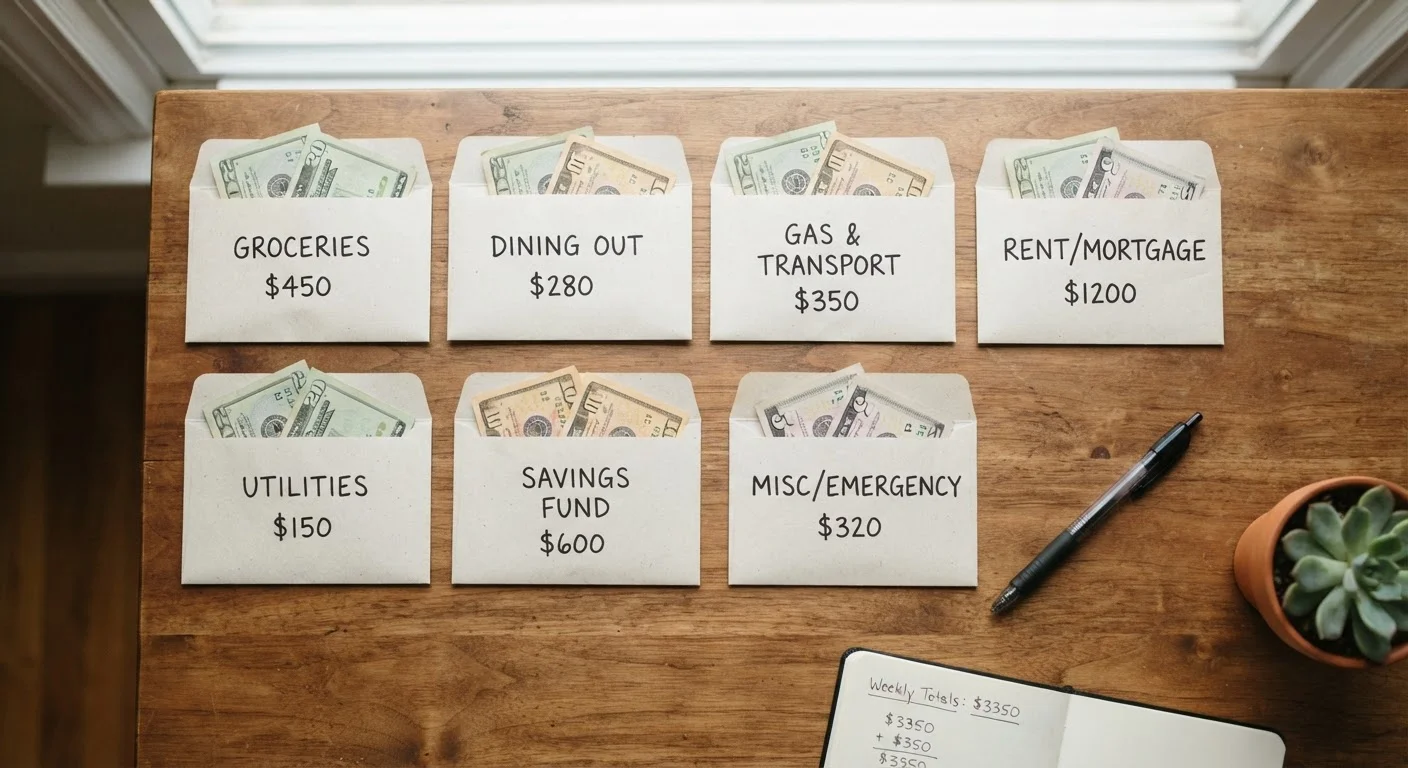
Envelope budgeting is straightforward in concept: at the start of each pay period, you withdraw cash and divide it into labeled envelopes — one for groceries, one for gas, one for dining out, and so on. When an envelope is empty, spending in that category stops until the next cycle.
The system was popularized long before digital banking existed, but it remains widely practiced today. Personal finance educators often recommend it as a starting point for people who feel disconnected from where their money goes. The core logic is simple: cash is finite and visible. When you hand over bills, you feel the transaction in a way a card swipe rarely replicates.
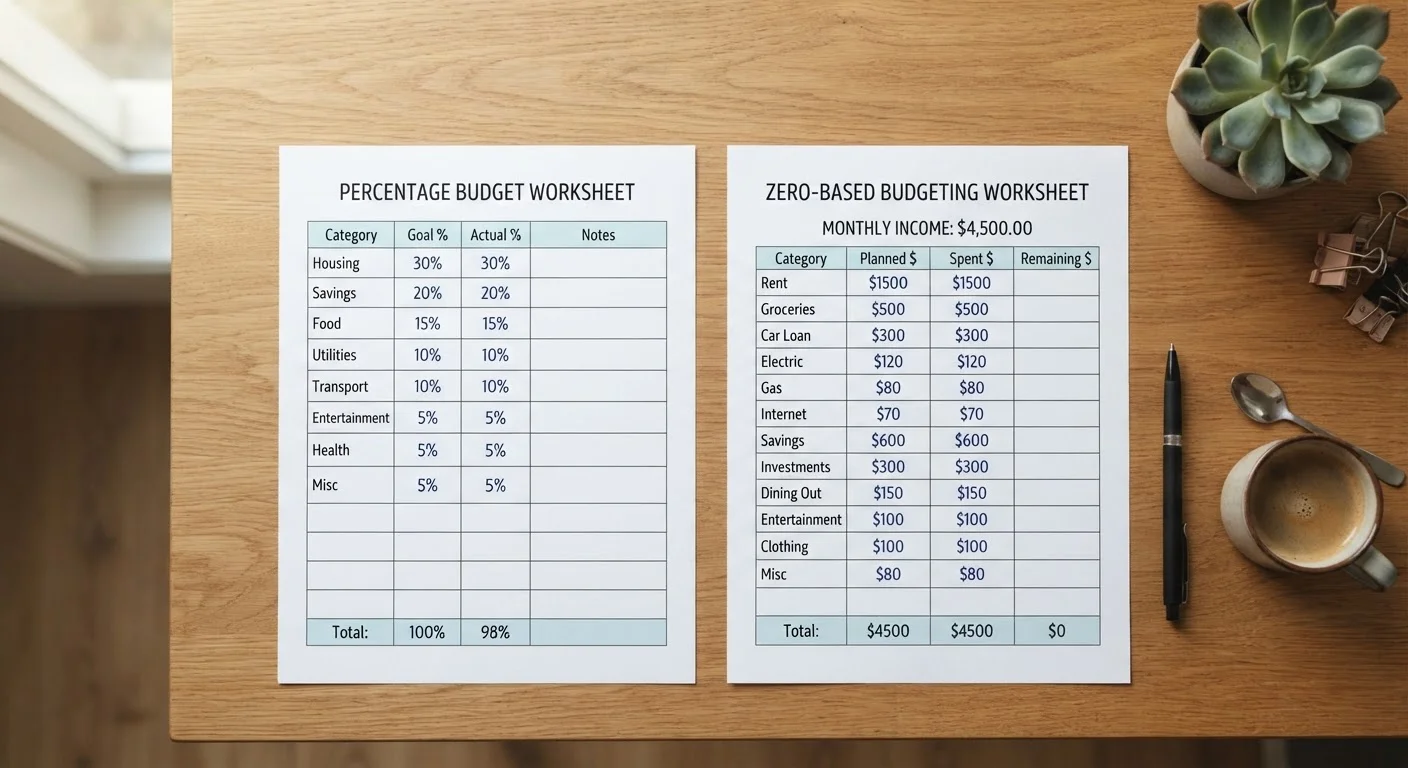
For a broader look at how envelope budgeting compares to other structured frameworks, see our comparison of zero-based and percentage-based budgeting.
The Real Advantages
The envelope method has earned its reputation through several concrete strengths:
Creates immediate, tangible spending awareness
Handling physical cash activates a psychological cost that card payments tend to mute. Research in behavioral economics consistently finds that cash payments feel more 'real,' which can reduce impulse purchases.
Hard spending limits prevent category overspending
Once the grocery envelope is empty, the decision is made for you. This removes the daily negotiation with yourself that leads to overspending in flexible categories.
No app, subscription, or technology required
The entire system runs on paper envelopes and cash — accessible to anyone regardless of smartphone ownership, internet access, or comfort with financial software.
Helps build the habit of pre-allocating income
Assigning money to categories before spending it is the foundation of proactive budgeting. Envelope budgeting makes this concrete, which helps people internalize the habit over time.
Easy to understand and explain to a household
The system is intuitive enough that partners and family members can participate without a learning curve, making it useful for shared household finances.
Taken together, these advantages explain why the method still resonates decades after digital banking became standard. The physical constraint is the point — it's a feature, not a limitation.
Where It Tends to Break Down
Honest evaluation means acknowledging real drawbacks, and envelope budgeting has several that matter in a modern financial life:
Awkward and impractical in digital payment environments
Online shopping, subscription services, and tap-to-pay terminals don't accept cash. Using envelopes in a largely cashless life requires constant workarounds that many people eventually abandon.
Cash handling carries security risks
Carrying significant amounts of cash or storing it at home creates loss and theft exposure that a bank account doesn't. Unlike card transactions, lost or stolen cash is typically unrecoverable.
Difficult to manage with variable or irregular income
The system assumes a predictable pay cycle that allows for upfront allocation. Freelancers, contract workers, or anyone with fluctuating income often find the rigid structure difficult to maintain.
Misses out on card rewards and purchase protections
Paying cash means forgoing the fraud protection, purchase insurance, and rewards points that credit and debit cards offer — a real financial trade-off for disciplined card users.
Requires consistent cash withdrawal discipline
The system only works if you actually withdraw and allocate cash on schedule. Skipping a pay period or withdrawing 'a little extra' undermines the entire structure quickly.
Digital Envelope Variations Exist
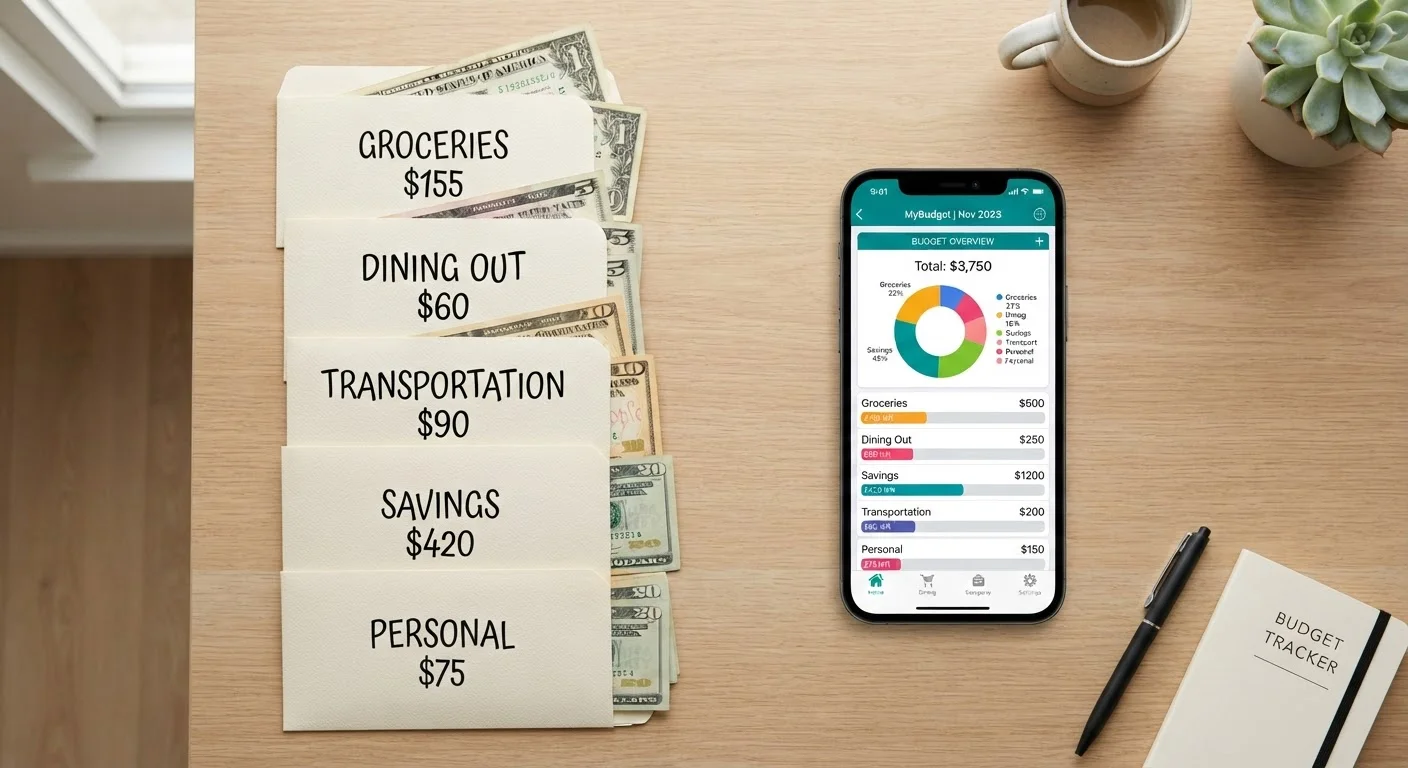
Several budgeting apps replicate the envelope method digitally — assigning virtual 'envelopes' to spending categories linked to your bank account. These tools preserve the allocation logic while working with modern payment methods. They involve trade-offs of their own, including subscription costs and the loss of physical cash friction, but they're worth considering if cash handling is a barrier.
For people who find cash envelopes impractical but want similar spending discipline, cash envelopes vs. digital budgeting apps explores how both approaches stack up in daily use.
Who Gets the Most Out of This System
Envelope budgeting tends to work best in specific circumstances. If you have a predictable monthly income, a tendency to overspend on variable categories, and a preference for tangible financial tools, it's a natural fit. People rebuilding spending habits after debt or financial difficulty also often find the physical accountability helpful during the reset period.
It's less well-suited for freelancers or gig workers with irregular income, households where most spending is digital or subscription-based, or people who find cash management stressful or unsafe.
~33%
Americans with no monthly written budget
According to Gallup polling data, roughly one-third of U.S. adults report not following any formal household budget, suggesting significant room for structured systems like envelope budgeting to make an impact.
~$1,500
Average monthly discretionary spending per household
U.S. Bureau of Labor Statistics Consumer Expenditure data indicates that variable discretionary categories — food away from home, entertainment, apparel — represent a meaningful share of household budgets where envelope controls can apply.
A practical middle ground: use physical envelopes only for the two or three categories where you most often overspend, and manage fixed bills digitally. This preserves the behavioral benefit without forcing an all-or-nothing cash lifestyle.
This article is for general informational purposes only and does not constitute personalized financial advice. Consult a qualified financial professional for guidance tailored to your specific situation.