What Makes a Protein Source 'High Quality'?
Not all protein is created equal. Nutritional scientists assess protein quality using two main frameworks: amino acid profile and digestibility. Essential amino acids — nine in total — cannot be made by the human body and must come from food. A protein source that supplies all nine in adequate ratios is called a complete protein.
Digestibility matters just as much. The DIAAS, the gold-standard measurement used by the Food and Agriculture Organization, accounts for how much of a protein's amino acids your gut actually absorbs. Animal proteins like eggs, dairy, and meat tend to score high on this measure. Many plant proteins score somewhat lower — though preparation methods like soaking, sprouting, or cooking can improve absorption meaningfully.
Understanding these two dimensions helps cut through the noise. As you evaluate your own plate, consider both completeness and digestibility together rather than looking at grams of protein alone. For a broader view of how protein fits into everyday eating, see our weekly grocery list audit for guidance on nutritional coverage.
| Animal Protein | Plant Protein | |
|---|---|---|
| Amino acid completeness | Complete (all 9 essential AAs) | Often incomplete; soy and quinoa are exceptions |
| Digestibility (DIAAS) | Generally high (0.9–1.2) | Moderate to high (0.5–1.0 depending on source) |
| Fiber content | None | High in legumes, grains, seeds |
| Key micronutrients provided | B12, heme iron, zinc, calcium | Folate, magnesium, potassium, phytonutrients |
| Nutrients requiring attention | Saturated fat in some sources | B12, non-heme iron, zinc, calcium |
| Cost (general range) | Varies widely; meat can be higher cost | Legumes and grains are often lower cost |
| Environmental footprint | Generally higher, especially red meat | Generally lower |
Animal Proteins: Strengths and Considerations
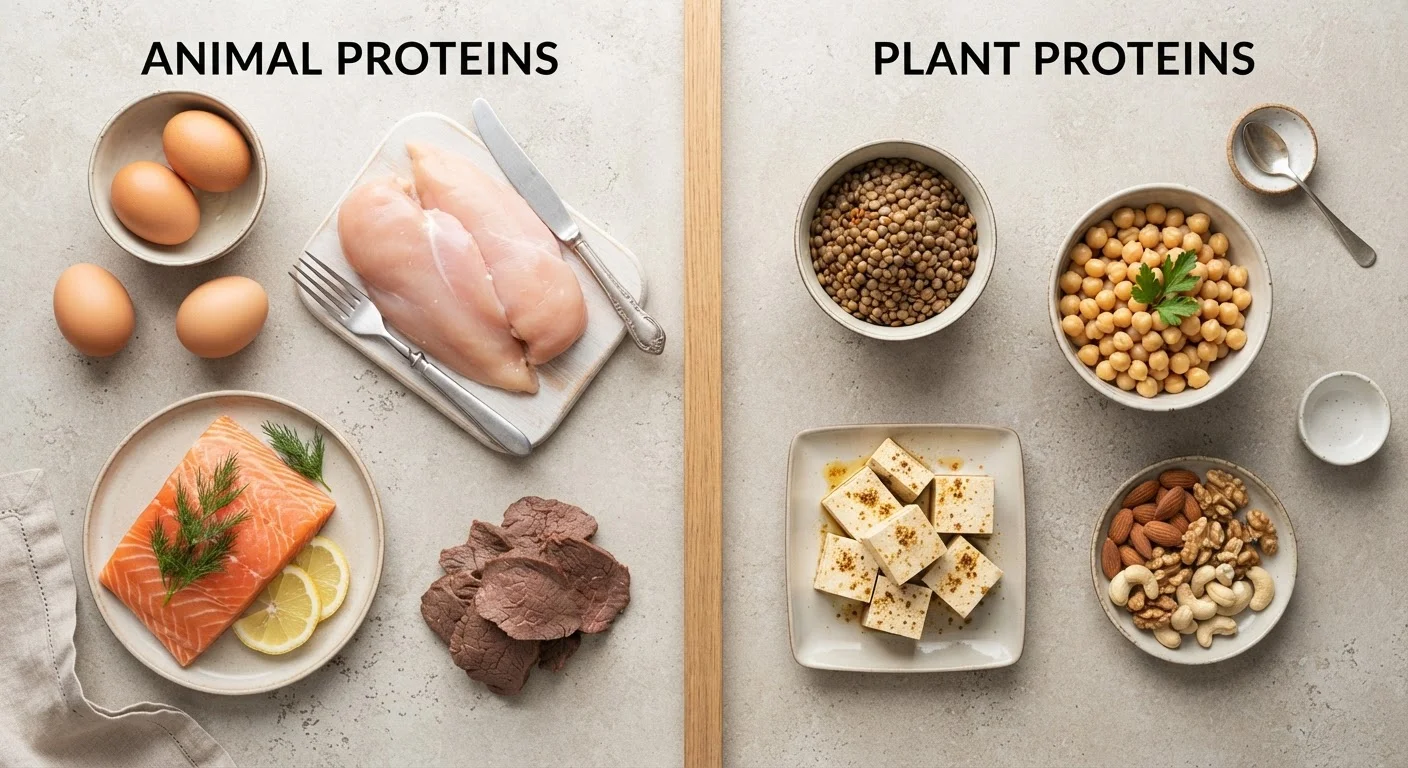
Animal-based proteins — including meat, poultry, fish, eggs, and dairy — are reliably complete and highly digestible. Eggs, for instance, are frequently used as the reference food in protein quality research because of their near-ideal amino acid profile and high DIAAS score. Fatty fish like salmon offer protein alongside omega-3 fatty acids, which support cardiovascular and cognitive health according to established research.
That said, some animal protein sources — particularly processed meats and high-fat red meats — are associated in observational studies with increased cardiovascular risk when consumed in high quantities. Lean options like skinless poultry, low-fat dairy, and seafood are generally considered more favorable choices by major dietary guidelines. Environmental and ethical considerations also factor into many Americans' food decisions, though those are personal values outside the scope of nutrition science alone.
Choosing Leaner Animal Protein Options
If animal proteins are a regular part of your diet, leaner options like skinless poultry, eggs, low-fat dairy, and fatty fish tend to align more closely with widely accepted dietary guidelines. Limiting heavily processed meats such as deli cuts and sausages is a common recommendation from major nutrition and public health organizations. Cooking method also matters — baking, grilling, or steaming preserves protein quality better than high-heat frying.
Plant Proteins: Strengths and Considerations
Legumes, tofu, tempeh, edamame, quinoa, hemp seeds, and certain grains provide meaningful protein alongside fiber, antioxidants, and phytonutrients not found in animal foods. Quinoa and soy are notable exceptions in the plant world — both are considered complete proteins with reasonably high digestibility scores.
The traditional concern about plant proteins being 'incomplete' has been somewhat overstated in public discourse. While individual plant sources may lack sufficient amounts of one or two essential amino acids, eating a variety of plant proteins across the day — rice and beans, hummus and whole-grain bread, lentil soup with seeds — can achieve an adequate full amino acid profile. Research supports this, and major dietetics organizations, including the Academy of Nutrition and Dietetics, affirm that well-planned plant-based diets can meet all protein needs.
One area requiring attention: plant-based eaters should monitor intake of vitamin B12, iron, zinc, and calcium, which are less bioavailable from plant sources. Consulting a registered dietitian can help identify any gaps. For budget-conscious readers, plant proteins also tend to be cost-effective — worth exploring in our guide on eating well on a budget.
~0.8g/kg
Daily protein recommendation per body weight
The U.S. Dietary Reference Intake sets the Recommended Dietary Allowance for protein at approximately 0.8 grams per kilogram of body weight for healthy adults.
32%
Americans not meeting protein variety targets
USDA dietary data suggests a significant share of Americans rely heavily on a narrow set of protein sources, missing the nutritional diversity that variety provides.
Practical Guidance for Building a Protein-Smart Plate
Most Americans don't need to choose one camp exclusively. The most evidence-grounded approach involves drawing from a range of sources — animal and plant — to maximize nutritional coverage while accommodating personal preference, budget, and health goals. The whole foods vs. processed foods research is also relevant here: minimally processed proteins from either category generally outperform heavily processed alternatives.
- Vary your sources: Rotate between legumes, fish, poultry, dairy, eggs, and plant-based options throughout the week.
- Pair strategically: Combine plant proteins that complement each other's amino acid profiles (e.g., grains with legumes).
- Watch processing: Choose minimally processed options when possible — whole beans over protein isolate powders, for example — to retain co-occurring nutrients.
- Adjust for your needs: Older adults, athletes, pregnant individuals, and those with chronic conditions may have different protein requirements. Speak with a healthcare provider or dietitian for personalized guidance.
This article is for general informational and educational purposes only. It is not a substitute for professional medical or dietary advice. Please consult a qualified healthcare provider or registered dietitian before making significant changes to your diet.