
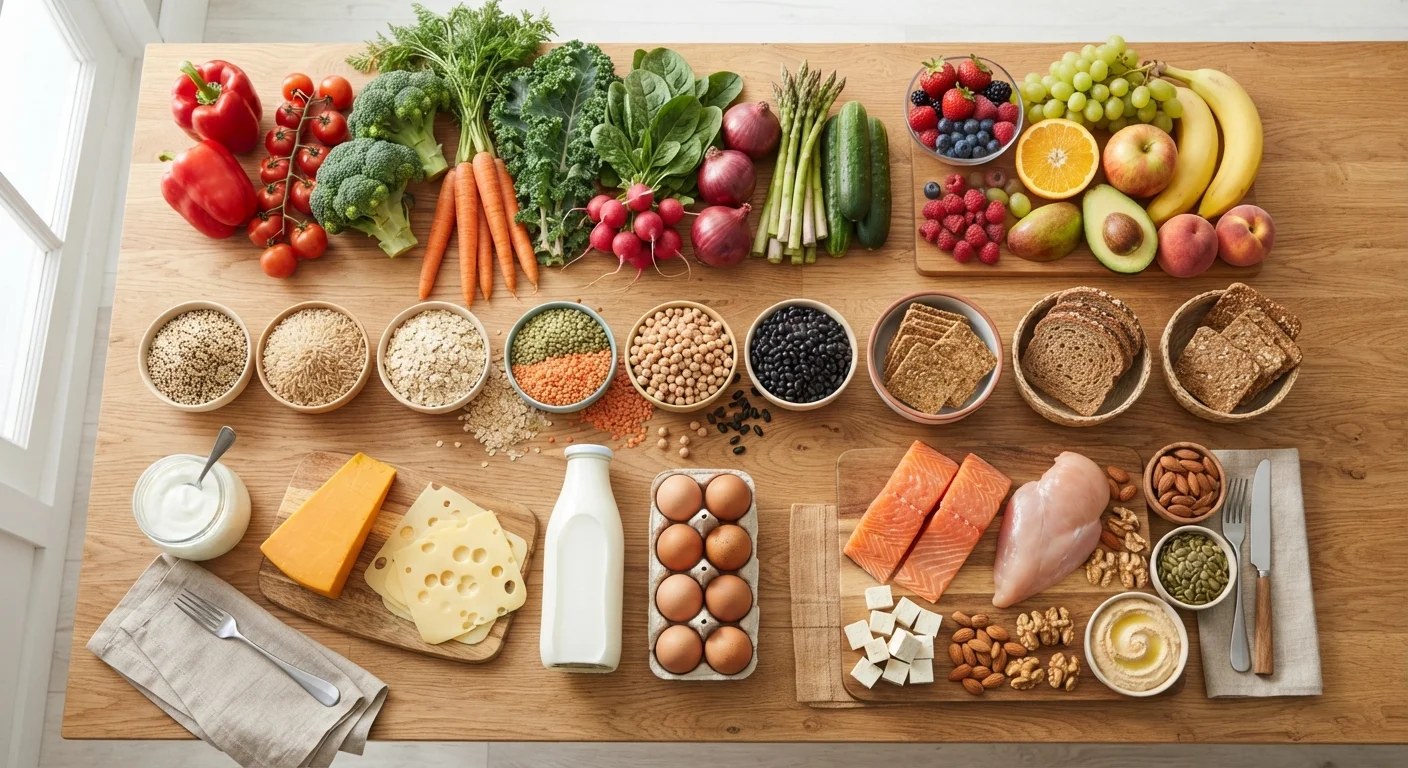
Why Auditing Your Grocery List Matters
Most of us shop on autopilot. We grab the same items week after week, rarely stepping back to ask whether what's landing in our cart actually adds up to a nutritionally sound diet. According to the USDA's Dietary Guidelines for Americans, the majority of U.S. adults fall short on vegetables, fruits, dairy, and whole grains — while consistently overconsuming sodium, added sugars, and saturated fat.
A grocery list audit isn't about following a rigid meal plan or chasing dietary perfection. It's a quick, practical check that helps you notice patterns: Are you reliably buying protein sources? Do you have a vegetable for every color category? Is there anything on your list supporting gut health or bone health?
Think of it as the nutritional equivalent of a weekly check-in — similar in spirit to the kind of reflective review described in our personal mental wellness audit. Small, consistent awareness tends to produce better outcomes than occasional overhauls.
Use the checklist below with your current grocery list open in front of you. Work through each group and note any categories you're consistently skipping.
Fruits & Vegetables
Whole Grains & Complex Carbohydrates
Protein Sources
Dairy & Calcium-Rich Alternatives
Healthy Fats
Hydration & Beverages
Nutritional Red Flags to Spot
Tools to Make the Audit Easier
You don't need special equipment to audit your grocery list, but a few simple resources can make the process faster and more accurate.
Current Grocery List
Your existing list is the primary input for this audit — have it open alongside the checklist.
USDA MyPlate Food Groups Reference
The USDA's MyPlate resource defines serving recommendations across all five food groups and is useful for comparing your list against federal dietary guidance.
Nutrition Facts Labels
Use labels on packaged items to check fiber content, sodium, added sugars, and vitamins when assessing whether an item fills a nutritional gap.
Registered Dietitian
A licensed dietitian can personalize this general checklist for specific health conditions, dietary restrictions, or life stages.
Reading the Results: What Gaps Mean
After working through the checklist, you'll likely find a few categories you're reliably covering and one or two you consistently miss. That's normal and useful information — not a reason for concern.
One Week's List Isn't the Full Picture
A single grocery haul rarely reflects your complete diet — you may have pantry staples, freezer items, or restaurant meals that contribute meaningfully to your nutrition. Use this audit to spot recurring patterns over several weeks rather than drawing firm conclusions from a single list. If you're concerned about a specific nutrient deficiency, a blood panel ordered by your healthcare provider is the most reliable way to assess your actual status.
If you're missing protein variety, consider whether you're relying on a single source (for example, chicken only). Our comparison of animal and plant protein sources can help you broaden your options without overhauling your routine.
If hydration-supporting foods are absent — things like water-rich vegetables, fruits, or beverages beyond sugary drinks — that's worth attention. The science of hydration goes beyond simply drinking eight glasses a day, and food contributes meaningfully to fluid intake.
Budget concerns are one of the most common reasons nutritious foods get dropped from grocery lists. If cost is a barrier, evidence-based strategies for eating well on a budget can help you fill gaps without increasing your spend significantly.
This article is for general informational and educational purposes only and does not constitute medical or nutritional advice. Individual needs vary based on age, health status, activity level, and other factors. Please consult a registered dietitian or qualified healthcare professional for guidance tailored to your personal health situation.