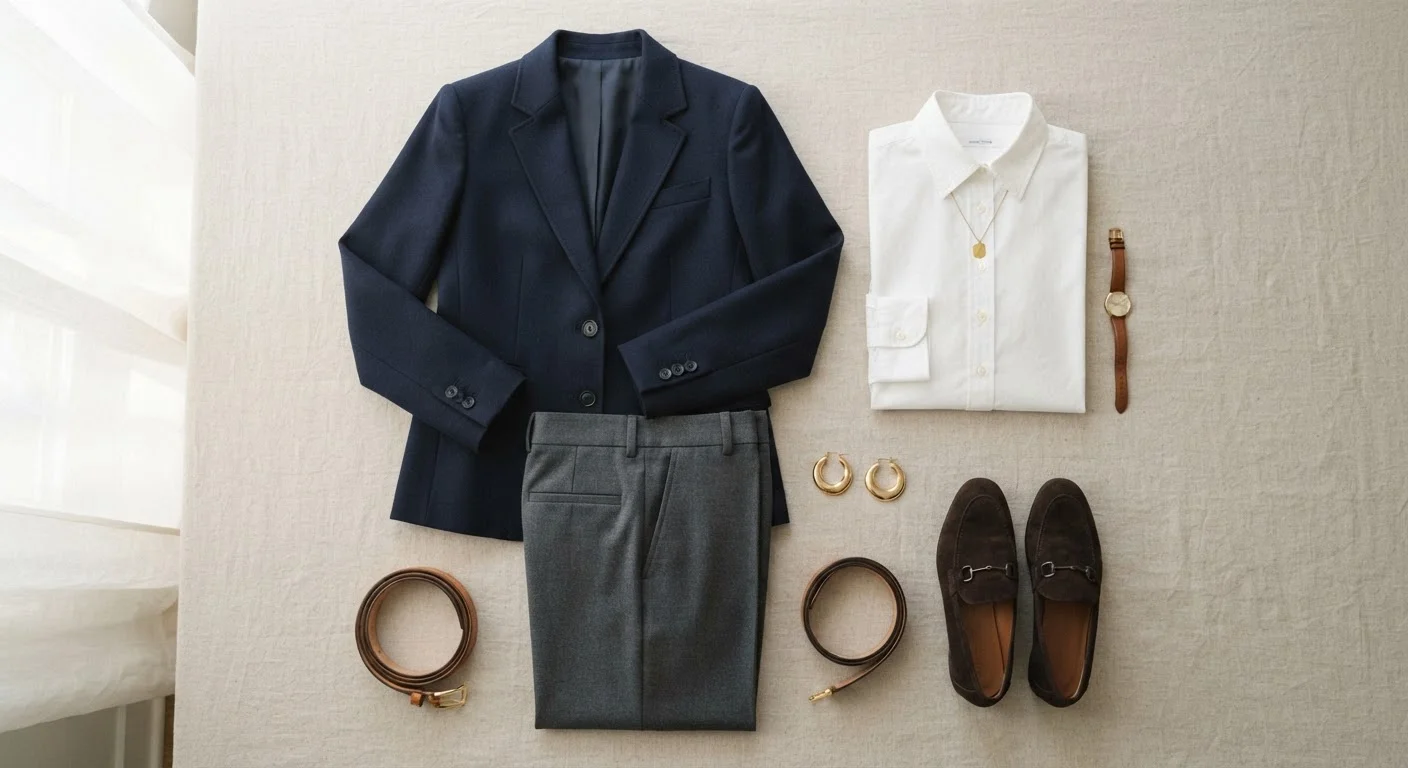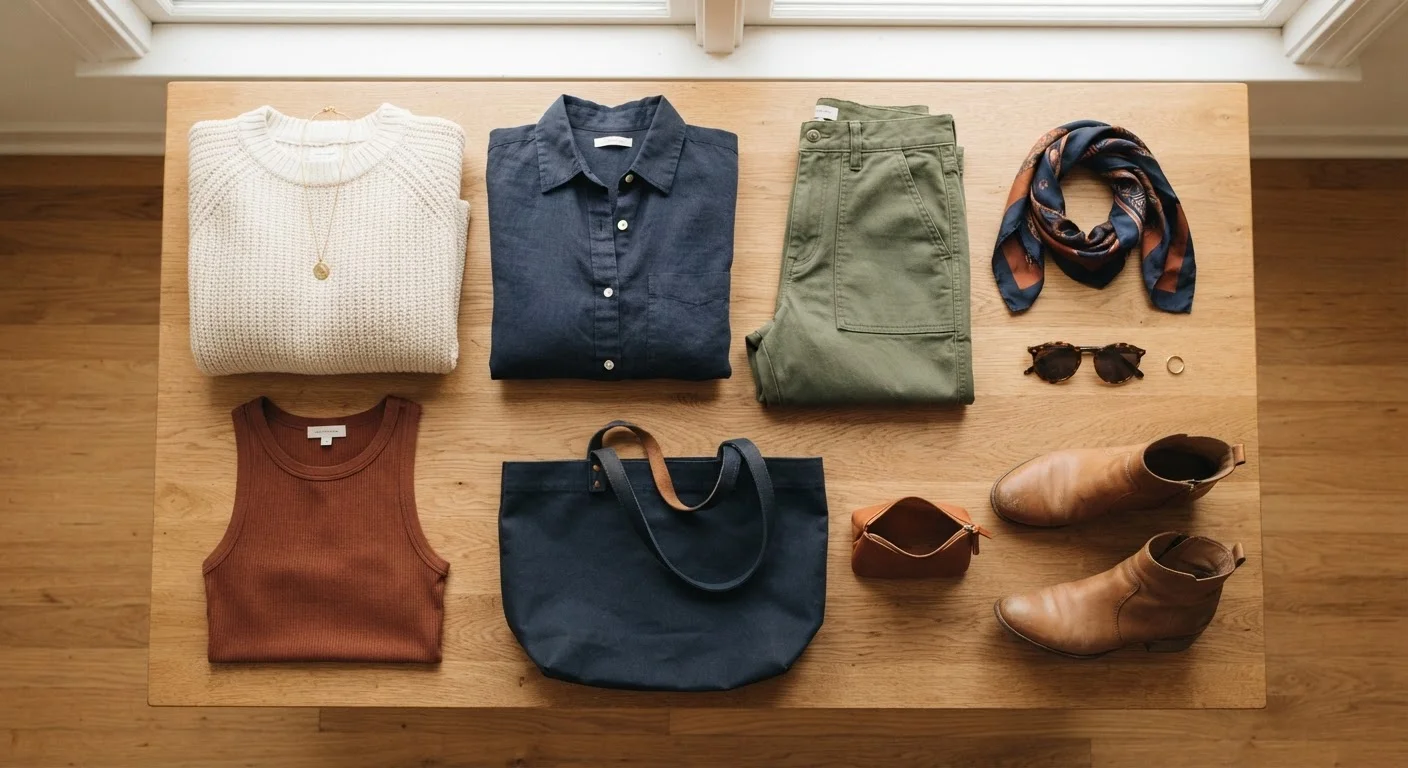

Why Body-Shape Rules Persist (And Why That's a Problem)
Body-shape dressing guidelines have been a staple of women's magazine culture for generations, and they've migrated wholesale into online content. The appeal is obvious: they promise a simple, personalized formula for getting dressed. If you just know your shape, the thinking goes, the right choices become automatic.
The problem is that these frameworks were built on a narrow conception of what bodies look like, what clothing should accomplish, and what 'flattering' even means. The word itself carries assumptions — that the goal of dressing is to appear as close to an idealized silhouette as possible. That's one goal. It's not the only one, and for many people it's not even a priority.
Understanding where the advice comes from makes it much easier to take what's useful and leave the rest. The myth-busting below focuses on the specific rules that cause the most confusion — and replaces them with more practical guidance.
Myth
You need to identify your body shape (hourglass, pear, apple, etc.) before you can dress well.
Fact
Most real bodies don't fit neatly into these categories, and labeling yourself isn't necessary for dressing well.
The classic body-shape system was popularized in fashion media decades ago, but it flattens enormous human diversity into a handful of geometric labels. Real bodies vary in height, proportions, posture, and the way fat and muscle are distributed — none of which a single label captures. Dressing well is far more about understanding your proportions in specific garments than about matching a category to a rulebook.
Myth
Vertical stripes make you look taller and slimmer; horizontal stripes make you look wider.
Fact
Research on the so-called Helmholtz illusion suggests the relationship between stripe direction and perceived size is more nuanced than the old rule implies.
The folk wisdom about stripes dates back to a 19th-century optical illusion study, but subsequent research has complicated the picture considerably. Some studies suggest that horizontal stripes can actually make a figure appear taller and narrower under certain conditions. The visual effect depends on stripe width, garment cut, color contrast, and the viewer's eye movement. The simpler takeaway: wear the stripe pattern you like; it probably won't do what the rule claims anyway.
Myth
Dark colors are universally slimming and should be worn to minimize certain body parts.
Fact
Color affects perceived silhouette in context, but 'dark equals slim' is a significant oversimplification.
Color value (light vs. dark) does influence how shapes read visually, but factors like fabric sheen, garment fit, and surrounding colors matter just as much. A poorly fitting dark garment will not 'slim' anything — it will just be an ill-fitting dark garment. More usefully, contrast between top and bottom can draw or shift the eye, but this can be used to any effect you choose, not just a minimizing one. Wearing color freely and confidently consistently reads as more intentional than strategic dark-blocking.
Myth
Certain body types should avoid specific clothing styles entirely (e.g., crop tops, wide-leg pants, or bodycon fits).
Fact
No silhouette is off-limits for any body type — fit, styling, and confidence matter far more than categorical rules.
The 'avoid if you're...' framework is one of the most persistent and least useful pieces of style advice around. Wide-leg trousers work across body types when the rise and waist fit well. Crop tops are worn confidently by people of every size. The actual variables that determine whether something looks good are: does it fit at the shoulders, waist, and hips? Is the fabric appropriate for the occasion? Does the wearer feel at ease? Those questions apply universally. For a deeper dive into why fit outweighs everything else, see our guide to clothing fit.
Myth
You should always 'balance' your proportions by adding volume where you're narrow and minimizing where you're wider.
Fact
Proportion-balancing is one tool, not a mandate — and deliberately asymmetric or unbalanced silhouettes are a recognized style approach.
Fashion has long celebrated asymmetry, volume play, and deliberate contrast as design elements — not problems to correct. 'Balancing' implies your natural shape is out of equilibrium and needs fixing, which isn't a helpful or accurate starting point. Experimenting with proportion can be fun and creatively rewarding, but it's a preference, not a rule. Some of the most iconic looks in everyday style come from wearing exactly the proportions that supposedly shouldn't work.
What Actually Helps When Getting Dressed
If not body-shape categories, what should guide clothing choices? A few genuinely useful principles hold up across body types, style preferences, and occasions.
Watch Out for Shame-Based Language
A lot of body-shape advice is framed around 'hiding,' 'minimizing,' or 'balancing' certain features — language that implies something needs to be fixed. That framing can quietly erode your confidence over time. Seek out style guidance that focuses on what you enjoy wearing, not what you should conceal.
Fit at the key points. Shoulders, chest, and waist are the landmarks that determine whether a garment works. Off-the-rack clothes are made for a statistical average — alterations and tailoring can make an enormous difference without requiring a large budget. Our clothing fit guide walks through exactly what to look for.
Proportion awareness, not proportion correction. Paying attention to how lengths and volumes interact in an outfit is genuinely useful — not to 'fix' your body, but to create looks that feel intentional. Mixing a voluminous top with a slim bottom, or vice versa, is a real tool. So is wearing all one silhouette. Both can work.
Color and pattern as creative choices. Rather than using color strategically to minimize or maximize, experiment with what you actually enjoy wearing. Our color coordination primer covers simple principles for pulling outfits together without overthinking contrast or tone.
Start with what you already own. Before applying any new framework, it helps to see what's already working in your wardrobe. Shopping your own closet is one of the most underrated style exercises — it clarifies what you actually reach for and why.
For a broader look at building a practical, confident everyday wardrobe, the complete everyday style guide covers all of this in one place. And when occasion-specific dressing comes up, dress codes decoded takes the guesswork out of what different labels actually require.
Style Rules Are Not Style Law
Body-shape dressing guides are frameworks, not requirements. They were developed with specific — and often narrow — body ideals in mind. Treat any guideline as a starting point for experimentation, not a prescription you must follow. What matters most is how you feel, not whether your outfit matches a chart.