
Why Most People Haven't Tracked Spending — and Why That's Fine
Most Americans reach adulthood without any formal instruction in personal budgeting. If you've never tracked your spending, you're not behind — you're just starting, and starting is the only requirement. The goal of a first budget isn't perfection. It's awareness.
A budget is simply a plan for your money. It doesn't restrict your spending so much as it makes your choices visible. Once you can see where your dollars go, you can decide whether that's actually where you want them going. That shift in perspective — from reactive to intentional — is what budgeting is really about.
For a broader foundation before diving in, this plain-language budgeting introduction covers core concepts worth knowing as context.
Fixed expense
A cost that stays the same each month, such as rent, a car payment, or a subscription. These are easier to plan around because you know the amount in advance.
Variable expense
A cost that changes from month to month, like groceries, gas, or dining out. Tracking these over several months helps you find a realistic average.
Net income
The amount of money you actually take home after taxes and any deductions. This — not your gross salary — is the number your budget should be built on.
Spending plan
Another term for a budget — a deliberate decision about where your money goes each month before you spend it, rather than after.
Discretionary spending
Money spent on wants rather than needs — entertainment, hobbies, eating out. This category usually offers the most room to adjust when you want to save more.
Step One: Know What You Actually Bring In
Your budget has to start with your net income — the money deposited into your account after taxes and deductions, not your gross salary. If your paycheck arrives twice a month, add those two amounts together. If your income varies, use a conservative recent average rather than your best month.
Include all reliable income sources: wages, side work, regular freelance income. Exclude one-time windfalls unless you have a specific plan for them. The number you land on is your real monthly starting point — everything else gets built from there.
Step Two: Find Out Where Your Money Goes
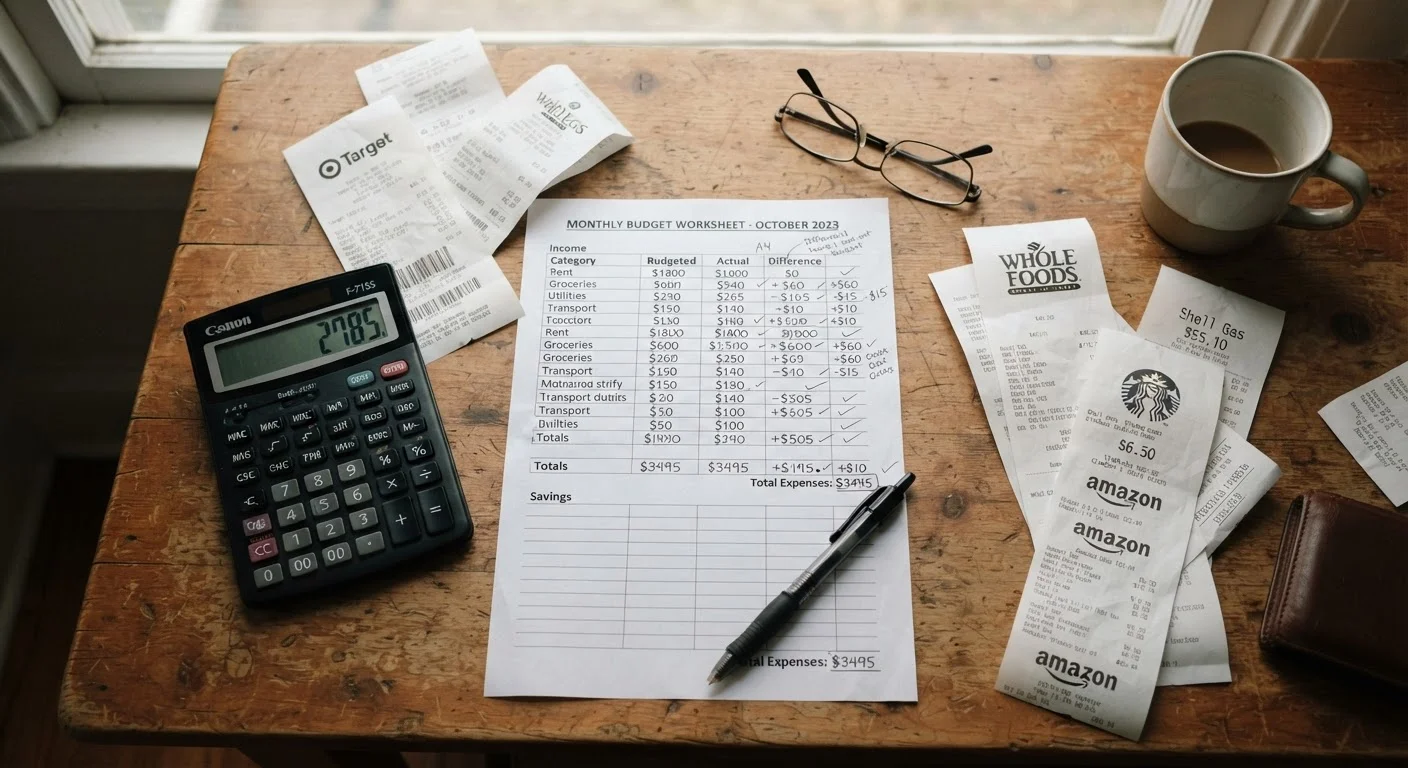
Before you can plan your spending, you need to understand your current spending. Pull one month of bank and credit card statements and sort every transaction into broad categories: housing, food, transportation, utilities, subscriptions, and discretionary (everything that doesn't fit the others).
Use Last Month as Your Starting Point
Pull up your bank and credit card statements from the most recent full month. Categorize each transaction into broad groups: housing, food, transportation, and everything else. You don't need perfect accuracy — a rough breakdown reveals patterns that are genuinely useful. One month of real data is worth more than any estimate.
This exercise usually surfaces surprises — subscriptions you forgot, spending categories that dwarf your estimate. That's normal and useful. The point isn't to feel bad about what you find; it's to have real numbers to work with.
Separating fixed expenses from variable expenses helps here. Fixed costs like rent are predictable. Variable costs like groceries or gas need averaging across a few months for accuracy.
Step Three: Build a Simple Spending Plan
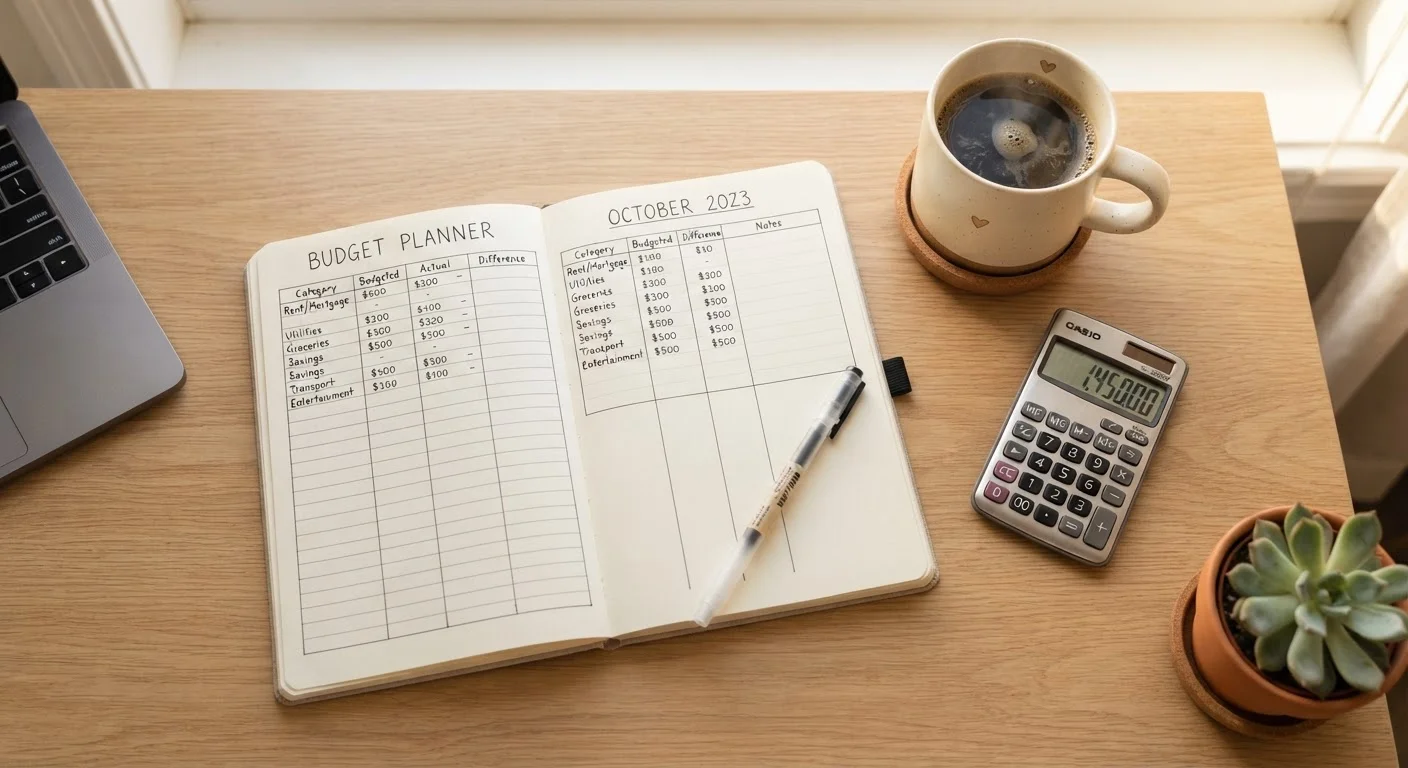
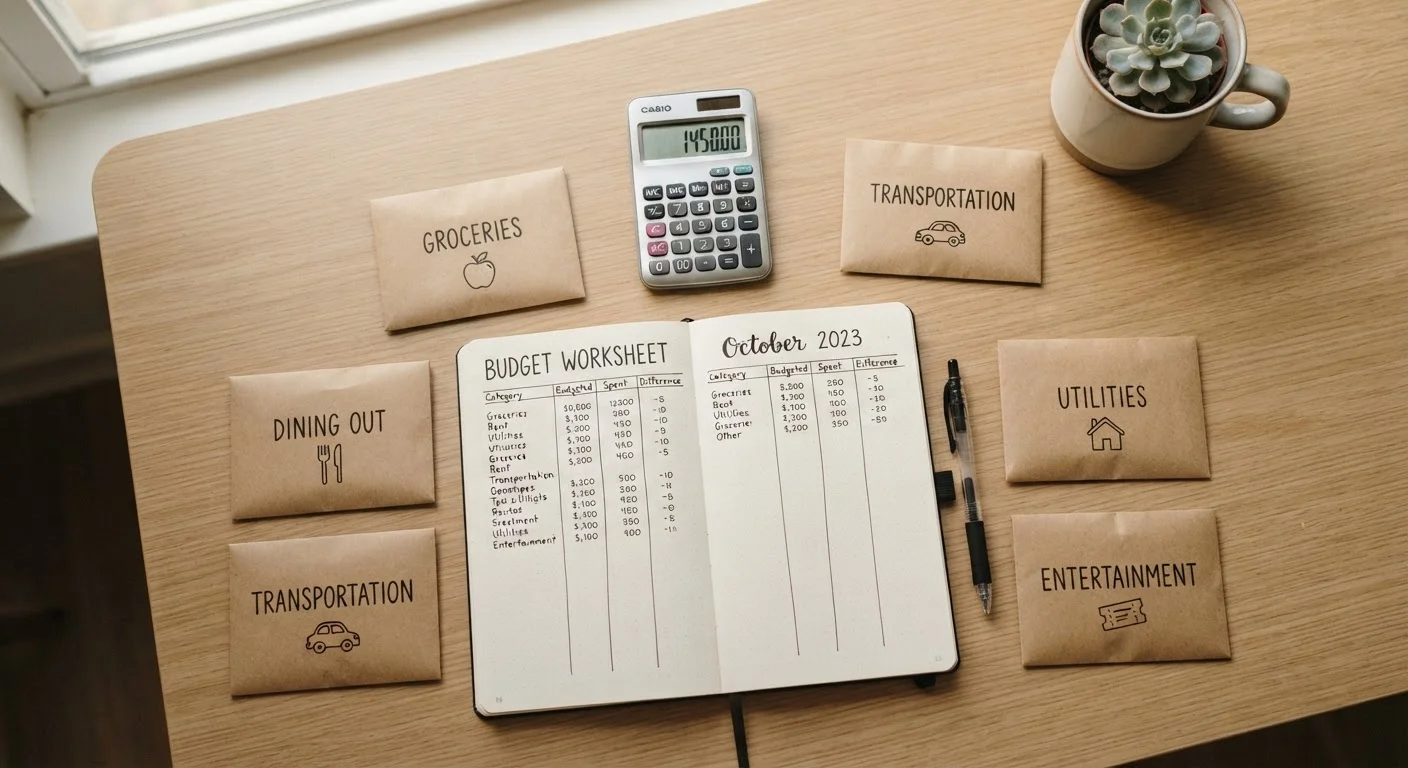
With your income and expense numbers in hand, you can build a spending plan. A three-bucket framework works well for beginners:
- Needs: Housing, utilities, groceries, transportation, minimum debt payments
- Wants: Dining out, entertainment, hobbies, non-essential subscriptions
- Savings or debt paydown: Emergency fund contributions, extra debt payments, longer-term savings goals
The well-known 50/30/20 guideline — roughly half for needs, 30% for wants, 20% for savings — is a reasonable starting framework, not a rigid rule. Your numbers may look different, especially early on. The goal is to make sure your three buckets add up to no more than your income, with something — even a small amount — going toward savings or debt reduction.
Don't Build a Budget Around Ideal Numbers
One of the most common first-budget mistakes is writing down what you wish you spent rather than what you actually spend. An aspirational budget that ignores reality will fail quickly. Start with honest current numbers, then make gradual adjustments once you can see the full picture.
If you're interested in a more structured approach, zero-based budgeting assigns every dollar a specific job and may suit people who want tighter control.
Staying Consistent Without Burning Out
The most common reason first budgets fail isn't math — it's structural habits that are hard to maintain. Common budgeting missteps often trace back to overly complex systems or unrealistic expectations, not a lack of discipline.
A few practices that help:
- Review weekly, not just monthly. A five-minute check-in each week catches problems before they compound.
- Build in a buffer. Unexpected costs happen every month. A small miscellaneous category (even $50–$100) prevents one surprise from breaking the whole plan.
- Adjust, don't abandon. When a category blows over, move money from another bucket rather than declaring the budget a failure.
A budget that you stick with imperfectly for six months delivers far more value than a flawless plan you abandon in week three. Give yourself permission to iterate.
This Is General Information, Not Financial Advice
The strategies in this article are intended as general educational guidance for people new to budgeting. Everyone's financial situation is different. For decisions about debt repayment, savings strategies, or investment planning specific to your circumstances, consider speaking with a licensed financial professional.
This article provides general financial information for educational purposes only and does not constitute personalized financial, tax, or legal advice. For guidance specific to your situation, consult a qualified, licensed financial professional.