Why Budgeting Feels Hard (And Why It Doesn't Have to Be)
Most people who've never made a budget assume they need to be good at math, financially disciplined, or already earning enough. None of that is true. A budget is simply a written record of what comes in and what goes out — and a deliberate plan for the difference.
The real reason budgeting feels overwhelming is vagueness. When your finances live only in your head, small purchases blur into a fog and end-of-month surprises feel inevitable. Writing it down breaks that cycle. For a broader look at core budgeting concepts before you dive in, see our introduction to personal budgeting.
Take-home income
The money you actually receive after taxes and other deductions — the figure to use when building any budget.
Fixed expense
A recurring cost that stays the same amount each month, such as rent, a car payment, or an insurance premium.
Variable expense
A cost that changes month to month, like groceries, gas, or dining out — these are usually the most adjustable part of a budget.
50/30/20 guideline
A simple budgeting framework that suggests dividing take-home income into 50% for needs, 30% for wants, and 20% for savings and debt payoff.
Budget surplus
When your income exceeds your expenses for the month — the extra can be directed toward savings or debt reduction.
Budget deficit
When your expenses exceed your income for the month, signaling a need to reduce spending, increase income, or both.
Step 1: Add Up Your Real Take-Home Income
Take-home pay — the amount deposited into your account after taxes and deductions — is your true starting number. Gross salary is irrelevant for day-to-day budgeting because you can't spend money you never receive.
List every consistent income source: wages, freelance payments, side work, or government benefits. If your income varies month to month, use a conservative estimate based on your three lowest-earning months rather than your best. Overestimating income is one of the most common first-budget mistakes.
Use Your Lowest-Income Month as the Baseline
If your income fluctuates, anchor your budget to a lower estimate rather than an average. It's much easier to redirect a surplus than to scramble when income comes in lower than expected. You can always allocate extra money when a stronger month arrives.
Step 2: List Every Expense You Actually Have
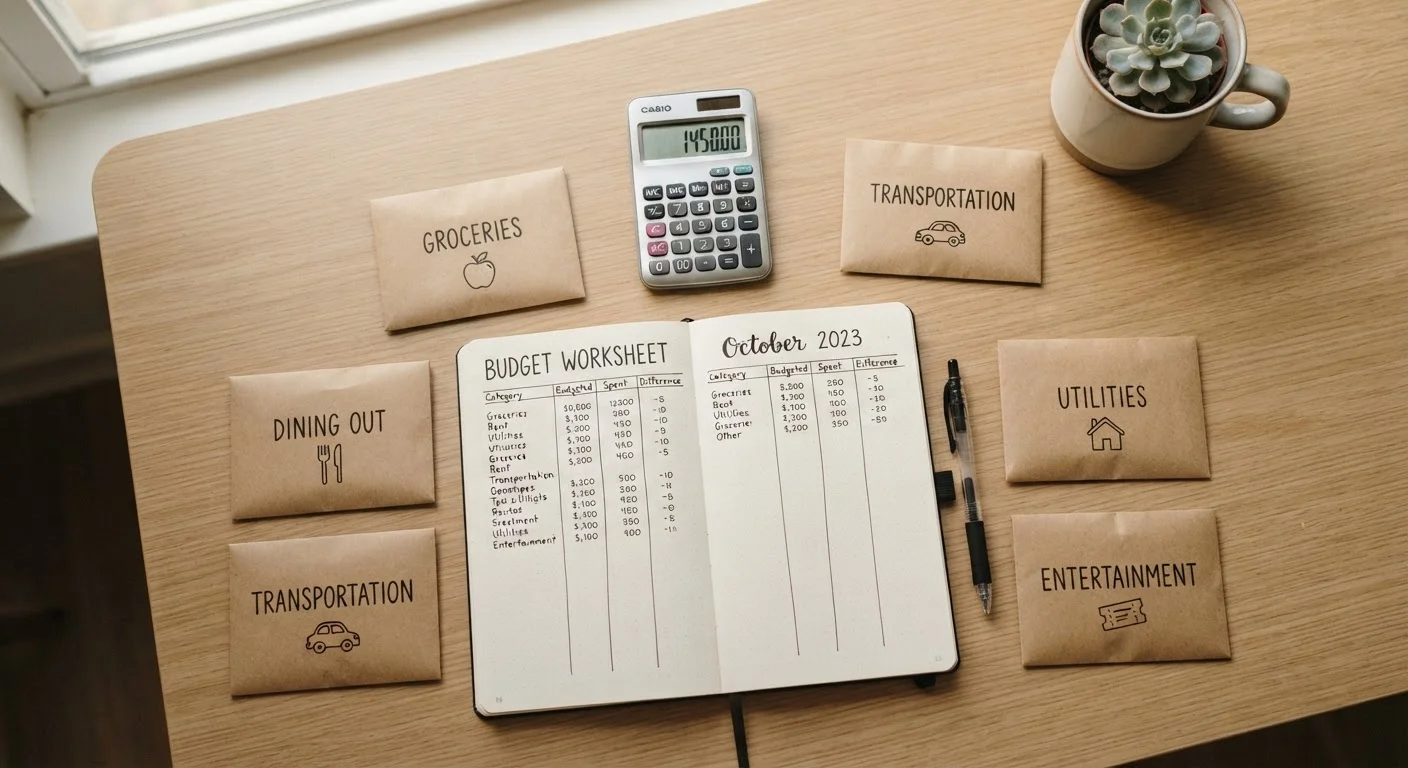
Pull up two to three months of bank and credit card statements. Write down every category you spend in — rent or mortgage, utilities, groceries, transportation, subscriptions, dining out, clothing, and anything else that appears regularly.
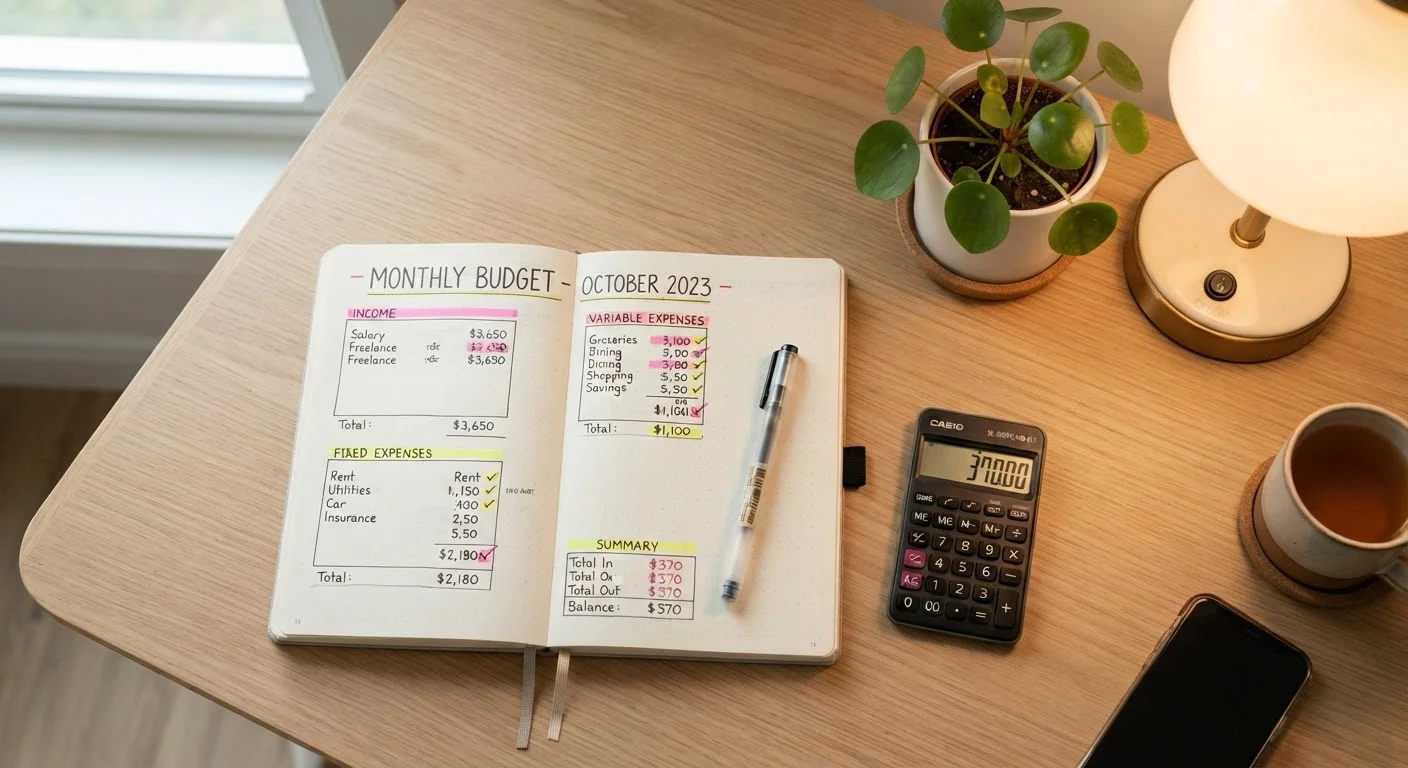
Separate expenses into two types:
- Fixed expenses — amounts that stay the same each month (rent, loan payments, insurance premiums).
- Variable expenses — amounts that change (groceries, gas, entertainment, personal care).
Variable expenses are where most people discover spending patterns they weren't aware of. Total everything up. If the sum surprises you, that reaction alone is valuable information.
Don't Forget Annual and Irregular Expenses
Car registration, holiday gifts, annual subscriptions, and medical costs don't show up every month — but they will arrive. Divide annual costs by 12 and include that monthly portion in your budget as a separate savings line. Forgetting these is a leading cause of budget busts in the first few months.
Step 3: Choose a Simple Spending Framework
Once you know your income and expenses, you need a structure to organize them. For beginners, the 50/30/20 guideline is a practical starting point:
- 50% of take-home income toward needs (housing, utilities, groceries, transportation, minimum debt payments).
- 30% toward wants (dining out, subscriptions, hobbies, travel).
- 20% toward savings and extra debt repayment.
These percentages are guidelines, not rules. High-cost-of-living areas may push housing alone past 50%, which means trimming elsewhere. Adjust the ratios to reflect your actual situation rather than forcing your life into a rigid formula.
If you want a more precise method that assigns every dollar a job before the month starts, our guide on zero-based budgeting walks through how that works and when it makes sense.
No Framework Fits Every Situation Perfectly
The 50/30/20 split is a starting point, not a prescription. Readers carrying significant debt may benefit from directing more than 20% toward repayment. Those in high-cost cities may need to renegotiate the needs category. Use any framework as a rough map, then adapt it to reflect your real life.
Step 4: Review, Adjust, and Keep Going
At the end of your first month, compare what you planned to spend against what you actually spent. Expect gaps — they are normal and informative, not failures. The goal of that first review is understanding, not perfection.
Set a recurring monthly check-in: 15 to 30 minutes to update figures, catch any new expenses (an annual subscription that auto-renewed, a medical copay), and reset category limits for the coming month. Over time, this habit becomes faster and more intuitive.
A budget that gets reviewed and adjusted is a living tool. One written once and forgotten is just a piece of paper.
This article is for general informational and educational purposes only and does not constitute personalized financial advice. Please consult a qualified financial professional for guidance specific to your situation.