What the Declarations Page Actually Is
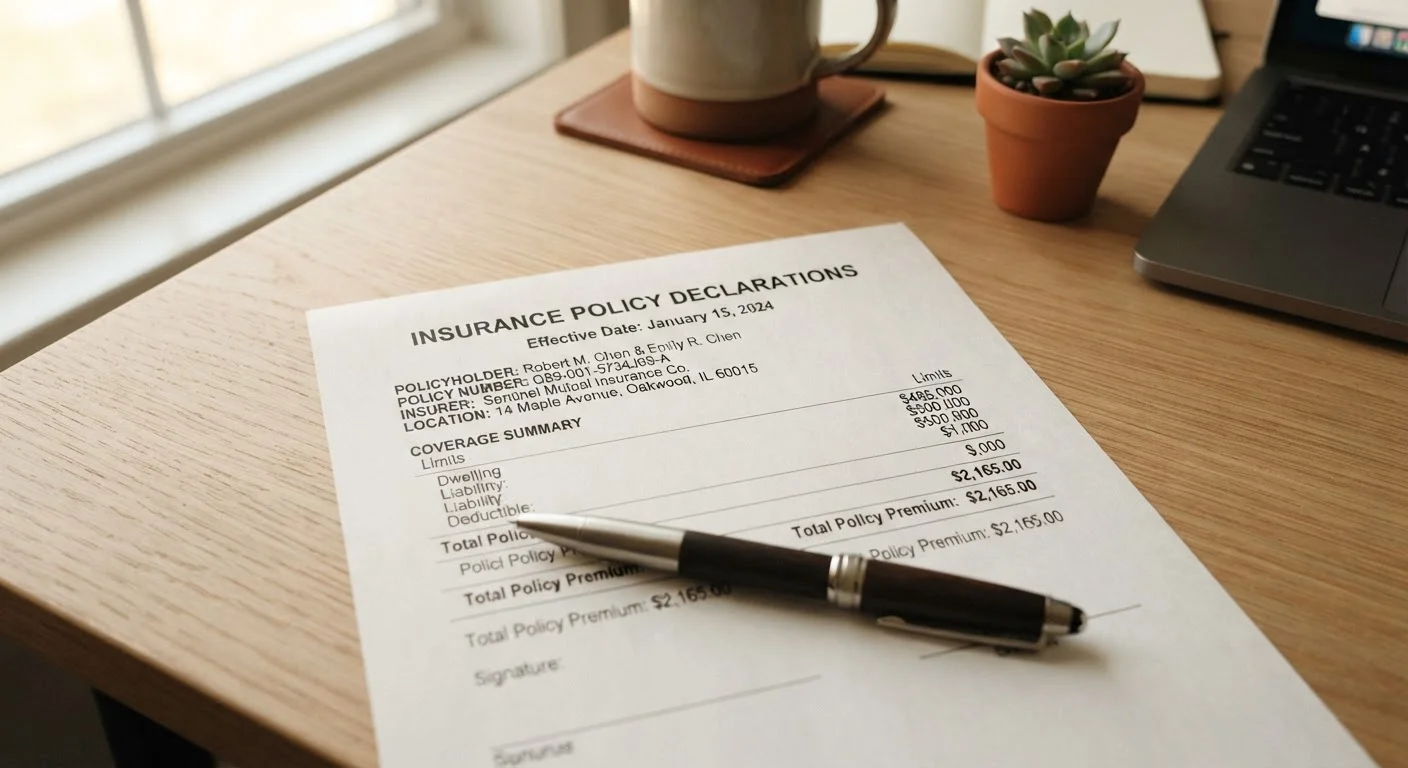
Every insurance policy — whether it covers your home, car, renters belongings, or life — opens with a declarations page, often called the "dec page." Think of it as the cover sheet that summarizes the contract in plain terms. It doesn't replace the full policy, but it tells you the most important facts at a glance.
The dec page is the first place any claims adjuster, lender, or landlord will look when they need to verify your coverage. More importantly, it's the first place you should look whenever you have a question about what you're actually paying for. For a broader look at how this page fits into the overall policy structure, see A First-Timer's Guide to Reading an Insurance Policy.
What you will need
How to Read Each Section, Line by Line
Once you pull out your dec page, here's how to work through it systematically. Each field carries real financial weight.
Confirm the named insured and address
The top of the dec page lists the named insured — the person or entity the policy legally protects — along with the property address or vehicle being covered. Verify that your full legal name is spelled correctly and that the address matches the location you intended to insure. A mismatch here is more than a clerical annoyance; it can create complications during a claim.
Check the policy period
Just below the insured's name you'll find the policy period: the exact start and end dates of your coverage. Claims for events that happen outside this window — even by one day — are typically not covered. Note the expiration date and set a reminder at least 30 days before it so you have time to renew or shop for alternatives.
Review coverage types and limits
This is the most financially consequential section. Each line lists a coverage type (for example, dwelling, liability, or collision) alongside its limit — the maximum dollar amount the insurer will pay for a covered loss under that category. If your limit is lower than the actual cost of a claim, you pay the difference out of pocket. Compare these limits against what it would realistically cost to rebuild your home, replace your car, or cover a liability judgment.
Locate your deductibles
The deductible is the amount you agree to pay toward a covered loss before your insurer pays the rest. Some policies carry a single deductible; others list separate deductibles for different perils (for instance, a standard deductible for most claims and a higher percentage-based deductible for wind or hail). Know each one. A deductible that looked reasonable when you signed up may feel burdensome when you're actually filing a claim.
Note the premium and payment schedule
The dec page shows your premium — the total cost of the policy — and often breaks it down by payment period (annual, semi-annual, or monthly). If you're paying in installments, there may be a service fee attached. Confirm these figures match what your bank or credit card is actually being charged. Discrepancies are rare but worth catching early.
Identify any listed endorsements or riders
Endorsements (also called riders) modify the base policy — adding coverage, removing it, or changing a specific term. The dec page typically lists them by name or code. If you see an endorsement you don't recognize, pull the attached document or call your insurer to confirm what it does. For deeper context on how endorsements and other policy terms shape real-world coverage, see Decoding Your Insurance Policy.
Keep a Digital Copy of Your Dec Page
Scan or photograph your declarations page and store it somewhere accessible — a cloud folder, email thread, or secure app. If you ever need to file a claim quickly or verify coverage for a lender, having it on hand saves real time. Update the file each time your policy renews.
What the Dec Page Doesn't Tell You
The declarations page is a summary, not the full story. It will not list what your policy excludes — the situations, perils, or property types that aren't covered. Those details live in the policy's exclusions section, which you have to read separately. For plain-language definitions of terms you'll encounter throughout the full policy, our plain-language glossary is a useful companion.
A Dec Page Is a Summary, Not a Guarantee
Seeing a coverage type listed on your declarations page does not guarantee a specific claim will be paid. Coverage is always subject to the full terms, conditions, and exclusions in the policy document. When in doubt, read the underlying policy language or ask your agent to clarify before a loss occurs — not after.
Similarly, endorsements or riders — add-ons that expand or restrict standard coverage — may be listed on the dec page by name but are spelled out in separate attached documents. Never assume coverage exists simply because a line item appears; confirm what that line item actually provides by reading the corresponding section of the full policy.
Before agreeing to any new policy, it also pays to ask pointed questions about what you're seeing. Before You Sign offers a practical checklist to work through with your agent.
This article is for general informational and educational purposes only and does not constitute personalized insurance, legal, or financial advice. Coverage terms, limits, and regulations vary by provider, policy, and state. Always read your actual policy documents and consult a licensed insurance agent or adviser regarding your specific situation.