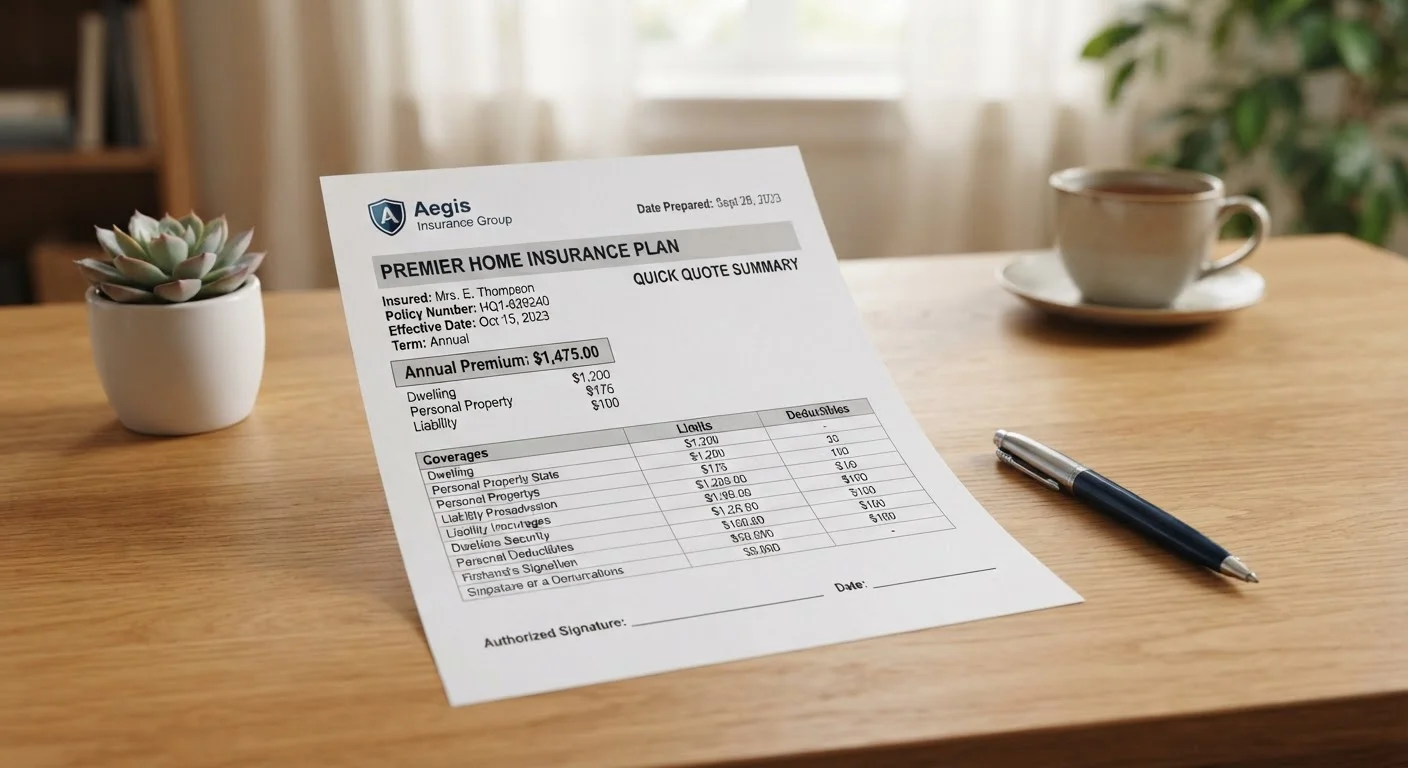

Why Insurance Policies Are So Hard to Read
Insurance policies aren't written to be confusing on purpose — but they are written to be legally precise, and that precision creates density. Every word has to hold up in court, so insurers use specific language that leaves as little ambiguity as possible. The result is a document that can run 30 to 60 pages and feel impenetrable to anyone who isn't a lawyer or underwriter.
The good news: once you understand the standard structure, you can navigate most policies without reading every line. Policies across different insurance types — home, auto, health, life — follow a broadly similar format. Learn the map, and you can find what you need quickly. For a deeper dive into the terminology you'll encounter, see our field guide to core insurance terms.
Declarations Page
The summary page of your policy that lists key details like your name, coverage period, limits, deductibles, and premium. It's the quickest way to confirm what you've purchased.
Coverage Limit
The maximum dollar amount an insurer will pay for a covered loss. Any costs above this limit are your responsibility.
Deductible
The amount you pay out of pocket before your insurance kicks in on a claim. A higher deductible generally means a lower premium, and vice versa.
Exclusion
A specific condition, event, or type of damage that the policy will not cover. Exclusions are listed separately from the main coverage grant and can significantly limit what you're protected against.
Endorsement (Rider)
A written amendment attached to the base policy that changes, adds, or removes coverage. Endorsements take priority over conflicting language in the original policy document.
Covered Peril
The specific event or cause of loss that the policy agrees to cover — such as fire, theft, or windstorm. If the cause of your loss isn't a covered peril, the claim will likely be denied.
The Standard Sections of a Policy
Most insurance policies contain the same core sections, though the order and labeling may vary slightly by insurer and policy type.
- Declarations Page (the "dec page"): This is usually page one or two, and it's the most reader-friendly part of the entire document. It lists your name, the coverage period, the property or risk being insured, your coverage limits, deductibles, and your premium. Think of it as the summary you can actually use.
- Definitions: This section explains what specific terms mean within the policy. Terms that appear in bold or quotation marks throughout the document will be defined here. Read this section before assuming you know what a word means — insurers assign precise meanings that sometimes differ from common usage.
- Coverage Grant (Insuring Agreement): This is where the insurer describes what it agrees to cover. It's typically broad and affirmative — stating what events or losses are included. Don't stop here, though; the exclusions section will narrow it significantly.
- Exclusions: This is arguably the most important section to read carefully. Exclusions are the situations, events, or types of damage the insurer will not pay for. Many denied claims come down to an exclusion the policyholder didn't know existed.
- Conditions: These are your obligations as the policyholder — things like notifying the insurer promptly after a loss, cooperating with investigations, or paying premiums on time. Failing to meet a condition can jeopardize a claim.
- Endorsements and Riders: Attached amendments that modify the base policy. They can expand coverage, restrict it, or add new provisions. Always read endorsements — they override conflicting language in the base document.
Understanding coverage types helps you interpret which of these sections will matter most in your policy. See our coverage types hub for plain-language explanations of the major categories.
The Words That Actually Control Your Coverage
In any insurance policy, a handful of terms do the heaviest lifting. Getting these straight will help you read any section with more confidence.
Use the Definitions Section as a Reference
Keep the definitions section bookmarked as you read through the rest of your policy. Any time you encounter a bolded or quoted term, flip back and check the precise definition before continuing. This habit alone can prevent significant misunderstandings about what is and isn't covered.
Pay particular attention to how your policy defines the event that triggers coverage — sometimes called the "covered peril" or "covered loss." A homeowners policy covering "sudden and accidental" water damage, for example, will almost certainly exclude a slow leak that developed over months. The modifier matters enormously. For a thorough breakdown of how these terms shape real-world outcomes, see our guide to the terms that actually affect you.
How to Read a Policy Strategically
Nobody reads an insurance policy like a novel. Here's a practical approach that surfaces what matters without demanding hours of your time.
- Start with the declarations page. Confirm your limits, deductibles, and coverage types match what you thought you purchased.
- Check the definitions section. Note any terms that are bolded throughout the document — these have controlled meanings. Flag any you're unsure of.
- Read the exclusions carefully. For your specific situation — your home's age, your driving history, your health circumstances — consider which exclusions are most likely to apply. Don't assume something is covered just because the insuring agreement sounds broad.
- Review conditions you must meet. Understand what the insurer expects of you, especially after a loss event.
- Read all endorsements. These modify the base policy and are easy to overlook because they're often stapled at the back.
If a section confuses you, write down your exact question and bring it to a licensed agent or broker. A summary document from your insurer is useful, but it doesn't govern your actual coverage — the full policy does. If you're still deciding on coverage, our end-to-end insurance selection walkthrough covers how to evaluate policies before you sign. And when comparing quotes, understanding what the numbers mean will help you avoid misreading the figures.
This article is for general informational purposes only and does not constitute personalized insurance, legal, or financial advice. Coverage terms, exclusions, and regulations vary by provider, policy, and state. Always read your actual policy documents and consult a licensed insurance professional for guidance specific to your situation.