What R-Value Actually Measures
When you pick up a roll of insulation at a home improvement store, the R-value label is the most prominent number on the packaging — but many homeowners aren't entirely sure what it represents. R-value measures thermal resistance: how effectively a material slows the movement of heat from one side to the other.
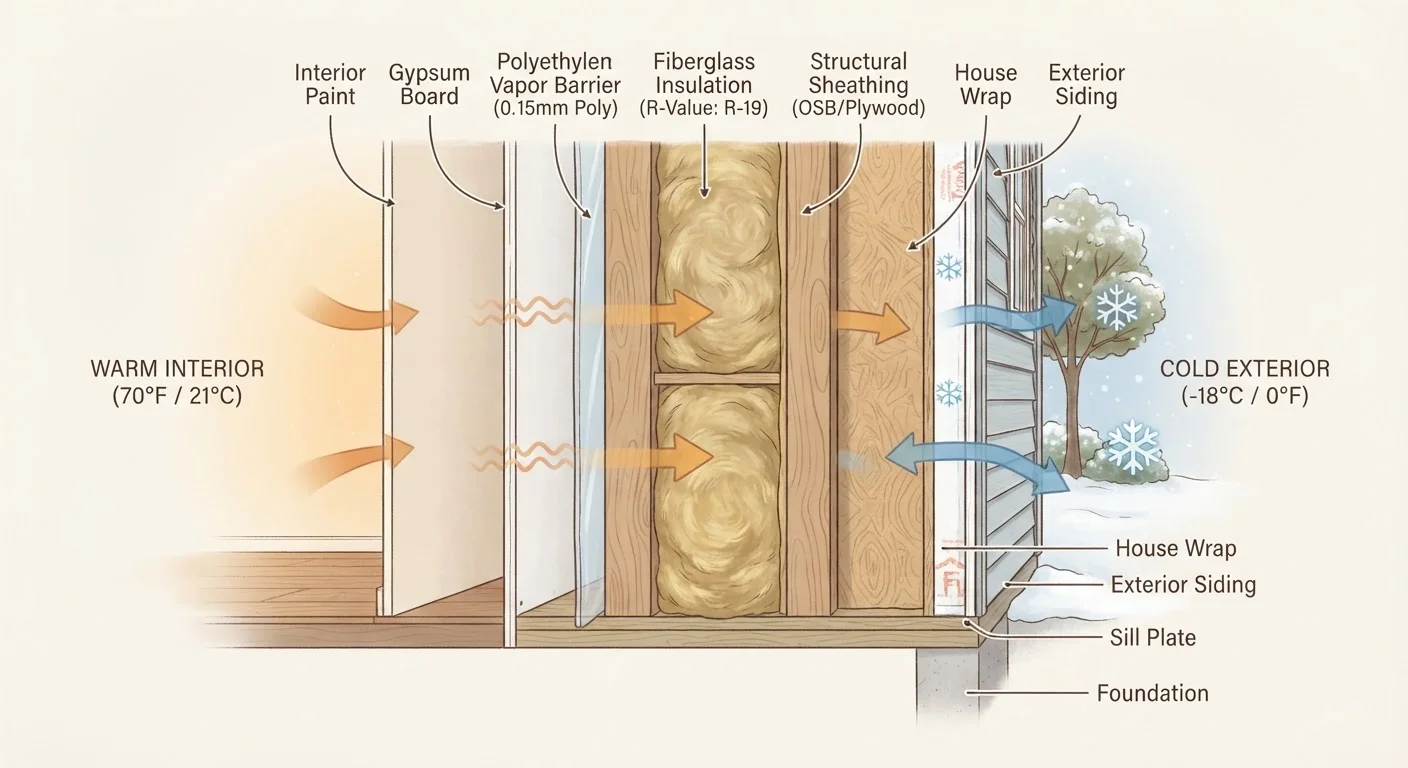
Heat naturally moves from warm areas to cool ones. In winter, it escapes through your walls and ceiling toward the cold outdoors. In summer, outdoor heat pushes inward. Insulation slows that transfer, and R-value quantifies exactly how well it does so.
The measurement is straightforward: a higher number means greater resistance. R-13 wall batts resist heat flow less than R-21 batts of the same width. When you stack two layers, their R-values add together — R-19 plus R-19 equals approximately R-38. This additivity is one of the most practical things to understand about the metric.
R-Value Is Additive — With Limits
Stacking insulation layers adds their R-values together only when the layers are both dry and properly installed with no compression. Compressing a batt into a space thinner than its designed depth reduces its effective R-value below the label rating. Always install batts at their full, uncompressed thickness for accurate performance.
What R-Value Doesn't Tell You
R-value is a laboratory measurement taken under controlled, steady-state conditions with no wind, no moisture, and no air movement. Real homes are none of those things, which means the number on the bag and the performance in your wall can differ meaningfully.
Three factors routinely reduce real-world thermal performance below the rated R-value:
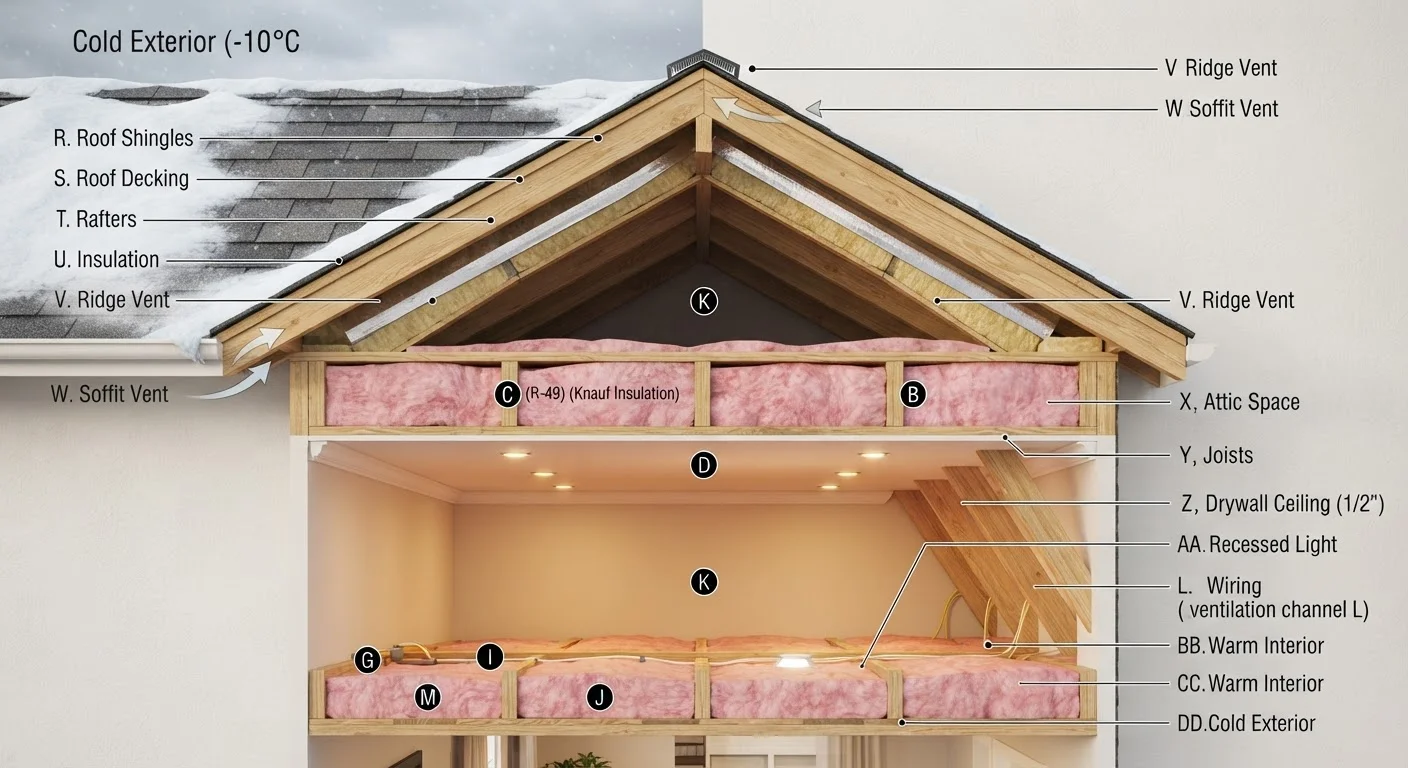
- Air leaks: Gaps around electrical outlets, pipes, and ceiling fixtures let heat bypass insulation entirely. No R-value compensates for an unblocked air pathway.
- Moisture: Wet insulation conducts heat far more readily than dry insulation. A fiberglass batt soaked from a roof leak may perform at a fraction of its rated value.
- Installation gaps: Compressed batts, voids around framing, and poorly fitted pieces all reduce effective R-value. A batt stuffed into a cavity it doesn't fill correctly underperforms its label.
This is why building professionals emphasize air sealing alongside insulation upgrades. The two work together — and skipping air sealing is one of the insulation myths that cost homeowners the most in energy bills.
Seal Before You Add Insulation
Before adding new insulation in an attic or wall, use canned spray foam or caulk to seal any visible gaps around pipes, wires, and light fixtures. Air sealing and insulation work together — gaps let heat bypass even the highest R-value materials. Many building professionals consider air sealing the higher-priority step.
How Climate Zone Changes the Equation
The U.S. Department of Energy publishes a climate zone map dividing the country into eight zones based on heating and cooling demand. Zone 1 covers hot, humid southern Florida; Zone 7 covers subarctic Alaska. The recommended R-values differ significantly between them.
8
U.S. climate zones with distinct R-value recommendations
The U.S. Department of Energy's Building Energy Codes Program defines eight climate zones across the contiguous U.S., Alaska, and Hawaii.
R-60
Maximum attic R-value recommended for coldest U.S. zones
The DOE recommends up to R-60 in attics for Zone 7 (subarctic regions), compared to R-30 or less for the warmest southern zones.
~15%
Estimated share of home heat loss through the attic
The DOE estimates that, in a typical home, the attic is one of the largest pathways for heat loss, underscoring why attic R-value recommendations are among the highest.
A homeowner in Zone 2 (coastal Texas or southern Georgia) may only need R-30 in the attic, while a homeowner in Zone 6 (Minnesota or Maine) is advised to reach R-60. Walls, floors over unconditioned crawlspaces, and basement walls each carry their own zone-based recommendations.
This matters practically: installing R-60 attic insulation in a Zone 2 climate adds cost and material without a proportional return in energy savings. Conversely, under-insulating in a cold zone means your heating system works harder every winter. Checking your zone before purchasing is a few minutes well spent.
Putting R-Value to Work in Your Home
Understanding R-value helps you evaluate what you already have and plan upgrades strategically. Start with these practical steps:
- Identify your climate zone using the DOE's online Zone Map by entering your zip code.
- Measure existing insulation depth in your attic. For loose-fill cellulose, a ruler and the manufacturer's coverage chart will give you an approximate current R-value.
- Seal air leaks first. Caulk and weatherstripping around penetrations, windows, and the attic hatch typically cost little but meaningfully improve thermal performance before you add a single batt.
- Plan layers strategically. In attics, laying new batts perpendicular to existing ones covers joists — which themselves conduct heat — and adds R-values cleanly.
For work involving structural changes, electrical penetrations, or spray foam in enclosed cavities, consult a licensed insulation contractor. Many jurisdictions require permits for significant envelope work, and proper ventilation in attic and crawlspace areas must be maintained. Always verify local building codes before starting.
This article is for general informational purposes only. It is not a substitute for advice from a licensed contractor or building professional familiar with your local codes and conditions.