
Why This Comparison Matters
The question of where to exercise is one of the most common friction points people face when trying to build a fitness habit. Marketing from both sides — home fitness equipment on one end, gym memberships on the other — often oversimplifies the decision. The reality is more nuanced, and the right choice depends heavily on individual circumstances rather than universal rules.
Both environments can support meaningful physical progress. Research consistently shows that the variables most predictive of fitness outcomes are adherence and effort — not the setting. That said, certain environments genuinely serve certain people better, and understanding those differences can help you stop second-guessing your setup and start training consistently.
It's also worth noting that this isn't necessarily an either-or decision. Many active adults move between home and gym training depending on the season, their schedule, or their current goals. See how combining different training modalities can also affect your results.
The Case for Home Workouts
Training at home has grown significantly in popularity, and the practical advantages are real. The most obvious is convenience — there's no commute, no wait for equipment, and no need to plan around gym hours. For people with demanding schedules, young children, or irregular work shifts, that friction removal can be the difference between exercising and not.
No commute — exercise happens on your schedule
Removing the need to travel to a facility significantly lowers the barrier to starting a session, especially on busy days when commute time would otherwise be the excuse not to train.
Lower ongoing cost after initial setup
Once basic equipment is purchased, there are no monthly fees. A set of resistance bands and a few dumbbells can cover foundational strength and conditioning work for years.
Private, low-pressure environment
For people who feel self-conscious exercising in front of others, home provides a space to build confidence and technique without social anxiety interfering with the process.
Flexible scheduling with no facility hours
Early morning, late night, or mid-afternoon — home training adapts to your life rather than requiring you to adapt to a gym's operating schedule.
Home training also tends to feel lower-stakes for beginners. Many people who feel self-conscious in gym environments find it easier to build confidence and establish a routine at home first. Over time, a modest investment in versatile equipment — resistance bands, a set of adjustable dumbbells, or a pull-up bar — can cover a wide range of training goals without recurring costs.
The trade-off is that home environments can introduce different distractions: family members, household tasks, or simply the pull of a couch. Motivation strategies that work in a gym — the ambient energy of others exercising, scheduled class times — aren't automatically available at home and may need to be deliberately replicated.
The Case for Gym Training
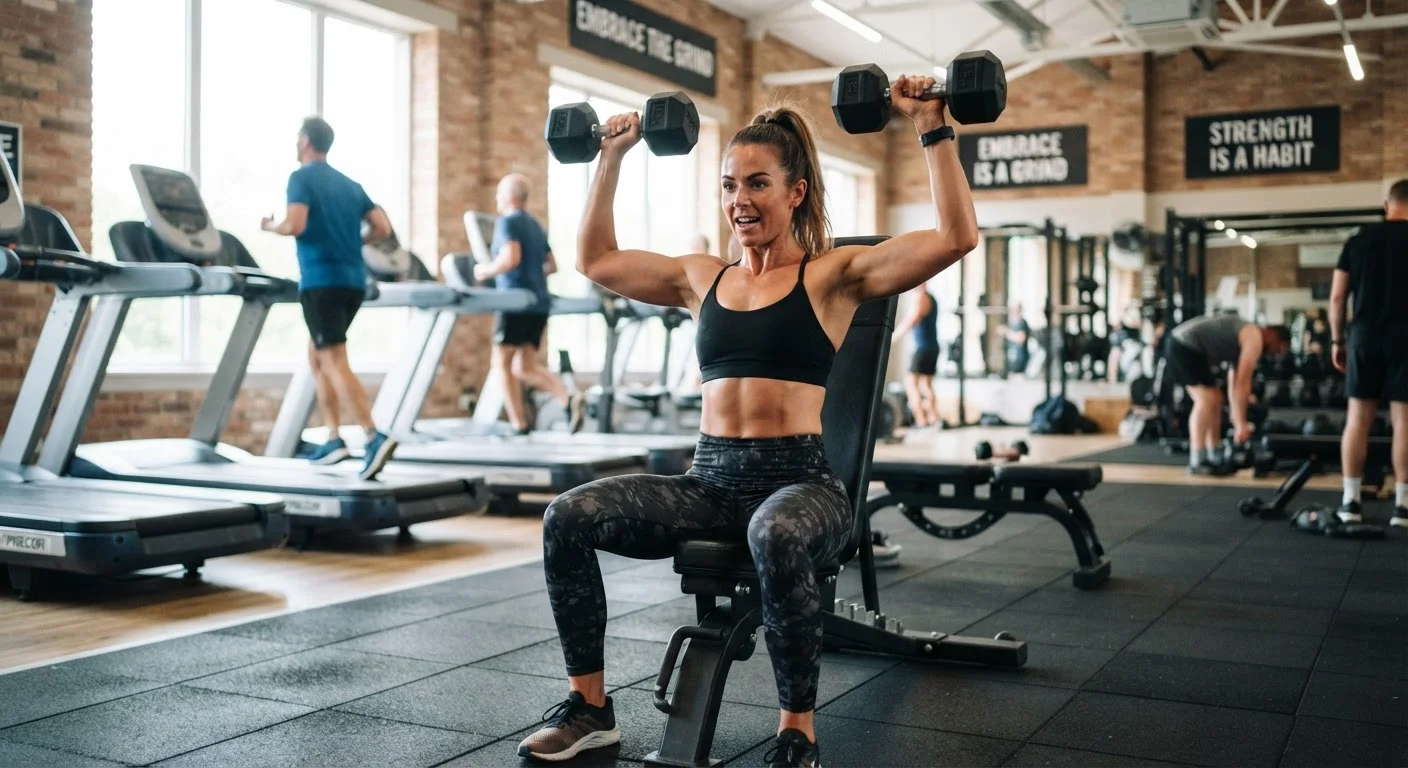
Gyms offer something that most home setups can't easily replicate: a dedicated space with no competing demands on your attention. When you're at a gym, the environment itself signals that this time is for training. That psychological cue is genuinely useful for many people, especially those who struggle with motivation or focus.
Membership cost adds up over time
Monthly gym fees range widely, and for people who don't use the facility consistently, the ongoing cost can feel disproportionate to the benefit received.
Commute creates an additional time barrier
Even a 15-minute drive each way adds 30 minutes to every session, which can become a genuine obstacle for people with constrained schedules.
Crowding at peak hours limits access to equipment
Popular machines and free weights are frequently occupied during evenings and weekend mornings, which can disrupt workout flow and extend session length unexpectedly.
Can feel intimidating for beginners
New exercisers sometimes report discomfort in gym environments, particularly in free-weight areas, which can delay the start of a consistent training habit.
Access to varied equipment is another concrete advantage. Barbells, cable machines, rowing ergometers, and squat racks open up training options that are difficult or expensive to reproduce at home. For people with specific strength or physique goals, that variety often translates into better long-term progression.
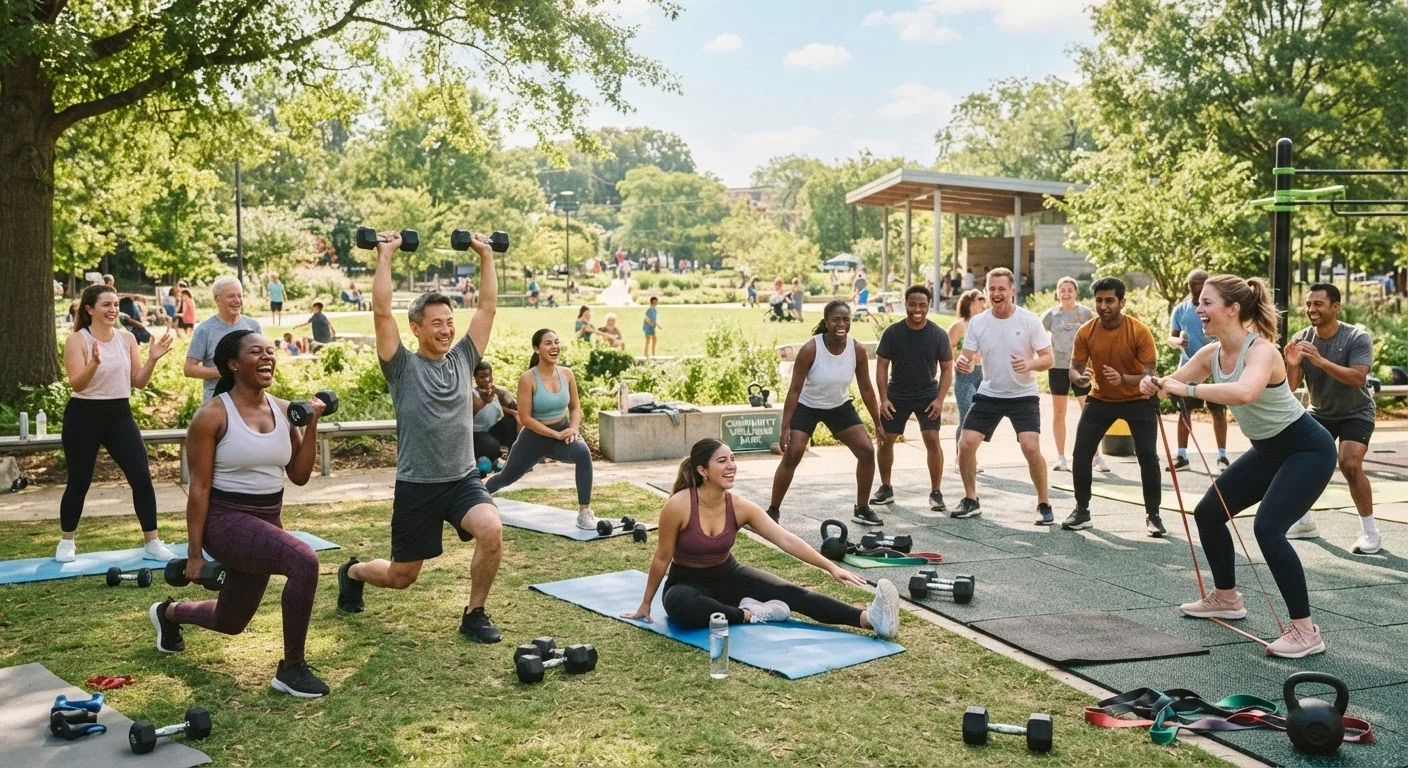
Group fitness classes, personal trainers, and even informal community connections can also provide accountability that home training lacks by default. Social reinforcement is a well-documented motivator — and gyms provide a natural structure for it. If you're curious about fitness myths that might be shaping your expectations, it's worth sorting those out regardless of where you train.
~$50/month
Average U.S. gym membership cost
Industry data suggests the average American gym membership runs between $40 and $70 per month, not counting initiation fees or add-on services.
23%
Adults meeting aerobic activity guidelines
According to the CDC, only about 23% of U.S. adults meet both aerobic and muscle-strengthening physical activity guidelines — a gap that exists regardless of training location.
Making the Decision That Fits Your Life
Rather than asking which option is objectively better, a more useful question is: which environment removes the most barriers for you specifically? Consider your schedule, your budget, your goals, and — critically — your personality. Some people thrive with autonomy; others need external structure to stay consistent.
If your primary concern is joint health or you're returning from an injury, low-impact exercise options are available in both settings and don't require a gym to be effective. Similarly, no matter where you train, rest and recovery should be built into your routine — it's as important as the workouts themselves.
A hybrid approach — using the gym for heavier lifting or classes while handling cardio and mobility work at home — is a practical middle ground many people find sustainable. What matters most is that your approach supports movement you'll actually do, week after week, without dread.
A Hybrid Approach Is a Valid Strategy
You don't have to choose one environment permanently. Many people find that using a gym for structured lifting sessions while handling mobility work, cardio, or shorter sessions at home provides the best of both worlds. Flexibility in your approach often supports longer-term consistency better than rigid commitment to a single setting.
This article is for general informational purposes only and does not constitute medical or fitness advice. Consult a qualified healthcare or fitness professional before starting or changing an exercise program, especially if you have existing health conditions.