What Problem Does a Sinking Fund Solve?
Most budgets account for rent, groceries, and utility bills — costs that arrive on a predictable schedule. But plenty of real-world expenses are irregular: the car registration due every January, the dentist visit every six months, the holiday shopping season that arrives whether you're ready or not.
When those costs hit without prior planning, they feel like emergencies even though they aren't. The result is a blown budget, a credit card balance, or money pulled from savings meant for something else. A sinking fund closes that gap by converting a large lump-sum cost into manageable monthly contributions. See how sinking funds handle irregular expenses for a deeper look at specific use cases.
34%
Americans with no savings for emergencies
A Federal Reserve report on the economic well-being of U.S. households found that roughly a third of adults would struggle to cover an unexpected $400 expense using cash or savings.
$1,000+
Typical unexpected car repair cost
Industry estimates from automotive research firms consistently place common car repairs — such as transmission or brake work — in the four-figure range, underscoring the value of incremental saving.
How to Set One Up
Setting up a sinking fund involves three straightforward steps:
- Name the expense. Be specific. "Car costs" is vague; "annual registration and inspection" is actionable.
- Estimate the total. Look at last year's bill or research the typical cost. Accuracy matters more than precision — a reasonable estimate is enough to get started.
- Divide by months remaining. If you need $600 in 12 months, that's $50 per month. If you have six months, it's $100. Adjust based on what your budget can absorb.
Once you have a monthly target, treat the transfer like a fixed bill. Automating the transfer removes the decision entirely and makes consistency far more likely. You can also explore micro-saving methods to supplement your contributions without noticing the extra effort.
Use Sub-Accounts to Stay Organized
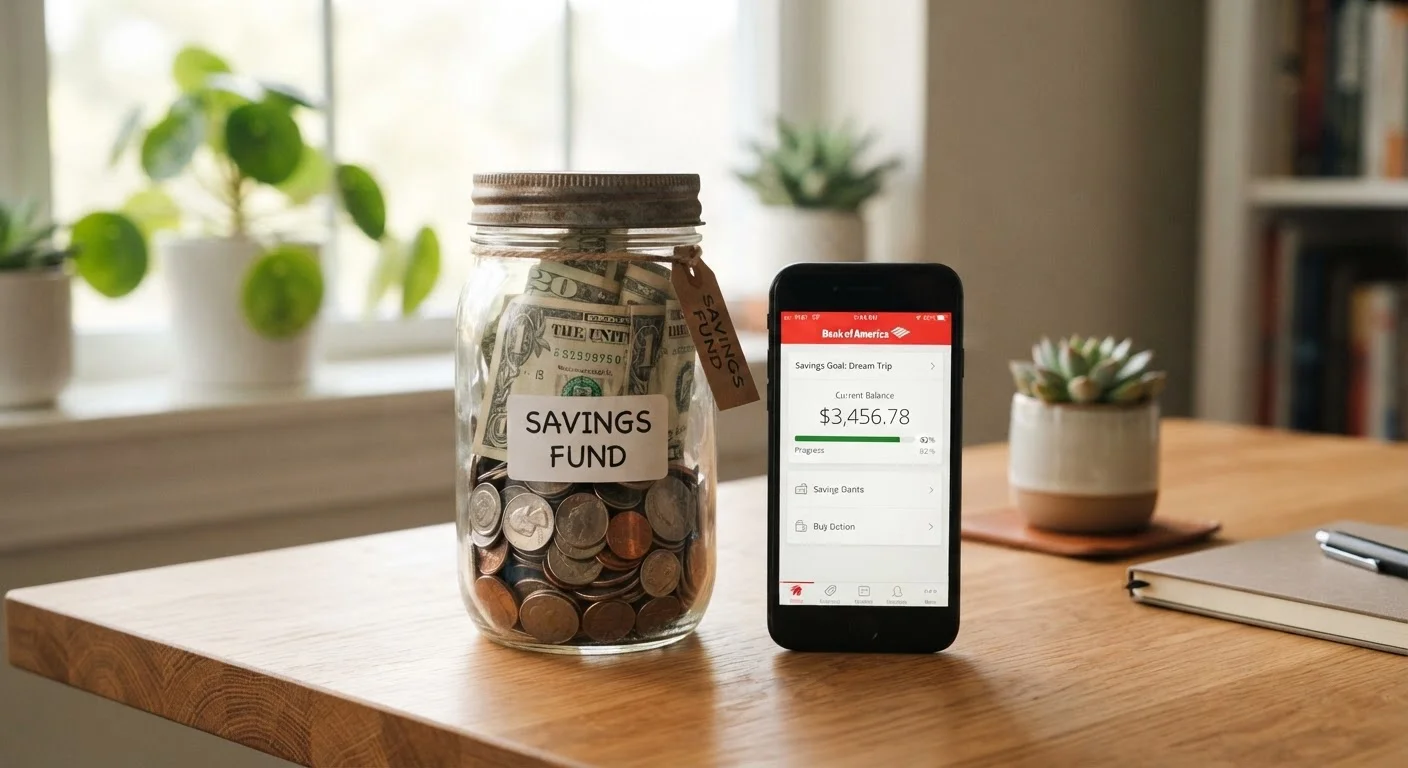
Many online banks allow you to open multiple savings sub-accounts at no cost and label each one by purpose. Naming a sub-account 'Holiday Gifts 2025' or 'Car Registration' makes it easier to track progress and resist the temptation to spend the money on something else.
Sinking Funds vs. Your Emergency Fund
These two savings tools are often confused, but they serve distinct purposes. An emergency fund exists for the unpredictable — a sudden job loss, a medical crisis, or an urgent home repair you never saw coming. A sinking fund targets the predictable — costs you know are coming, even if the exact date or amount shifts slightly.
Mixing the two weakens both. If you raid your emergency fund every December for holiday spending, you'll enter the new year with a depleted cushion for actual emergencies. Keeping them separate — even as labeled sub-accounts within the same bank — keeps both funds intact and purposeful. For a clearer breakdown, this comparison of emergency funds and monthly buffers is a useful reference.
Practical Tips for Staying on Track
Starting is easier than maintaining. A few habits help sinking funds stay functional over time:
- Review quarterly. Cost estimates change. If your car insurance premium went up, adjust your monthly contribution before the renewal date arrives.
- Don't merge funds. Keeping each sinking fund separate — even mentally — reduces the temptation to borrow from one category to cover another.
- Account for timing. If a cost is six months away and you're starting today, you have less runway than if you'd started a year ago. Recalculate and contribute more aggressively if needed, or adjust your expectations about what you can cover.
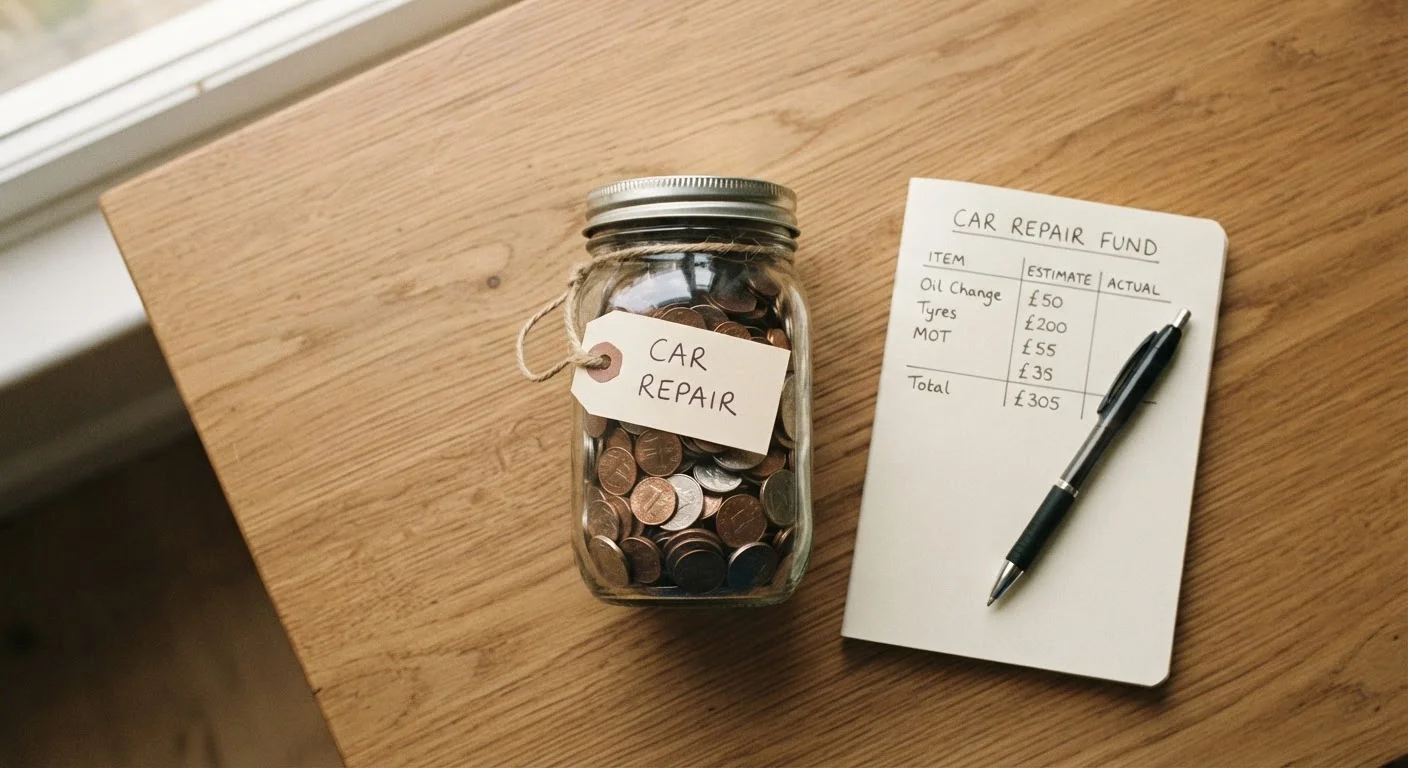
- Start small if needed. Even $20 a month toward a future car repair is better than nothing. Imperfect progress beats a perfect plan that never launches.
For a fuller framework on how sinking funds fit into a complete budget, this budgeting guide covers the mechanics in detail. And if you're building all of this from scratch, the Budgeting Basics hub is a practical starting point.
Sinking Funds Don't Require a Perfect Budget
You don't need a complete, polished budget to start a sinking fund. Even if you're still figuring out your monthly spending, you can open a labeled savings account, pick one upcoming expense, and start transferring a small fixed amount each payday. Refine the system as your financial picture becomes clearer.
This article is for general informational and educational purposes only and does not constitute personalized financial advice. Consult a qualified financial professional for guidance tailored to your individual situation.