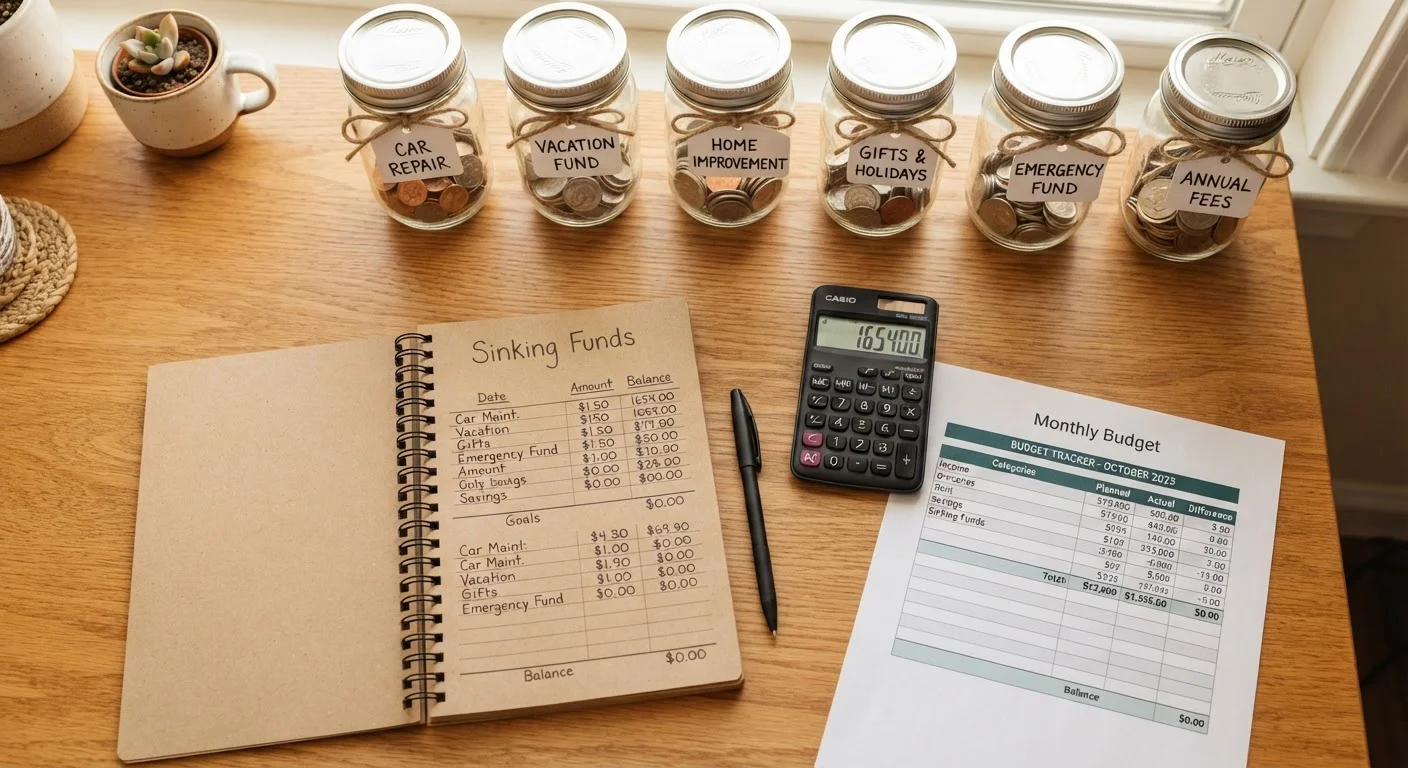

Why Irregular Expenses Break Budgets
Most budgets account for monthly constants — rent, utilities, groceries. The expenses that routinely derail spending plans are the ones that show up once or twice a year: a car registration notice, an annual insurance premium, a dentist bill, or a holiday shopping list. These costs aren't surprises in the truest sense — you know they're coming — but without a plan, they can feel like financial ambushes.
The result is often a rushed scramble: pulling from savings, floating the bill on a credit card, or cutting corners on other expenses that month. Sinking funds exist to solve exactly this problem.
1 in 3
Americans who couldn't cover a $400 emergency without borrowing
According to the Federal Reserve's Report on the Economic Well-Being of U.S. Households, a significant share of adults face difficulty with unexpected expenses.
$1,200+
Average annual car maintenance and repair cost per vehicle
Industry estimates from AAA consistently show that vehicle upkeep is one of the most common irregular expenses that strains household budgets.
How a Sinking Fund Actually Works
The mechanics are simple. You identify an upcoming expense, estimate its total cost, determine when you'll need the money, and divide that amount by the number of months between now and then. That quotient becomes your monthly contribution.
For example: If your car needs new tires in eight months and you expect the cost to be around $800, you'd set aside $100 per month. By the time the appointment rolls around, the money is waiting — no credit card required.
You can run multiple sinking funds at once, each with its own target and timeline. Common categories include:
- Vehicle maintenance and registration
- Holiday and gift spending
- Annual insurance premiums
- Travel and vacations
- Medical and dental expenses
- Home repairs or appliance replacement
For a closer look at how sinking funds fit into a broader budget system, see how sinking funds prevent budget blowups.
Automate to Make It Effortless
The biggest threat to a sinking fund is inconsistency. Set up an automatic transfer the same day your paycheck lands so the contribution happens before your spending decisions begin. Even small amounts — $20 or $30 per month — compound into meaningful reserves over a full year. Treating the contribution as a non-negotiable line item, just like rent, is the habit that makes sinking funds work.
Setting Up Your First Sinking Fund
Start with one category — preferably the irregular expense that has caused you the most stress in the past. Estimate the cost, set a target date, and calculate the monthly contribution. Then do three things:
- Open a separate account or sub-account. Keeping the money distinct from your checking account prevents accidental spending.
- Automate the transfer. Schedule a recurring transfer on payday so the contribution happens before you have a chance to spend it. Micro-saving automation methods can complement this approach if your contributions are small.
- Label the account clearly. Many banks allow nicknames for sub-accounts. Naming a fund "Car Maintenance" or "Holiday Gifts" reinforces its purpose every time you log in.
Once the first fund feels routine — usually after two or three months — add a second. Over time, most of your irregular expenses become predictable line items rather than emergencies.
Sinking Funds Within a Broader Saving Strategy
Sinking funds aren't a replacement for an emergency fund or long-term savings — they work alongside both. Think of them as the middle layer in a three-part savings structure: emergency reserves handle the truly unpredictable, sinking funds cover known irregular costs, and long-term accounts address distant goals like retirement or a home purchase.
This layered approach is especially useful for people whose income changes month to month. If you freelance or work variable hours, sinking fund contributions can flex with your earnings — contributing more in strong months and less during slow ones — without derailing the plan entirely. The strategies for variable-income savers covers this in practical detail.
For anyone working to build a more complete budget framework, the Budgeting Basics hub offers a range of tools and concepts to explore alongside sinking funds.
“A budget is telling your money where to go instead of wondering where it went. Sinking funds are the part of the budget that makes sure predictable costs don't become crises.”
— Dave Ramsey, Personal finance author and radio host
This article is for general informational and educational purposes only and does not constitute personalized financial advice. Consult a qualified financial professional for guidance tailored to your individual situation.