
The Core Difference Between the Two Approaches
Both methods share the same goal — building savings — but they approach the problem from opposite ends of the paycheck.
Paying yourself first means directing a set amount into savings the moment income arrives, before any bills, groceries, or discretionary spending. What remains is what you live on. The logic is structural: savings become non-negotiable rather than whatever survives the month.
Budgeting what's left means covering known expenses first — rent, utilities, loan payments, food — and saving whatever remains at the end of the month. This approach prioritizes stability for fixed obligations but places savings last in line.
The practical difference shows up in behavior. When savings come last, they compete with every spending impulse that arises during the month. When they come first, that competition is removed entirely. For a deeper look at how automation reinforces this, see why automating savings outperforms willpower.
How Each Method Works in Practice
Pay yourself first in practice: On payday, a fixed dollar amount or percentage — often set up as an automatic transfer — moves directly to a savings or retirement account. Many employer-sponsored retirement plans operate this way by default. The transfer happens before you open your wallet. You then budget and spend from what remains.
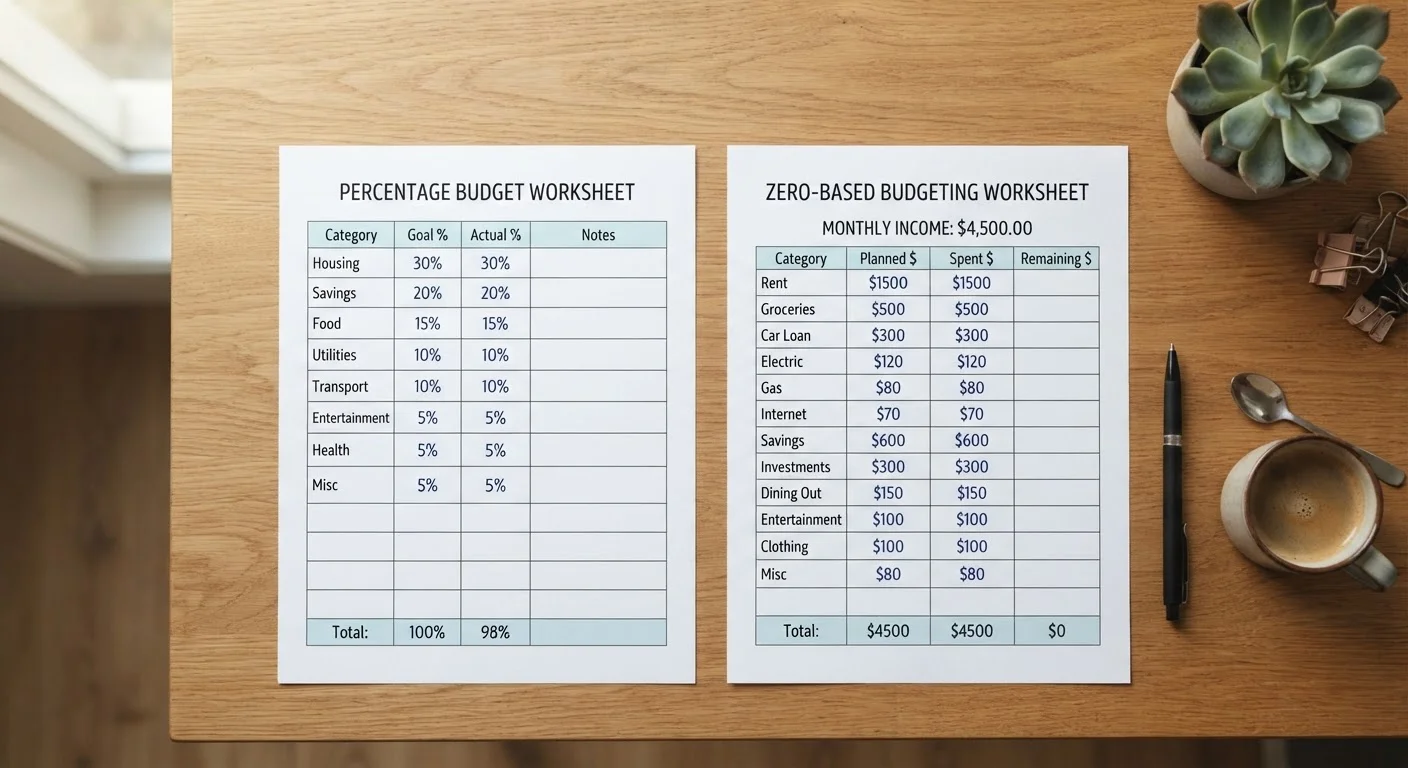
Budget what's left in practice: You list all expected expenses for the month, allocate funds to each category, and assign any surplus to savings. This requires a more active monthly review and works best when income and expenses are relatively predictable. It shares structural similarities with zero-based and percentage-based budgeting frameworks.
| Pay Yourself First | Budget What's Left | |
|---|---|---|
| Savings timing | Saved before any spending | Saved after expenses are covered |
| Best income type | Steady, predictable paycheck | Variable or irregular income |
| Automation potential | High — easy to automate | Lower — requires active monthly review |
| Spending discipline required | Low — constraint is built in | High — surplus must be protected |
| Flexibility for tight months | Lower — fixed commitment | Higher — savings adjust with income |
| Consistency of savings outcome | Generally more consistent | Depends on monthly discipline |
Neither method requires sophisticated tools. A simple spreadsheet, a notes app, or a basic bank transfer setup can support either approach.
The Real-World Trade-Offs
Start Small to Build the Habit
If you're new to paying yourself first, beginning with even 1–3% of your take-home pay is a reasonable starting point. The goal initially is to establish the habit and the automatic transfer, not to hit a target savings rate immediately. Many people gradually increase the percentage over time as their budget adjusts to the lower spending baseline.
The pay-yourself-first method is straightforward to automate, which behavioral research consistently identifies as a meaningful advantage. When saving is automatic, it removes the monthly decision point where savings tend to get cut.
The downside: if your income is irregular — freelance work, commission-based pay, or seasonal employment — committing to a fixed savings amount each month can create cash flow problems in lean periods. Over-saving one month might mean struggling to cover fixed bills the next.
Budgeting what's left is more responsive to income fluctuations. If it's been a slow month, you reduce savings proportionally. If income was strong, you save more. The trade-off is that this flexibility often translates to saving less overall, because discretionary spending has a way of expanding when there's no early constraint on it.
For households managing two income streams, the dynamic adds another layer of complexity — see how couples can structure a joint budget for frameworks that accommodate multiple earners.
Combining Both Approaches
In reality, the two methods aren't mutually exclusive. A practical hybrid looks like this: automate a modest, fixed savings contribution on payday (pay yourself first), then budget remaining income carefully across expense categories (budget what's left). When income is higher than expected, the surplus goes to savings or debt repayment. When income dips, only the automated base amount is committed.
This layered approach is particularly useful for people trying to pay off debt while saving simultaneously, where cash flow must serve multiple competing priorities. It also aligns well with distinguishing between an emergency fund and a monthly buffer — two savings roles that are easy to conflate but serve different purposes. See the difference between an emergency fund and a monthly buffer for clarity on that distinction.
The underlying principle across both methods is the same: small, consistent financial moves compound over time. The best method is the one you'll actually stick with — and which one that is depends on how your income arrives and how your expenses are structured.
This article is for general informational and educational purposes only and does not constitute personalised financial advice. For guidance specific to your situation, consult a qualified financial adviser.