Why Tracking Method Matters as Much as Tracking Itself
Most people assume that simply recording purchases is enough to understand their spending. In practice, the method you choose determines what patterns become visible — and which ones stay hidden. A bank statement review will surface your biggest monthly categories almost instantly, but it won't tell you why you spent $340 at grocery stores when you budgeted $200. A detailed spreadsheet might answer that question, but only if you're willing to maintain it.
The goal isn't to find the perfect system. It's to find one that shows you something actionable about how your money moves — then use that information to make deliberate decisions. This article lays out four practical methods, what each is genuinely good at revealing, and where each falls short.
This content is for general informational purposes only and does not constitute personalized financial advice. Consider consulting a licensed financial professional for guidance specific to your situation.
The Four Main Approaches Compared
Each method below has a distinct data profile — think of them as different camera lenses on the same financial picture.
| Bank Statement Review | Spreadsheet | Envelope System | Budgeting App | |
|---|---|---|---|---|
| Setup effort | Very low | Medium to high | Low | Low |
| Ongoing effort | Monthly only | Weekly or daily | Daily (cash handling) | Minimal |
| Best pattern revealed | Large category totals | Trends over time | Overspending by feel | Cross-account overview |
| Works for digital spend | Yes | Yes | No | Yes |
| Customizable categories | Fully manual | Fully custom | Preset by envelope | Limited by app |
| Risk of blind spots | Retrospective only | Low if maintained | No digital trail | Auto-categorization errors |
For a broader look at how cash-based and app-based systems stack up in daily life, see our comparison of cash envelopes and digital budgeting apps.
Bank Statement Review: The Honest Starting Point
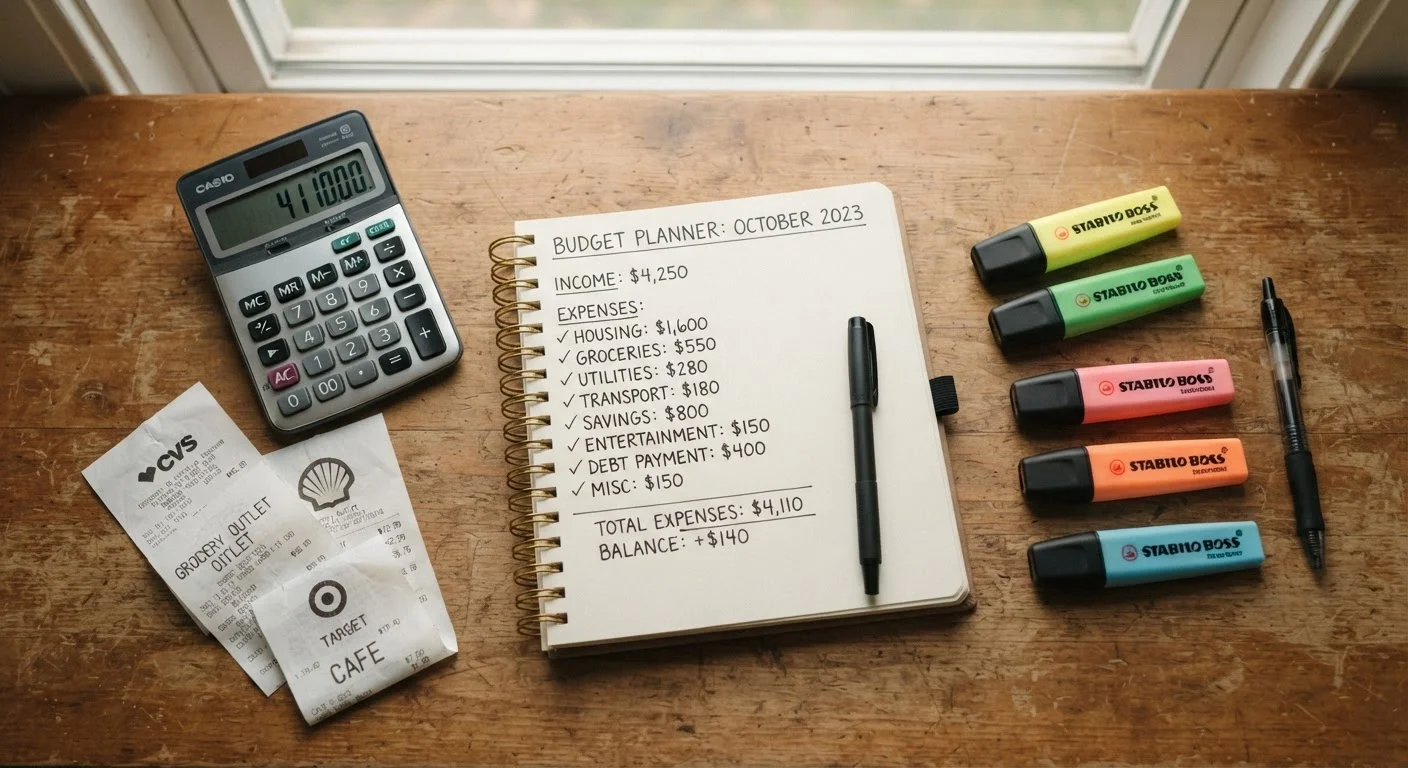
Pulling a month of bank and credit card statements requires no setup and no ongoing commitment. Go line by line, assign each transaction a category (groceries, dining, subscriptions, transportation), and total each group. This method works well for a first-time audit because it uses real historical data — not estimates.
Its limitation: it's retrospective. You're seeing last month's behavior, and without a consistent categorization standard, it's easy to rationalize edge cases rather than learn from them. Use it to establish a baseline, then graduate to a method that tracks spending in real time.
Start With Just Three Categories
When doing your first bank statement review, resist the urge to build a 15-category breakdown. Start with just three: needs (rent, utilities, groceries), wants (dining, entertainment, subscriptions), and financial obligations (debt payments, savings transfers). Getting that high-level split right is more valuable than perfect granularity at the start.
Spreadsheets: High Effort, High Clarity
A well-structured spreadsheet — whether in a free tool or a dedicated personal finance template — lets you design your own categories, track spending by paycheck cycle rather than calendar month, and build running totals that surface trends over quarters, not just weeks. This granularity is what reveals patterns like seasonal spending spikes or a slow creep in discretionary categories that bank statements mask in aggregate.
The trade-off is manual entry. Studies on habit formation consistently show that friction reduces compliance — if entering receipts feels like a chore, most people abandon the method within weeks. Building in a short weekly entry session (rather than daily logging) is one way to reduce that friction without losing accuracy.
Envelope Systems: Spending You Can Feel
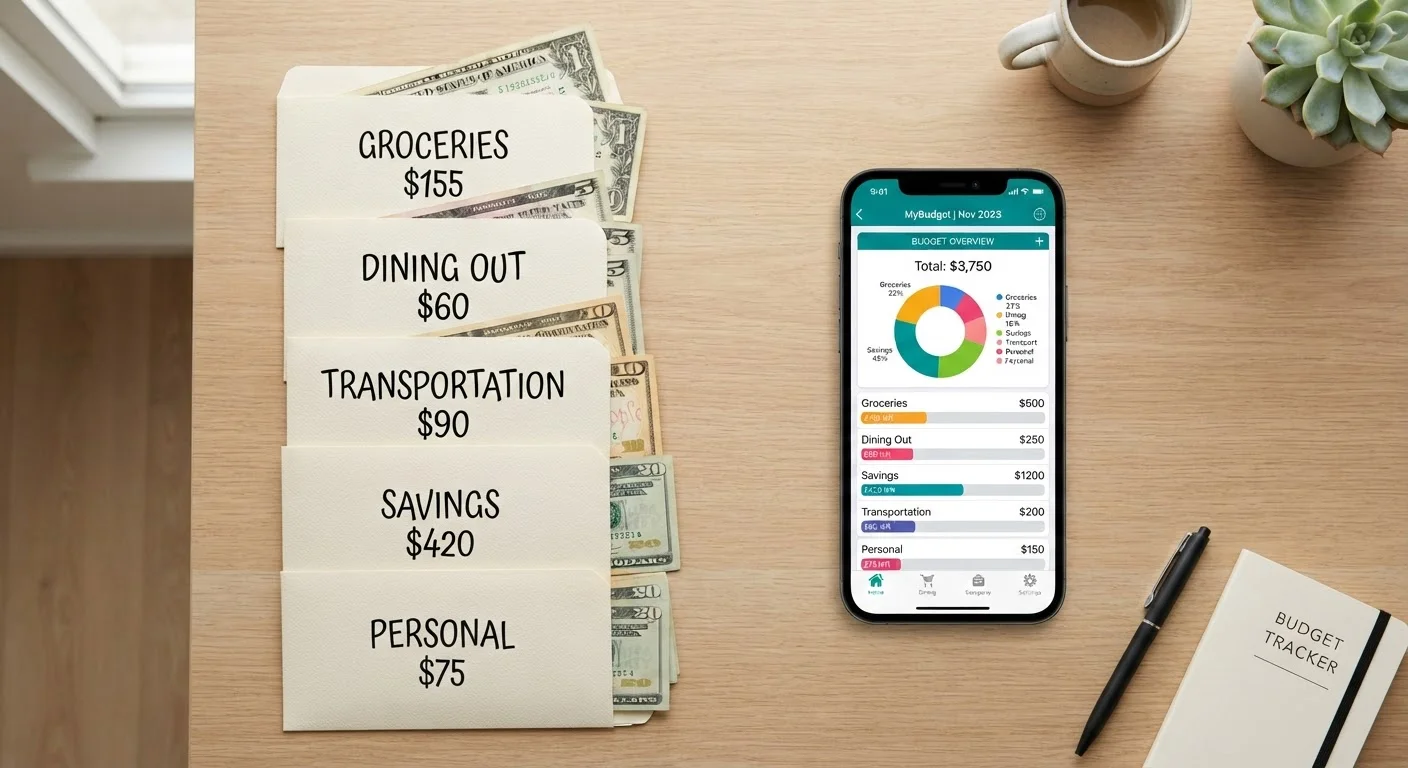
The envelope method — physically dividing cash into labeled envelopes for each spending category — creates a tangible limit that no app fully replicates. When the grocery envelope is empty, you feel it in a concrete way. Research in behavioral economics suggests that paying with physical cash tends to generate more psychological friction than digital transactions, which can translate into more deliberate purchasing decisions.
Where envelopes fall short: they don't accommodate digital-first spending well, and they provide no audit trail unless you log what you spend. They work best as a targeted tool for one or two categories you consistently overspend, rather than a whole-budget solution.
Budgeting Apps with Account Sync: Automation and Its Blind Spots
Apps that connect directly to bank accounts automatically categorize transactions and surface spending summaries without manual entry. This efficiency makes them the easiest method to sustain long-term. The pattern-recognition features in many of these tools can flag unusual charges or show month-over-month shifts across categories you might not notice otherwise.
The blind spot: auto-categorization is imperfect. A restaurant charge might be flagged as entertainment; a utility store might read as home improvement. If you never review the underlying transactions — which automation quietly discourages — miscategorization compounds into misleading totals. Treat the dashboard as a starting point for questions, not a final answer.
Don't Confuse Synced Data With Accurate Data
Budgeting apps show what they can read from your linked accounts — they don't capture cash spending, peer-to-peer transfers, or split transactions accurately without manual correction. If a significant portion of your spending happens outside your primary debit or credit card, app dashboards may consistently undercount entire categories. Always cross-reference against actual statements periodically.