
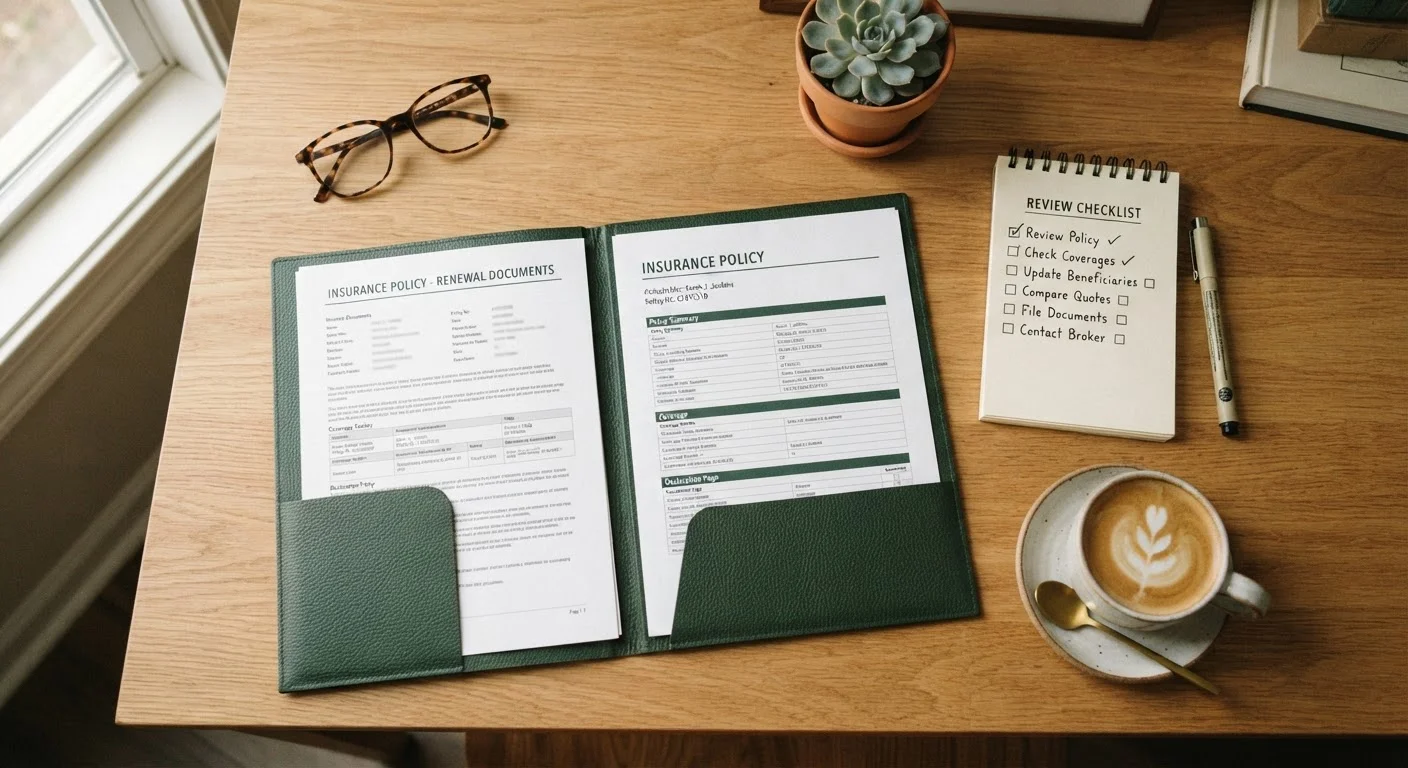
Why Bother With an Annual Insurance Review?
Most people renew their insurance policies on autopilot — same coverage, same carrier, same premium. But your life rarely stays the same from one year to the next. A promotion, a move, a new baby, or even a home renovation can quietly render your existing coverage inadequate without you realising it.
An annual checkup is simply a structured habit: you set aside time before each renewal to ask whether your current policy still reflects your actual life. It is general information and education, not a substitute for personalised advice from a licensed insurance agent — but it gives you the right questions to bring to that conversation.
If you want to go deeper on year-round policy habits, our annual policy review guide covers best practices for keeping limits and deductibles aligned over time. And for a broader look at what policy terms actually mean, the Policy Essentials hub is a solid starting point.
Don't Wait Until the Renewal Notice Arrives
Many insurers send renewal notices only 30 days before the policy expires, leaving little time for a thoughtful review. Start your checkup 60 to 90 days before renewal so you have room to ask questions, request quotes if needed, and make changes without rushing. Changes made at the last minute may not take effect in time, or may be subject to restrictions.
What You'll Need Before You Start
Gather these items before working through the checklist. Having them on hand keeps the review focused and efficient.
Current policy declarations pages
Provides your existing coverage limits, deductibles, and named insureds at a glance.
Last year's renewal statement
Lets you compare premium changes year over year and spot unexplained increases.
Home inventory list or photos
Helps verify that your personal property limits still cover what you actually own.
Recent pay stubs or income documentation
Useful for assessing whether your liability limits adequately reflect your current financial situation.
Contact details for your insurance agent or broker
Allows you to quickly follow up on questions or gaps identified during your review.
The Annual Insurance Checkup Checklist
Work through each group below. Items marked must are non-negotiable for a meaningful review. Should items are strongly recommended. Nice-to-have items add depth when you have extra time.
Life Changes Since Last Renewal
Coverage Limits and Deductibles
Beneficiaries and Named Insureds
Exclusions and Gaps
Premiums and Payment Details
Documentation and Claims History
A Coverage Gap Can Be Costly at Claim Time
Discovering that your coverage limit is too low — or that a risk is excluded — after a loss is far more expensive than addressing it before renewal. Outdated limits, missing riders, and incorrect named insureds are among the most common and preventable problems found during policy reviews. Take the time to read your policy documents, not just the summary sheet.
Once you've completed the checklist, note any gaps or questions and bring them to a licensed agent or adviser before your renewal date. Keep in mind that coverage terms, exclusions, and regulations vary by provider and state — always read your actual policy documents rather than relying on memory or summary sheets.
Insurance decisions sit alongside your broader financial picture. Our Everyday Money Tips hub and the monthly financial reset checklist can help you see how premium costs fit into your overall budget.
This article is for general informational and educational purposes only and does not constitute personalised insurance, financial, or legal advice. Coverage availability, terms, and regulations vary by provider, policy type, and state. Consult a licensed insurance agent or adviser for guidance specific to your situation.