
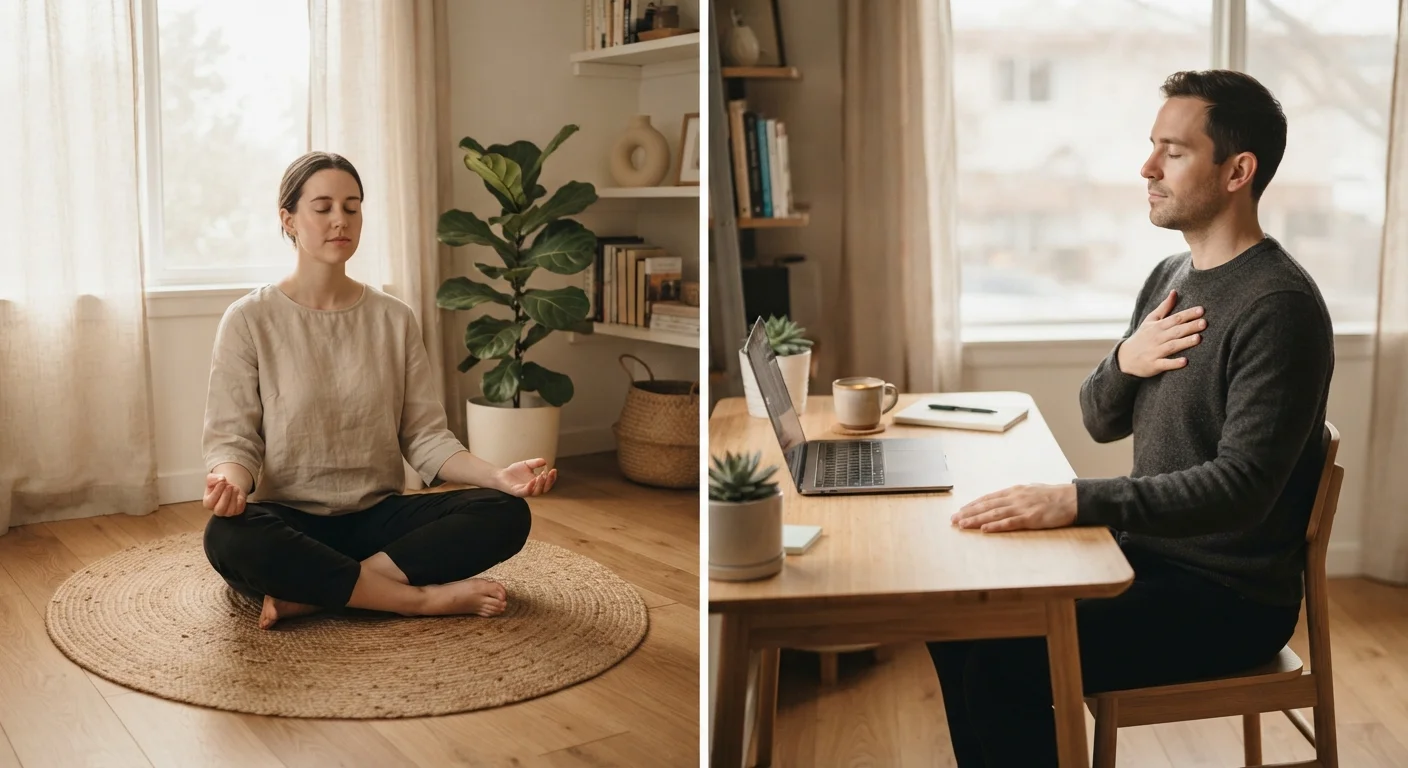
What Each Practice Actually Involves
Despite often appearing together in wellness content, meditation and deep breathing are distinct practices with different mechanisms and demands.
Meditation is a broad category of mental training practices. Most forms involve directing attention — to the breath, a phrase, a sound, or bodily sensations — and gently returning focus when the mind wanders. Common styles include mindfulness meditation, body-scan meditation, and loving-kindness practice. Sessions typically range from 10 to 30 minutes and benefit from regularity. The goal is not to empty the mind but to observe thoughts without reacting to them.
Deep breathing, sometimes called diaphragmatic or controlled breathing, is a specific physiological technique. By slowing and deepening the breath — typically extending the exhale longer than the inhale — you directly stimulate the vagus nerve and activate the parasympathetic nervous system, the body's built-in "rest and digest" mode. Techniques like 4-7-8 breathing or box breathing can be completed in under five minutes. To understand why stress affects the body so profoundly in the first place, see our article on the science behind chronic stress.
| Criterion | Meditation | Deep Breathing |
|---|---|---|
| Typical session length | 10–30 minutes | 2–5 minutes |
| Learning curve | Moderate — builds with practice | Minimal — works immediately |
| Primary mechanism | Cognitive — trains attention and awareness | Physiological — activates parasympathetic system |
| Speed of effect | Gradual — weeks to months | Rapid — within minutes |
| Equipment or space needed | Quiet space recommended | None — fully portable |
| Best evidence for | Anxiety, depression, focus, emotional regulation | Acute stress, heart rate, cortisol reduction |
| Consistency requirement | High — regular practice matters | Low — effective even used occasionally |
How the Evidence Compares
Both practices have meaningful research support, though the depth and scope of evidence differs.
Meditation has been studied extensively. A widely cited meta-analysis published in JAMA Internal Medicine found that mindfulness meditation programs produced moderate improvements in anxiety, depression, and pain. Research also suggests that long-term meditators show measurable differences in areas of the brain associated with attention and emotional regulation. These are promising findings, though it's important to note that individual results vary and study designs differ significantly.
Deep breathing's effects are well-documented at a physiological level. Slow, controlled breathing has been shown to reduce cortisol levels, lower blood pressure, and decrease subjective feelings of anxiety relatively quickly. A 2023 study in Cell Reports Medicine found that cyclic sighing — a specific breathwork pattern — produced greater reductions in anxiety and improved mood compared to mindfulness meditation over a month-long period. That said, the two practices target somewhat different outcomes, making direct comparisons complex.
8 weeks
Typical duration before measurable meditation benefits
Most well-designed mindfulness studies use eight-week structured programs as the minimum intervention period.
~5 min
Time for deep breathing to lower acute stress
Research on controlled breathwork techniques consistently shows physiological calming effects within a single short session.
36%
Reduction in anxiety symptoms in a mindfulness meta-analysis
A meta-analysis in JAMA Internal Medicine found moderate effect sizes for mindfulness programs on anxiety, depression, and pain.
Neither practice replaces professional mental health care. If stress is significantly affecting your daily functioning, consult a qualified healthcare provider.
Practical Fit: Time, Space, and Habit
Choosing the right practice often comes down to your schedule and lifestyle — not which one is objectively superior.
Meditation generally asks more of you upfront. Consistency matters: most research examines programs of eight weeks or more. You don't need a special cushion or studio, but finding a quiet space and committing to a regular time helps. Apps and guided recordings lower the barrier considerably, though even these require showing up daily. The payoff tends to accumulate gradually, which means patience is part of the practice.
Deep breathing is almost frictionless. You can practice it in a parked car, a bathroom break, or a meeting pause. There's nothing to download or schedule. This accessibility makes it a natural fit for the kind of small, consistent habits that research suggests have the most durable effect on mood and resilience.
Worth noting: the practices aren't mutually exclusive. Many people use deep breathing as a quick reset throughout the day and reserve meditation for a dedicated morning or evening session. If you're noticing that your stress level is escalating rather than staying situational, it may be worth reading about how stress differs from burnout to assess where you stand. And if your current coping strategies don't seem to be helping, some common habits may actually be deepening the problem.
A personal mental wellness check-in can help you identify which areas of your routine most need support before deciding where to focus.
This article is for general informational and educational purposes only and does not constitute medical or mental health advice. Always consult a qualified healthcare professional for concerns about your personal health or well-being.