
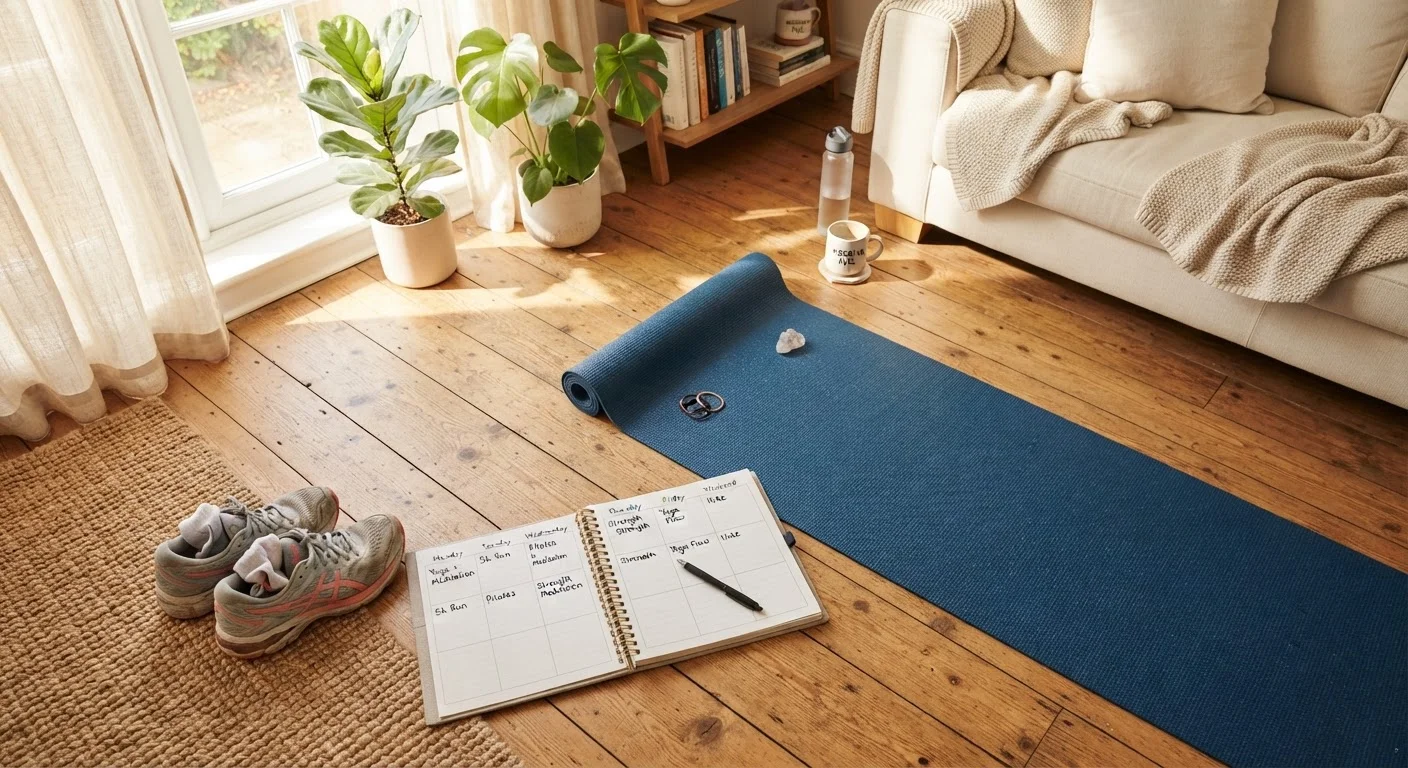
Why Most Movement Plans Fall Apart
Most people do not fail at fitness because they lack motivation. They fail because their plan was designed for a best-case week, not a typical one. Overly ambitious schedules, unfamiliar activities, and zero built-in flexibility create the conditions for quitting — usually within the first two to three weeks.
Research in behavior change consistently points to a few core factors that separate lasting habits from short-lived ones: starting small, building on existing routines, and making the activity itself feel rewarding rather than punishing. A weekly movement plan built on these principles looks less like a training program and more like a realistic map of how you can move more across a real seven-day stretch.
Always Consult Your Healthcare Provider First
This article provides general health information and is not a substitute for personalized medical advice. Before starting a new physical activity routine — especially if you have an existing health condition, injury, or have been sedentary for an extended period — consult a qualified healthcare professional. They can help you identify appropriate activity types and intensities for your individual situation.
The steps below walk you through building that kind of plan — practical, flexible, and designed to grow with you over time.
What You'll Need Before You Begin
Getting the right inputs in place before building your schedule saves time and improves the quality of your plan from the start.
What you will need
You do not need specialized equipment or gym access to build an effective movement week. Many evidence-supported activities — walking, bodyweight strength work, stretching — require nothing beyond comfortable clothing and consistent effort. The tools below can be helpful, though most are optional.
Weekly planner or calendar app
Schedule and visually track your planned movement sessions each week.
Fitness tracking app or journal
Log completed sessions, how you felt, and any adjustments needed.
Comfortable, supportive footwear
Reduces injury risk during walking, jogging, or gym-based activities.
Resistance bands or light dumbbells
Enables simple strength-based movement at home without gym access.
How to Build Your Weekly Movement Plan
Follow the steps below to design a weekly movement structure that reflects your current capacity, fits your schedule, and leaves room to grow. Each step builds on the previous one, so work through them in order before making your final plan.
Assess your current starting point honestly
Before mapping out any schedule, take stock of where you actually are — not where you think you should be. How many days per week are you currently moving with intention? What activities feel accessible and enjoyable versus burdensome? Note any physical limitations or recovery needs. This honest baseline prevents the most common planning mistake: designing for an idealized version of yourself rather than your real daily life.
Choose a realistic number of movement days
For most people returning to or building a movement routine, two to three dedicated sessions per week is a more durable starting point than five or six. Public health guidelines generally recommend at least 150 minutes of moderate-intensity aerobic activity per week for adults, but reaching that benchmark progressively is far more sustainable than attempting it in week one. Decide on your initial session count and block those time slots in your calendar as non-negotiable appointments.
Select a mix of activity types
A well-rounded weekly plan includes more than one type of movement. Aim to blend:
- Aerobic or cardiovascular activity — walking, cycling, swimming, dancing
- Strength or resistance training — bodyweight exercises, resistance bands, weights
- Flexibility and mobility work — stretching, yoga, or gentle movement flows
You do not need all three categories every week from day one. Start with what feels most accessible, then layer in variety over time. On days when a full session is not possible, short movement snacks throughout the day can help maintain momentum.
Schedule intentional rest and recovery days
Rest days are not gaps in your plan — they are part of it. Muscle repair, nervous system recovery, and sustained motivation all depend on adequate downtime between sessions. Plan at least one to two full rest days per week, and treat lighter recovery activities — a slow walk, gentle stretching — as legitimate movement options on those days. Learn more about how rest and recovery function as part of any fitness routine.
Review and adjust weekly
At the end of each week, spend five minutes reviewing what worked and what did not. Did a scheduled session get skipped? Was the intensity too high or too low? Small, honest adjustments — shifting a session to a different day, swapping an activity — compound into a plan that genuinely fits your life. Treat the plan as a living document, not a fixed contract.
Use Habit Stacking to Anchor New Movement
Pairing a new movement habit with something you already do reliably — like a morning coffee or a lunch break — dramatically reduces resistance. For a deeper look at the research behind this approach, see how habit stacking works for physical activity.
Avoid the All-or-Nothing Trap
One of the most common reasons movement plans fail is setting an unsustainably high initial bar. Missing a session does not make the plan a failure — it makes it a normal week. Flexibility built into your schedule from the start prevents the guilt cycle that leads most people to quit entirely.
Keeping the Momentum Going
Consistency over weeks and months matters far more than any single session. A plan that you follow imperfectly for three months will produce better outcomes than a perfect plan abandoned after two weeks. When motivation dips — and it will — focusing on showing up in any form, even a shortened session, preserves the habit infrastructure you have built.
If your schedule is frequently disrupted, movement snacks — short, frequent activity breaks — offer a practical bridge between structured sessions and the realities of a busy day. And if winding down after active days feels difficult, a consistent pre-sleep wind-down routine can support both recovery and sleep quality.
This article is for general informational and educational purposes only and does not constitute medical advice. Always consult a qualified healthcare professional before starting a new exercise program, particularly if you have any health conditions or concerns.