Why the Distinction Actually Matters
People often use "emergency fund" and "savings account" interchangeably, but conflating the two can quietly undermine your financial stability. A savings account is a financial tool — a place your bank holds your money while it earns a bit of interest. An emergency fund is a financial strategy — a deliberate reserve set aside for life's unexpected hard stops.
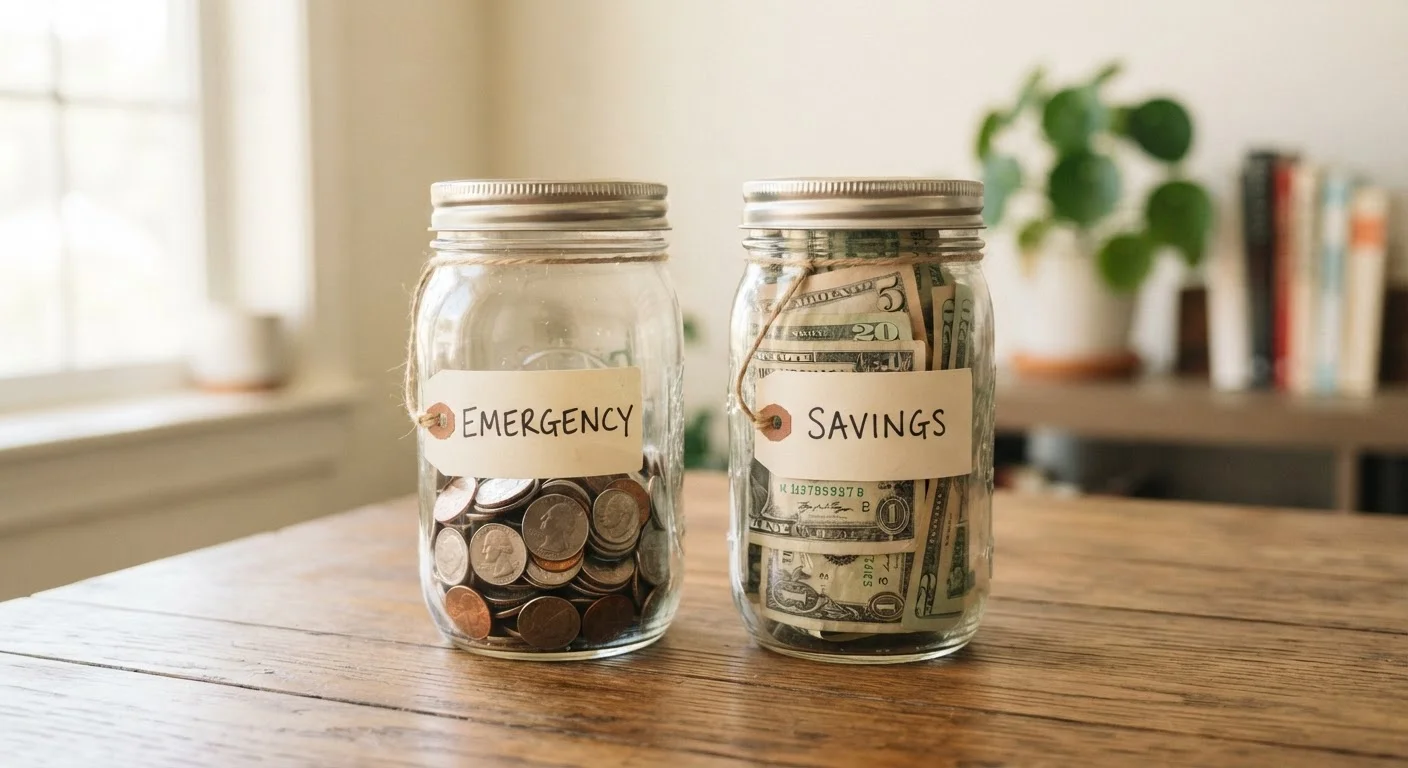
Think of it this way: a savings account is a container. An emergency fund is what you put in it and why. When you understand the difference, you make better decisions about how to label, protect, and grow your money.
Both Can Coexist in the Same Bank
You don't need to use a different bank for your emergency fund and your general savings. Many institutions allow multiple savings accounts under one login. The key is keeping them labeled and intentional — not the physical location of the money.
What a Savings Account Actually Is
A savings account is a deposit account offered by banks and credit unions that holds money not needed for daily spending. It earns interest — typically at a modest rate — and is separate from your checking account. Savings accounts are federally insured up to applicable FDIC or NCUA limits, making them low-risk places to park money you want to preserve.
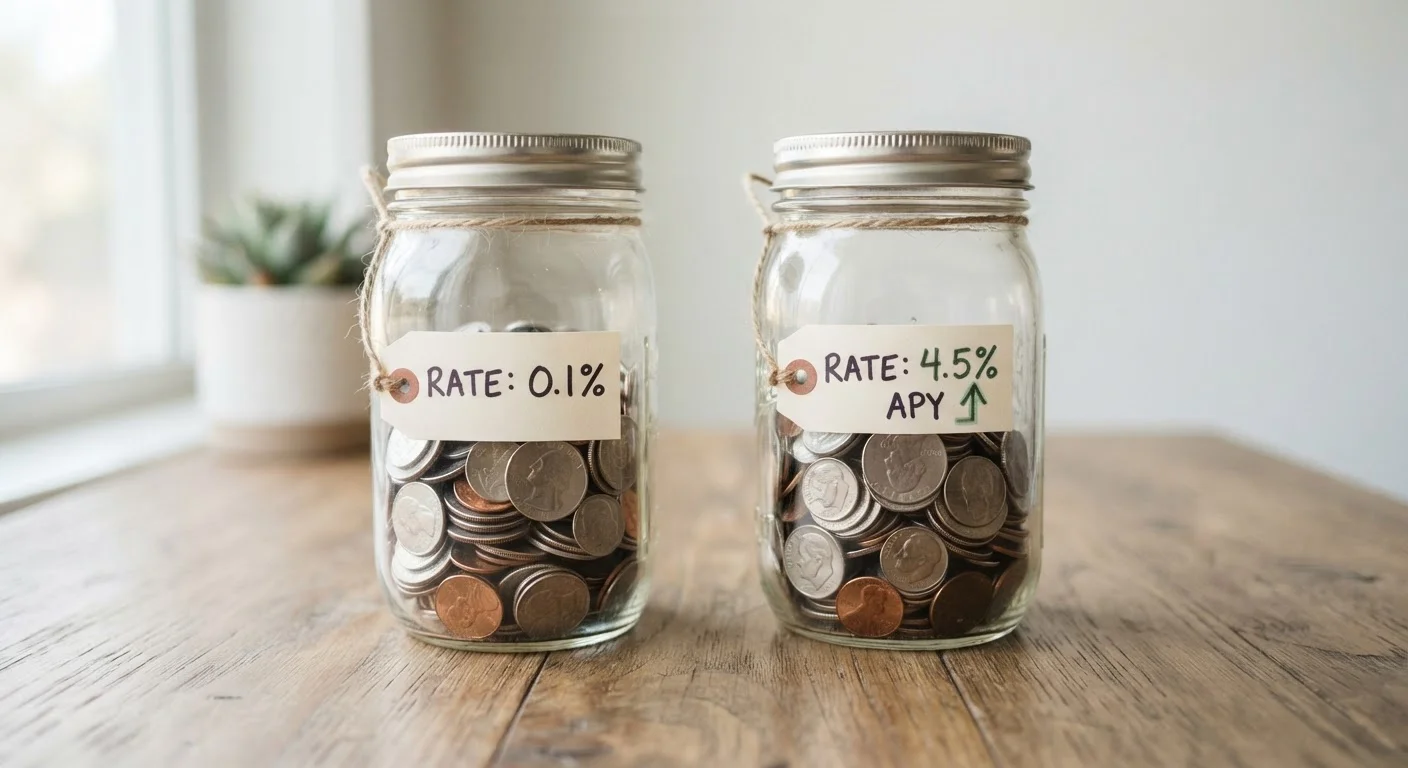
What makes savings accounts flexible is that they can serve any goal. You might keep one for home repairs, another for a future car purchase, and a third for a family trip. The account itself doesn't dictate the purpose — you do. That flexibility is useful, but it also means the account has no built-in guardrails. Money you intend for emergencies can drift toward other uses if it's sitting alongside everyday savings. For a broader look at account options, our comparison of high-yield and traditional savings accounts covers how rates and accessibility vary.
What Makes an Emergency Fund Different
An emergency fund isn't defined by where the money lives — it's defined by what the money is for and the discipline to leave it alone. A genuine emergency fund covers unexpected, necessary costs: sudden job loss, an urgent medical bill, a failing furnace in January, or a car repair that stands between you and your paycheck.
The standard guidance from financial educators suggests building three to six months of essential living expenses in your emergency reserve. "Essential" matters here — it means housing, utilities, food, transportation, and minimum debt payments, not discretionary spending. That distinction helps you calculate a realistic target rather than an abstract number.
~57%
Americans unable to cover a $1,000 emergency from savings
According to Bankrate's annual Emergency Savings Report, a significant majority of U.S. adults would need to borrow or use credit for an unexpected $1,000 expense.
3–6 months
Recommended emergency fund coverage of essential expenses
This range is a broadly cited guideline from financial education organizations; the right target varies by individual income stability and household needs.
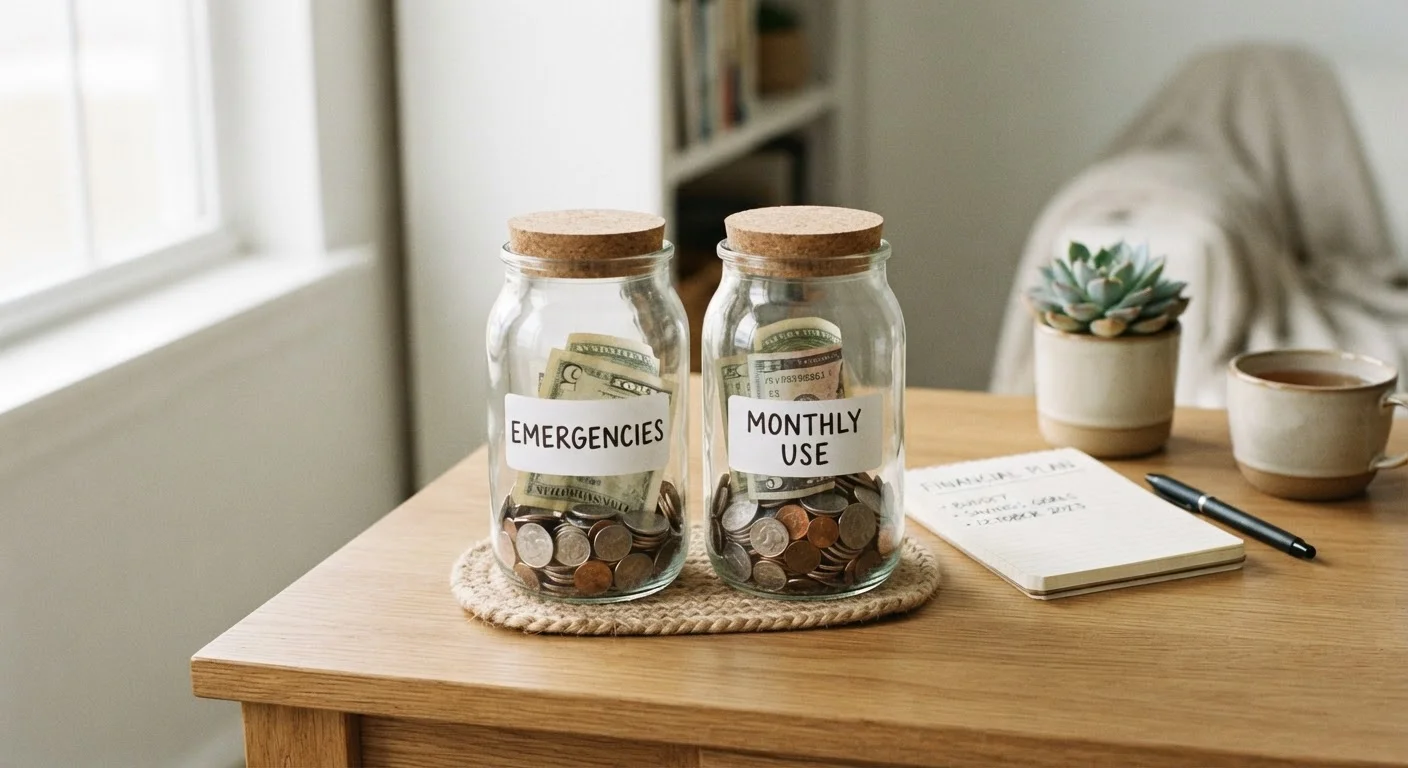
It's also worth noting what an emergency fund is not. It isn't a rainy-day vacation fund, a buffer for overspending, or a place to pull from when a sale feels too good to pass up. If you want to understand how emergency reserves differ from a short-term monthly buffer, our article on emergency funds versus monthly buffers breaks down that boundary clearly.
How to Structure Both Without Overthinking It
The most practical approach is simple: open a dedicated savings account exclusively for your emergency fund. Label it clearly — most online banks let you name sub-accounts. This creates a psychological and logistical barrier between your safety net and your other goals.
From there, build the emergency fund first before aggressively saving for discretionary goals. Even a small starting reserve of a few hundred dollars meaningfully reduces your reliance on credit cards when something goes sideways. Once that baseline is in place, you can build out savings accounts for specific goals alongside it.
Label Your Accounts to Stay Disciplined
Many banks and credit unions let you assign custom names to savings accounts or sub-accounts. Labeling one "Emergency Fund — Do Not Touch" creates a simple but effective mental barrier. It won't prevent withdrawals, but it adds a moment of friction that helps you pause before spending reserves on non-emergencies.
Automate contributions to both buckets if you can. Treating your emergency fund contribution like a fixed monthly expense — rather than whatever is left over — is one of the most reliable ways to make steady progress without constant willpower.
This article is for general informational and educational purposes only and does not constitute personalized financial advice. Please consult a qualified financial professional for guidance specific to your circumstances.