
How Each Strategy Works Against Interest
When you carry a loan, interest accrues on your remaining principal balance. Every dollar that reduces that balance — regardless of when it arrives — starts saving you money from that day forward. Both strategies exploit this same mechanic, just differently.
A lump-sum payment is a one-time payment beyond your regular minimum, applied directly to principal. Because it instantly lowers your balance by a large amount, the interest calculated on future billing cycles drops right away. A $2,000 lump sum on a $15,000 auto loan at 7% APR could save hundreds in total interest and shave months off repayment.
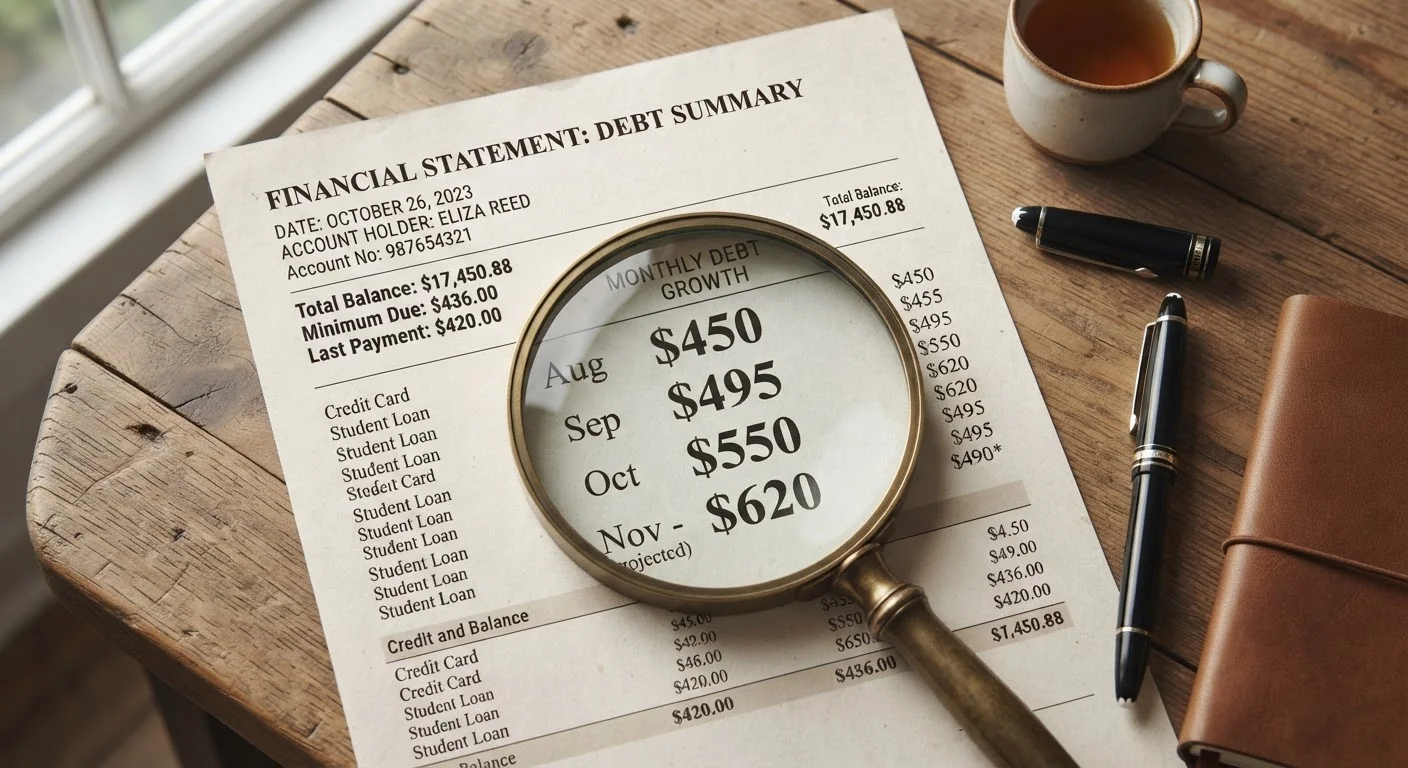
Consistent extra payments work through repetition. Adding $50, $100, or $200 to every monthly payment chips away at principal month after month. The savings compound over time: each extra dollar paid today means slightly less interest charged next month, which means your regular payment covers even more principal the month after that. To understand the mechanics in depth, see how compound interest inflates your balance.
~$1,000+
Interest saved on a typical auto loan with early extra payments
General amortization modeling shows even modest extra payments applied early in a loan's life can reduce total interest by hundreds to over a thousand dollars on mid-size balances.
4–6 months
Average time cut from a 5-year loan with consistent extra payments
Adding roughly 10–15% to a monthly payment on a standard consumer loan can shorten repayment by several months over the loan's life.
The Real-World Math: A Side-by-Side Look
Consider a $20,000 personal loan at 9% APR with a 5-year term and a minimum monthly payment of roughly $415. Here's how the two strategies compare against making only the minimum payment:
| Minimum Payment Only | Lump Sum ($2,400 at Month 1) | Extra $200/Month | |
|---|---|---|---|
| Total interest paid | ~$4,685 | ~$3,890 | ~$3,980 |
| Loan payoff time | 60 months | ~55 months | ~53 months |
| Extra cash required | $0 | $2,400 upfront | $200/month |
| Flexibility if income drops | High | Low (already spent) | Moderate |
| Habit-building value | None | Low | High |
| Best income type | Any | Irregular/windfall | Steady/salaried |
The lump-sum scenario assumes a single $2,400 extra payment at month one. The consistent extra payment scenario adds $200 per month throughout the loan. Notice that the total extra cash committed is identical — $2,400 — but the timing and behavioral demands are different. For most borrowers, the lump sum wins on paper when applied early, because it reduces the base on which all future interest is calculated from day one.
When a Lump Sum Makes the Most Sense
A lump-sum payment tends to deliver the greatest benefit when applied to high-interest debt early in the loan term, when the interest portion of each payment is at its peak. If you receive a tax refund, work bonus, or an inheritance, directing that cash toward principal before spending it elsewhere can produce an outsized financial return — often higher than what a savings account would yield at current rates.
That said, a lump sum only makes sense if you have a stable emergency fund in place. Draining your cash reserves to pay down a loan and then facing an unexpected expense could force you into new high-interest borrowing — erasing your gains. Always confirm with your lender that extra payments are applied to principal, not toward future scheduled payments, which some servicers do by default.
Confirm How Extra Payments Are Applied
Not all loan servicers automatically apply extra payments to your principal balance. Some apply the overage to your next scheduled payment instead, which reduces the interest-saving benefit significantly. Before sending a lump sum, contact your lender or log into your servicer's portal and select 'apply to principal' explicitly. Get confirmation in writing if the loan balance is substantial.
When Consistent Extra Payments Win
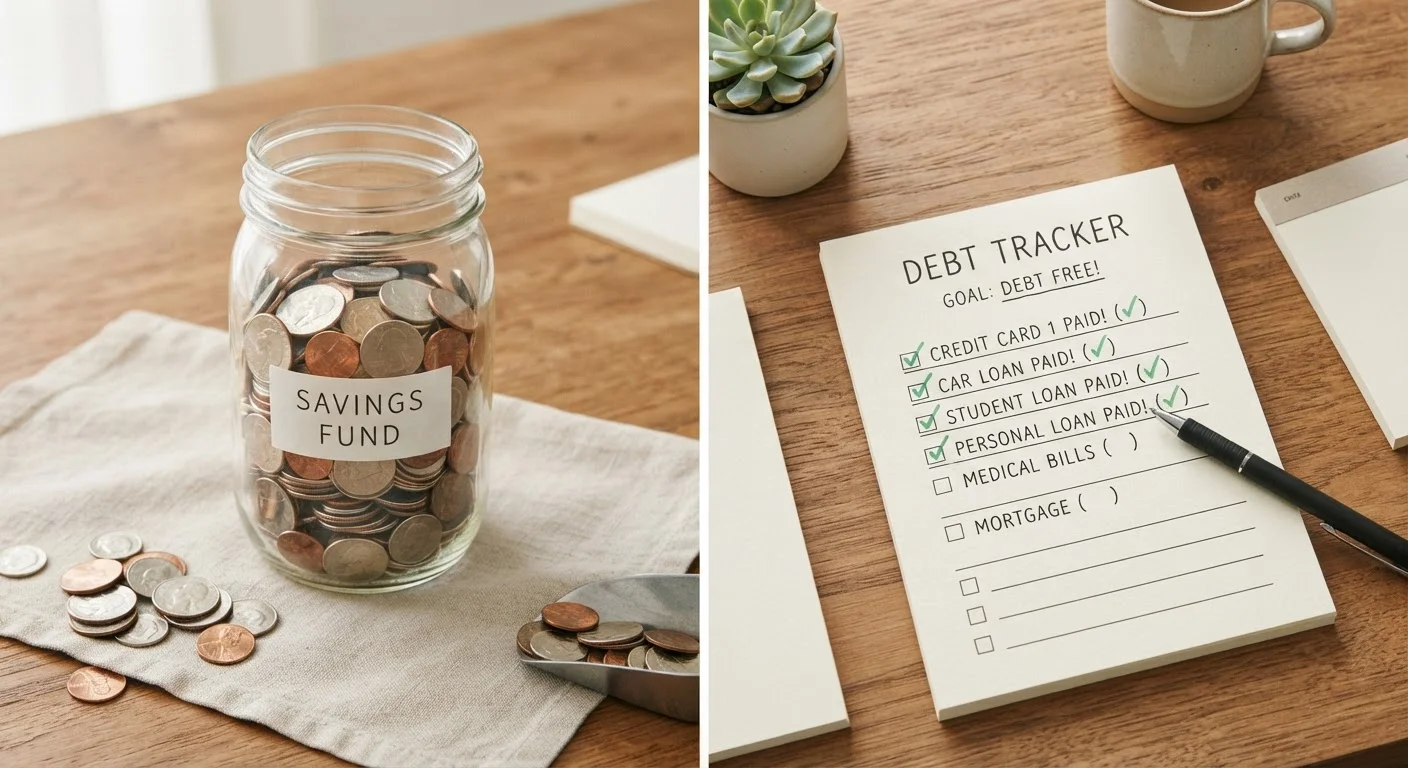
For borrowers with predictable monthly income and no windfall on the horizon, consistent extra payments are often the more realistic path. The habit itself has value: automating a slightly higher payment removes the temptation to spend that money elsewhere, and the steady progress keeps motivation high.
Consistent payments also offer flexibility. If your financial situation tightens one month, you can skip the extra amount and revert to the minimum — something you can't undo after a lump sum is spent. This adaptability makes the strategy compatible with broader goals like building savings simultaneously. For guidance on balancing both priorities, see how to pay off debt while saving at the same time.
If you're working through multiple debts, the consistent-extra-payment model pairs naturally with structured approaches. Compare frameworks in our overview of the debt avalanche and debt snowball methods.
Automate to Eliminate Temptation
If you decide on consistent extra payments, set up the higher amount as your automatic payment from day one — not as a manual top-up each month. When extra money flows out automatically, you're far less likely to redirect it toward discretionary spending. Even a small automated increase, like an extra $50 per month, compounds meaningfully over a multi-year loan.
Making the Decision That Fits Your Situation
The honest answer is that the strategy you can execute consistently beats the one that looks better on a spreadsheet. If you're the type to spend a windfall before it reaches your loan account, a lump sum may not be realistic. If monthly budget discipline is a struggle, automating a larger payment might be more effective than waiting for a future windfall to materialize.
A few practical questions to guide your choice:
- Do you have a funded emergency reserve? If not, build that first before making extra payments of any kind.
- What's your interest rate? Higher rates increase the urgency of early, aggressive paydown.
- Is your income steady or variable? Variable earners often do better saving windfalls for lump sums; steady earners can automate extra payments.
- Are there prepayment penalties? Check your loan agreement — some loans charge fees for paying off principal early.
Behavioral traps — like treating a paid-ahead balance as permission to skip future payments — can quietly stall progress. Learn to spot these patterns in our article on financial habits that stall debt repayment. And if your budget infrastructure needs a tune-up before either strategy can gain traction, the budgeting basics hub is a practical starting point.
This article is for general informational and educational purposes only and does not constitute personalized financial or legal advice. Consult a qualified financial professional before making decisions based on your individual circumstances.